

Philosopher · Classical antiquity · Classical Athens · Cyprus
Zeno of Citium
c. 334–c. 262 BC
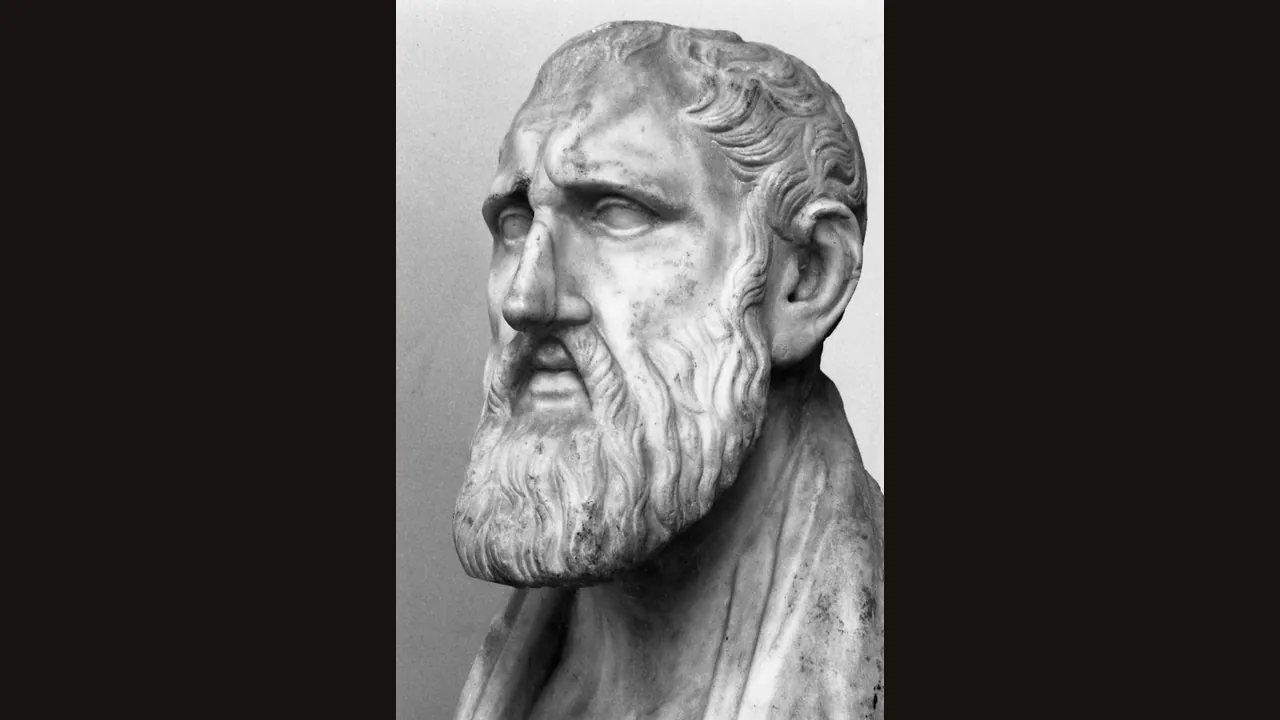
Phoenician Greek from Citium in Cyprus who founded Stoicism, teaching in the Painted Stoa at Athens. He taught that virtue is the only good and all else is indifferent. He lived about 334 to 262 BC, and none of his books survive.
Zeno came from Citium, a city in Cyprus with Phoenician roots, and lived about 334 to 262 BC. He worked as a merchant, and later writers tell that a shipwreck cost him his cargo and brought him to Athens about 312 BC. He stayed to study philosophy, first under Crates the Cynic, then under Stilpo of Megara and the heads of Plato's Academy. About 301 BC he began teaching in the Stoa Poikile, the Painted Porch, from which his school took the name Stoic. His books, among them a Republic, are all lost.
His system stood in three parts: logic, physics, and ethics. The physics held that the universe is a single living whole run by reason, which the Stoics called logos and pictured as a designing fire, and that events unfold by fate. The ethics taught that virtue is the only true good and vice the only true evil. Health, sickness, wealth, poverty, and reputation are indifferents, neither good nor bad, though some are naturally preferred to others. A man lives according to nature when his own reason agrees with the reason that runs the whole, and the violent emotions were counted as errors of judgment to be removed.
Cleanthes and Chrysippus built Zeno's outline into a full system after him, and the school's ethics found their fullest surviving voices in Rome, in Seneca, in Epictetus, and in the emperor Marcus Aurelius.
Facts
- Born
- About 334 BC, Citium, Cyprus.
- Source: Encyclopaedia Britannica, Zeno of Citium
- Died
- About 262 BC, Athens.
- Source: Encyclopaedia Britannica, Zeno of Citium
- School
- Stoicism, named for the Stoa Poikile where he taught.
- Source: Encyclopaedia Britannica, Zeno of Citium
- Known for
- Founding Stoicism: live according to nature, want only what is in your control, treat virtue as the sole good.
- Source: Encyclopaedia Britannica, Zeno of Citium
Sources
- Encyclopaedia Britannica, Zeno of Citium Source
Source links accessed 22 November 2026.
Images
Related
- GreeceConnected
- SenecaConnected
- EpictetusConnected
- Marcus AureliusConnected
- Diogenes of SinopeConnected
- EpicurusSame civilization
What happened elsewhere
Pairings are by recorded year, not exact simultaneity.
- Mauryan EmpireWhile Zeno of Citium (around 322 BC)
- Alexander the GreatWhile Zeno of Citium (around 356 BC)
- XunziWhile Zeno of Citium (around 310 BC)
- PyrrhoWhile Zeno of Citium (around 360 BC)
- ZhuangziWhile Zeno of Citium (around 369 BC)
Meanwhile
Meanwhile, around the world — drag to spin, click a pulsing marker.
Keep reading
Test yourself
When was Zeno of Citium born?
- About 334 BC, Citium, Cyprus
- 106 BC, Arpinum, Italy
- 121, Rome, Italy
- About 490 BC, Abdera, Greece
Answer
About 334 BC, Citium, Cyprus — Born: About 334 BC, Citium, Cyprus.
When did Zeno of Citium die?
- About 262 BC, Athens
- 270, in Campania, Italy
- About 135, Nicopolis, Greece
- 180, on the Danube frontier, likely of plague
Answer
About 262 BC, Athens — Died: About 262 BC, Athens.
What is Zeno of Citium known for?
- Founding Stoicism: live according to nature, want only what is in your control, treat virtue as the sole good
- The poem On Nature, which reasons that what is cannot come from what is not, so change and plurality are illusion
- The Moral Letters, the essays on anger and the shortness of life, and tragedies that shaped Renaissance drama
- The doctrine of the One, from which Intellect and Soul overflow, and the soul's return by contemplation
Answer
Founding Stoicism: live according to nature, want only what is in your control, treat virtue as the sole good — Known for: Founding Stoicism: live according to nature, want only what is in your control, treat virtue as the sole good.
Which school of thought was Zeno of Citium part of?
- Stoicism, named for the Stoa Poikile where he taught
- Stoicism, in its Roman practical form
- Epicureanism, taught in the Garden at Athens
- Pyrrhonist skepticism
Answer
Stoicism, named for the Stoa Poikile where he taught — School: Stoicism, named for the Stoa Poikile where he taught.
True or false: Phoenician Greek from Citium in Cyprus who founded Stoicism, teaching in the Painted Stoa at Athens.
- True
- False
Answer
True — True. Phoenician Greek from Citium in Cyprus who founded Stoicism, teaching in the Painted Stoa at Athens.
My notes
Highlights on this page
None yet.
Spotted an error on this page? Email [email protected] and it will be checked against the sources.