
Events
 Event · Twenty-first century · United StatesSeptember 11 attacks2001On September 11, 2001, nineteen al-Qaeda hijackers seized four American airliners and used them as weapons against the World Trade Center, the Pentagon, and, but for the passengers of Flight 93, the United States Capitol. 2,977 people were killed.Source: National September 11 Memorial & Museum
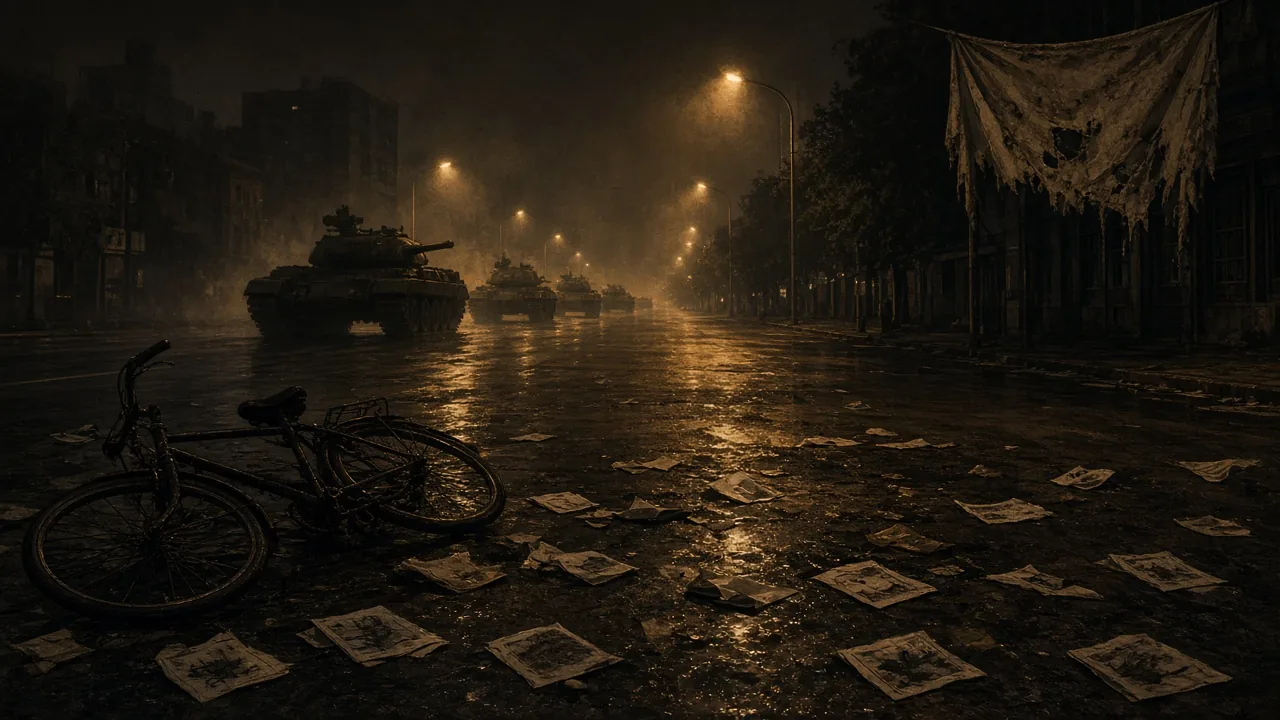 Event · Twentieth century · ChinaTiananmen Square 19891989Beijing protests from April 1989 after Hu Yaobang's death; martial law; military clearance on 3–4 June. Death tolls remain disputed; most killing was on approaches such as Muxidi, not only inside the square.
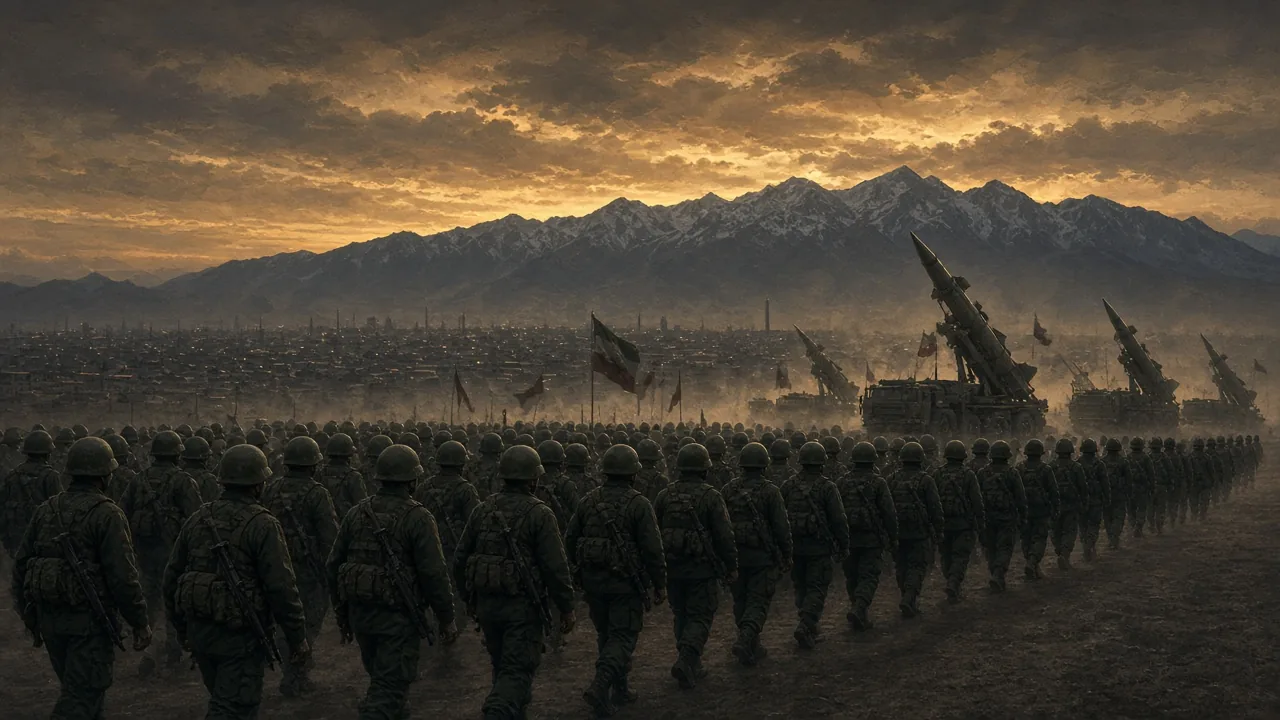 Event · Twenty-first century · IranIslamic Revolutionary Guard Corps1979–Parallel military and security force of the Islamic Republic of Iran, founded 1979 to protect the revolution. Controls large economic and external operations alongside the regular army.
 Event · Twentieth century · CambodiaKhmer Rouge1975–1979Communist regime in Cambodia under Pol Pot's party, April 1975–January 1979. Evacuation of cities, abolition of money and religion, S-21, mass killing. Excess deaths commonly estimated about 1.5–2 million.
 Event · Twentieth century · ChinaCultural Revolution1966–1976The campaign Mao launched in 1966 against officials, teachers, and people classed as enemies. Schools closed. Red Guards and later factional fighting killed large numbers. A full count is not agreed. Generally treated as lasting until Mao's death in 1976.
 Event · Twentieth century · GermanyBerlin Wall1961–1989Barrier sealing West Berlin from East Germany, built 13 August 1961, opened 9 November 1989. Built to stop emigration; shoot-to-kill orders governed escape attempts.
 Event · Twentieth century · ChinaGreat Leap Forward1958–1962The campaign launched in 1958 under Mao's authority: forced collectivization, backyard steel, and the famine of 1959–1961. Death tolls are estimates and do not agree.
 Event · Twentieth century · GermanyThe Stasi1950–1990Ministry for State Security of East Germany, 1950–1990. Roughly 91,000 full-time staff and on the order of 170,000–190,000 unofficial informants by 1988–89.Source: Helmut Müller-Enbergs; BStU figuresEvent · Twentieth century · ChinaSecond Sino-Japanese War1937–1945Full-scale war between the Republic of China and Japan, dated from the Marco Polo Bridge clash on 7 July 1937 to Japan's surrender in 1945. Japan had taken Manchuria in 1931. Some historians start the war there.
 Event · Twentieth century · RussiaStalin's Terror1937–1938Mass NKVD operations of 1937–1938 under quotas from Politburo resolution P51/94 and Order No. 00447, plus national operations. About 681,692 recorded executions in those two years.Source: NKVD statistical reports cited in standard histories
 Event · Twentieth century · ChinaLong March1934–1935The retreat of the Chinese Communist armies from Jiangxi to Shaanxi, October 1934 to October 1935, after encirclement by Nationalist forces.
 Event · Twentieth century · UkraineHolodomor1932–1933Famine in Soviet Ukraine and other regions, 1932–1933, driven by requisition, blacklists, passport controls and border seals. Death tolls are demographic estimates; genocide classification is debated.Event · Twentieth century · ChinaChinese Civil War1927–1949War between the Chinese Nationalist Party and the Chinese Communist Party, interrupted by the war against Japan, ending in communist victory in 1949.
 Event · Twentieth century · RussiaThe Cheka1917–1922All-Russian Extraordinary Commission, founded 20 December 1917 (7 December Old Style) under Felix Dzerzhinsky. Early Soviet secret police with power of summary execution.
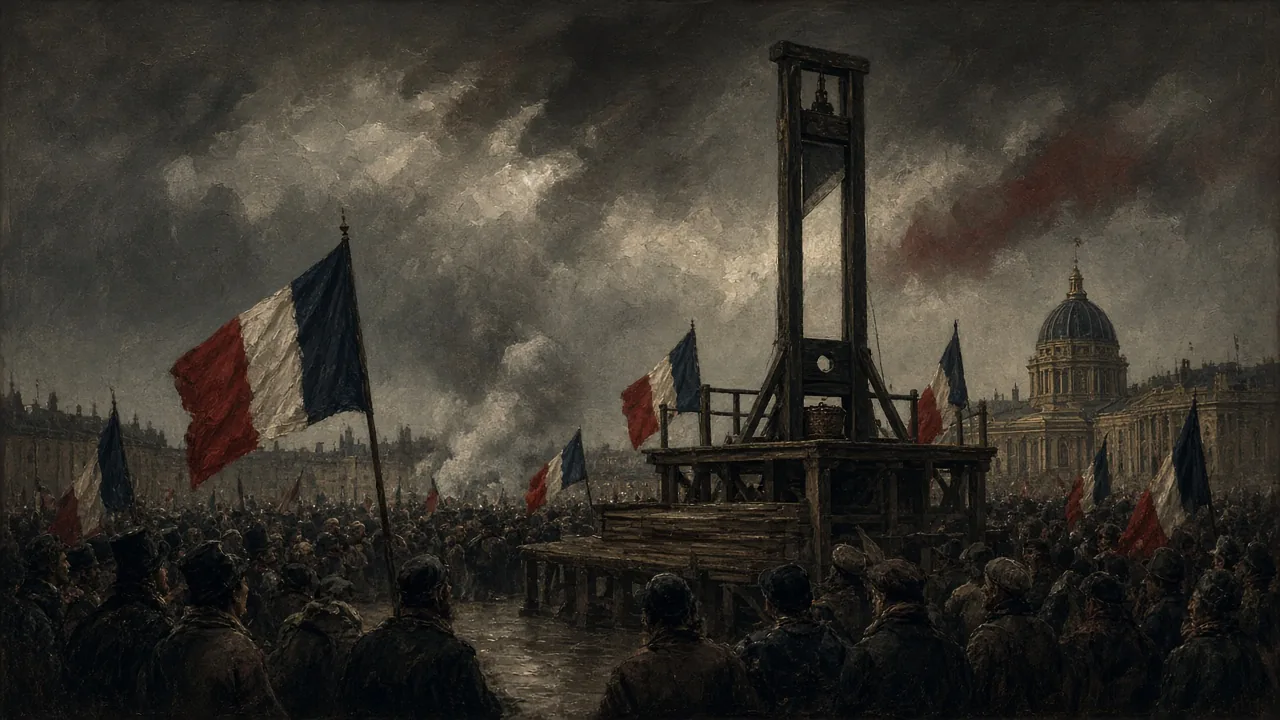 Event · Age of revolutions and empire · FranceFrench Revolution1789–1799From the Estates-General of 1789 through constitutional monarchy, republic, and the Terror under the Committee of Public Safety, to the Directory. Death sentences and civil war tolls are estimates with ranges.
People connected to these events
Battle maps
Seventeen battles with phase-by-phase movements from the sources, shown as 2D step maps.
Immersive 3D battle: Cannae
2 August 216 BCE — Apulia, Italy, on the Aufidus river.
Exact site along the river is debated. Which Roman consul held command on the day is contested.
- Phase 1: Deployment
The Romans mass their infantry in an unusually deep, narrow center, hoping to smash through by weight. Hannibal draws his Gallic and Spanish infantry into a convex crescent projecting toward the Romans, veteran African heavy infantry on the wings in echelon, superior cavalry on both flanks.
Source: Britannica, Battle of Cannae
- Phase 2: Cavalry clash
Hasdrubal's heavy cavalry on the Carthaginian left routs the Roman citizen cavalry on the Roman right, then rides behind the Roman line to strike the allied cavalry on the Roman left.
Source: Wikipedia, Battle of Cannae
- Phase 3: The center gives
The Roman mass drives into the crescent. Hannibal's center yields step by step without breaking; the convex arc flattens, then inverts into a concave pocket as the Romans push deeper.
Source: Gates of History, Battle of Cannae
- Phase 4: The trap closes
The African veterans wheel inward onto the exposed Roman flanks while Hasdrubal's cavalry seals the rear. Surrounded on all sides, the Roman army is destroyed.
Source: Wikipedia, Battle of Cannae — casualty figures disputed.
Red blocks: Roman forces. Blue blocks: Carthaginian forces. Positions are approximate reconstructions from the sources.
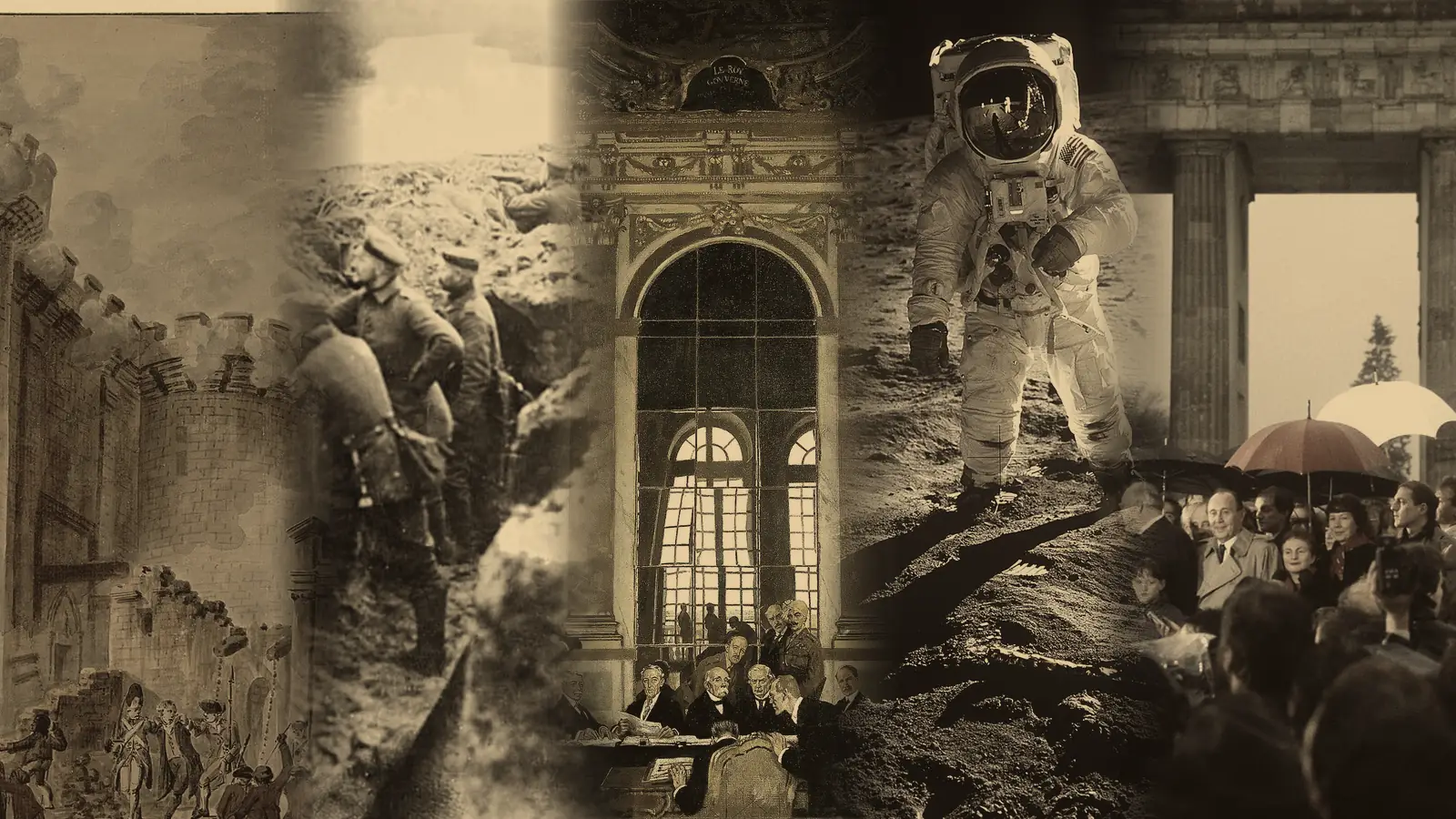
Background: Collage of the Storming of the Bastille (Jean-Pierre Houël); German trenches on the Aisne, WWI (Bain News Service); The Signing of Peace in the Hall of Mirrors, Versailles, 1919 (William Orpen); Buzz Aldrin on the Moon, Apollo 11 (Neil Armstrong, NASA); opening of the Brandenburg Gate, December 1989 (SSgt. F. Lee Corkran, U.S. DoD) (Public domain) — source 1, 2, 3, 4, 5


