
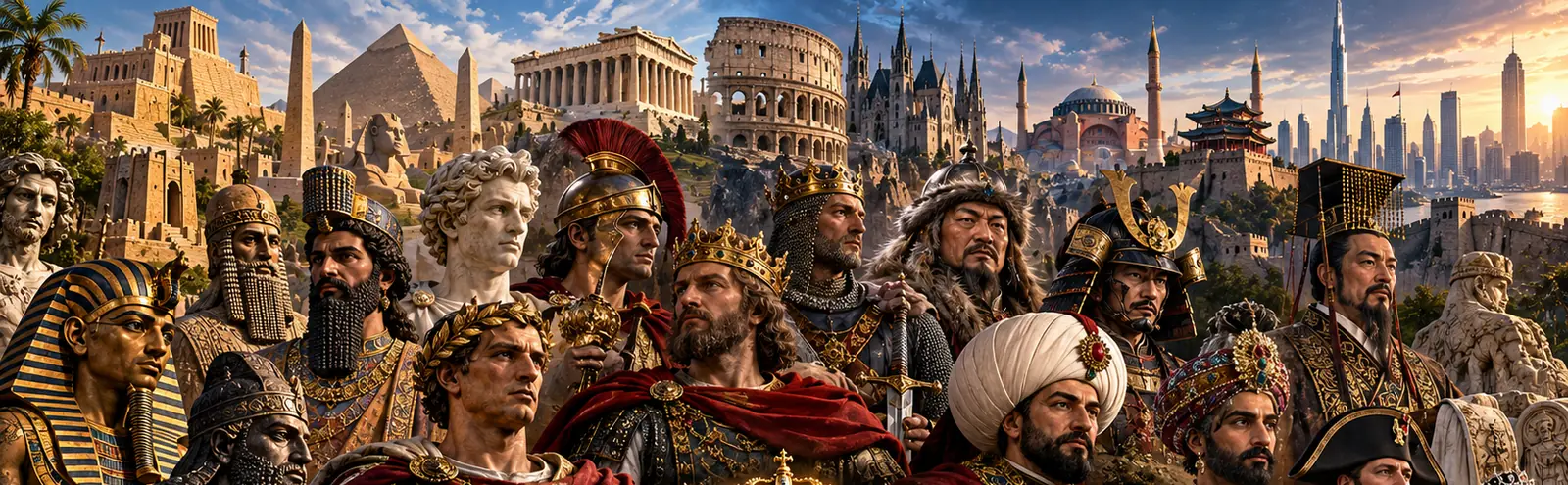
Ruler · Twentieth century · Russia
Joseph Stalin
1878–1953
General secretary of the Soviet Communist Party from 1922 and dominant ruler of the USSR until 1953. Forced collectivization, famine, and the mass operations of 1937–1938 were carried out under his authority.
The Great Terror was quota politics enforced with a gun, and the show trials of Old Bolsheviks were only its public face. The violence was systematically organized, planned, and executed using the same bureaucratic mechanisms the Soviet state applied to industrial production. The directives for mass executions and detentions did not originate from lower-level secret police units, but from the highest levels of the Soviet leadership.
The process began at the very top on July 2, 1937, when the Politburo issued a secret resolution, Resolution P51/94, titled "About Anti-Soviet Elements", composed and signed directly by Joseph Stalin. This document ordered regional party secretaries and local leaders of the NKVD (the People's Commissariat for Internal Affairs) to submit precise counts of "kulaks" and "criminals" within five days. The directive mandated that these individuals be categorized into two groups: those to be shot immediately, and those to be sentenced to long terms in labor camps. Local officials responded rapidly, providing estimates based on existing secret police registries, and the central leadership used these self-reported figures to establish the baseline quotas for the operation. Targets were established before specific formal charges were brought against individuals.
This directive culminated in NKVD Order No. 00447, signed by NKVD chief Nikolai Yezhov on July 30, 1937, and formally approved by the Politburo the following day. Order No. 00447 outlined the systematic repression of "former kulaks, criminals, and other anti-Soviet elements," a category defined broadly to include former tsarist officials, White Army officers, clergy, members of non-Bolshevik political parties, returned emigres, petty criminals, and individuals already residing in special settlements across Siberia, the Urals, and Kazakhstan.
The order divided suspects into two specific categories: Category I comprised individuals deemed the "most active" anti-Soviet elements, who were to be arrested and executed by shooting after their cases were reviewed by local administrative bodies. Category II included individuals classified as "less active" but hostile, who were to be sentenced to terms of eight to ten years in corrective-labor camps or prisons. To process these cases outside the standard judicial system, the order established NKVD troikas, three-person extrajudicial panels composed of the local NKVD chief, the regional party secretary, and the regional prosecutor. These panels reviewed cases without the presence of defense counsel, without hearing witness testimony, and without allowing right of appeal.
Order No. 00447 listed explicit numerical limits for every republic, krai, and oblast. For example, the initial quota for the Moscow region was set at 5,000 executions under Category I and 30,000 camp imprisonments under Category II, while Leningrad was assigned 4,000 for execution and 10,000 for imprisonment. Although these targets were initially presented as maximum limits requiring central approval to exceed, in practice local officials routinely requested higher limits, treating the original quotas as minimum targets to be met or surpassed. Archival records illustrate how regional officials requested increases in their execution limits. In a telegram addressed to Stalin on February 4, 1938, a regional party secretary reported that the local troika had fully processed its original quota, sentencing 9,600 former kulaks, Socialist-Revolutionaries, and anti-Soviet elements. Stating that the original plan was fulfilled, the official formally requested an additional limit of 3,000 executions under Category I and 2,000 camp sentences under Category II, alongside an extension of the operational deadline to March 20. Requests for quota increases were routinely submitted, processed, and approved through standard administrative channels.
Originally intended to run for four months starting August 5, 1937, the mass operation under Order No. 00447 was repeatedly extended and lasted for more than a year. By the time the operation concluded, troikas had sentenced approximately 767,000 individuals under Order No. 00447 alone, resulting in roughly 387,000 executions.
Historical records differentiate between several distinct statistical ledgers measuring the scale of repression during this era. Official secret police records document that 681,692 individuals were executed in NKVD cases across all operations during 1937 and 1938 alone, while total political and non-political arrests during this period are estimated between 1.5 million and 2.5 million. Meanwhile, official records for the corrective-labor camps of the Gulag system record 1,053,829 deaths between 1934 and 1953. Historians note this figure specifically measures deaths within primary labor camps and excludes penal colonies, as well as prisoners who were released shortly before dying to avoid recording deaths on official camp registries.
Parallel to Order No. 00447, the regime instituted a series of "national operations" targeting specific ethnic groups along Soviet border regions. The primary template for these operations was NKVD Order No. 00485, issued by Yezhov on August 11, 1937, which directed the liquidation of alleged espionage networks associated with the Polish Military Organization. Sentencing for national operations utilized the "album procedure". Instead of troikas, local NKVD officials and regional prosecutors formed two-person panels known as "dvoikas". These panels compiled brief summaries of individual cases into bound books or "albums," listing the personal details of suspects in one column and recommending either execution ("shoot") or labor camp sentences in the other. These albums were sent to Moscow, where Yezhov and Chief Prosecutor Andrei Vyshinsky signed off on thousands of sentences in single sessions. The Polish Operation resulted in the sentencing of 139,835 people, of whom 111,091 were executed. Across all national operations combined, 335,513 people were sentenced and 247,157 were shot.
While the public was presented with the Moscow Show Trials of 1936, 1937, and 1938, featuring elaborate public confessions from prominent Old Bolsheviks, the vast majority of executions occurred quietly through the extrajudicial troika and dvoika systems. To manage the social impact of these mass executions, the regime informed relatives that the condemned had been sentenced to "ten years without the right of correspondence". In 1937 and 1938, this phrasing served as a standardized euphemism for immediate execution. When relatives inquired after the ten-year period elapsed in the late 1940s, authorities were instructed to report that the missing individuals had died while serving sentences in labor camps.
The institutional framework of the Great Terror expanded under Nikolai Yezhov, who assumed control of the NKVD from Genrikh Yagoda on September 26, 1936. The operations were formally terminated from the top. On November 17, 1938, a joint decree issued by the Council of People's Commissars and the Central Committee of the Communist Party prohibited further mass arrests, abolished the extrajudicial troikas, and mandated that all future arrests obtain standard judicial or prosecutorial authorization. Lavrentiy Beria replaced Yezhov as head of the NKVD on November 25, 1938. The orders and quotas in the Soviet archives show the mass repressions of 1937 and 1938 were planned from the center. Quotas for detentions and executions were formally assigned, fulfilled, exceeded, and renewed through administrative channels, leaving a documented paper trail across the Soviet state archives.
Sources
Secondary sources
- Politburo Resolution P51/94 of July 2, 1937 and NKVD Order No. 00447: quotas, categories, troikas, and requests to raise the limits J. Arch Getty and Oleg V. Naumov, The Road to Terror: Stalin and the Self-Destruction of the Bolsheviks, 1932–1939 (1999).
- The Gulag system and its recorded mortality, including 1,053,829 deaths in the camps between 1934 and 1953 Oleg V. Khlevniuk, The History of the Gulag: From Collectivization to the Great Terror (2004).
- The national operations of 1937–38: 335,513 people sentenced and 247,157 shot, the Polish Operation the largest Nicolas Werth, The Black Book of Communism (1999).
Watch
Roots and Branches of the Radical Left
Events · 2026-10-15
Socialism is presented as an economic theory. In reality, woven through every part of the theory are two things that must be adopted before socialism can "work properly": a pseudo-history of mankind, and a massive shift of worldview. Both rest on a fundamental lie about human nature: they blame man's conditions for what belongs to the man himself.
That ideology did not appear from nowhere. It grew out of long-standing ideas, taken up across a chain of events and twisted over time into a promise of a better way for human beings to live, which is why the whole runs far deeper and is far more complex than the economic label suggests. Along the way it was woven in and out of great thinkers, at different points and for different reasons. Some were used for it and some against it, and through all of it the idea kept building.
This map lays that out where it can be seen: the evolution of the ideas, the effects they had, and the chain of cause and effect that followed from thinker to thinker.
Facts
- Born
- 18 December 1878 (Old Style 6 December), Gori, Georgia (then Russian Empire).
- Source: Encyclopaedia Britannica, Joseph Stalin
- Died
- 5 March 1953, near Moscow.
- Source: Encyclopaedia Britannica, Joseph Stalin
- Party office
- General secretary of the Central Committee from 1922; consolidated personal rule in the late 1920s.
- Source: Encyclopaedia Britannica, Joseph Stalin
- 1937–1938 executions
- NKVD records: about 681,692 executions in 1937–1938 across operations. Order No. 00447 alone: roughly 387,000 shot.
- Source: Getty & Naumov; archival NKVD figures cited in standard histories
Sources
- Getty & Naumov; archival NKVD figures cited in standard histories
- Encyclopaedia Britannica, Joseph Stalin Source
Source links accessed 22 November 2026.
Images
Related
- Stalin's TerrorConnected
- HolodomorConnected
- The ChekaConnected
- RussiaConnected
- UkraineConnected
- Twentieth centuryConnected
What happened elsewhere
Pairings are by recorded year, not exact simultaneity.
- RomaniaWhile Joseph Stalin (1878)
- Mustafa Kemal AtaturkWhile Joseph Stalin (1881)
- Winston ChurchillWhile Joseph Stalin (1874)
- Franklin D. RooseveltWhile Joseph Stalin (1882)
- Benito MussoliniWhile Joseph Stalin (1883)
Meanwhile
Meanwhile, around the world — drag to spin, click a pulsing marker.
Keep reading
Articles
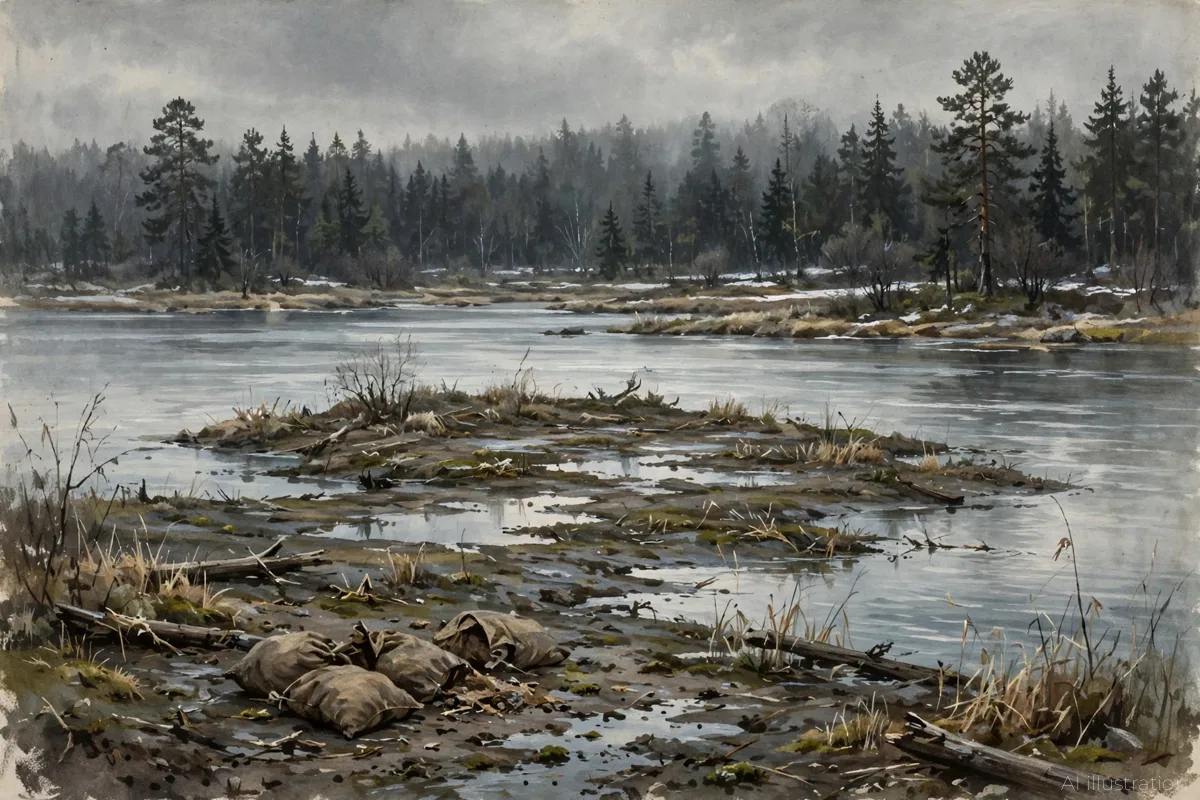 Nazino Island, 1933: The Island Stalin Filled With the UnwantedIn May 1933 the Soviet secret police deported about 6,700 people rounded up in Moscow and Leningrad, many for having no passport papers, and abandoned them on Nazino Island in Siberia's Ob River with flour and nothing else. Within thirteen weeks more than 4,000 were dead, and the starving survivors had turned to cannibalism.Read
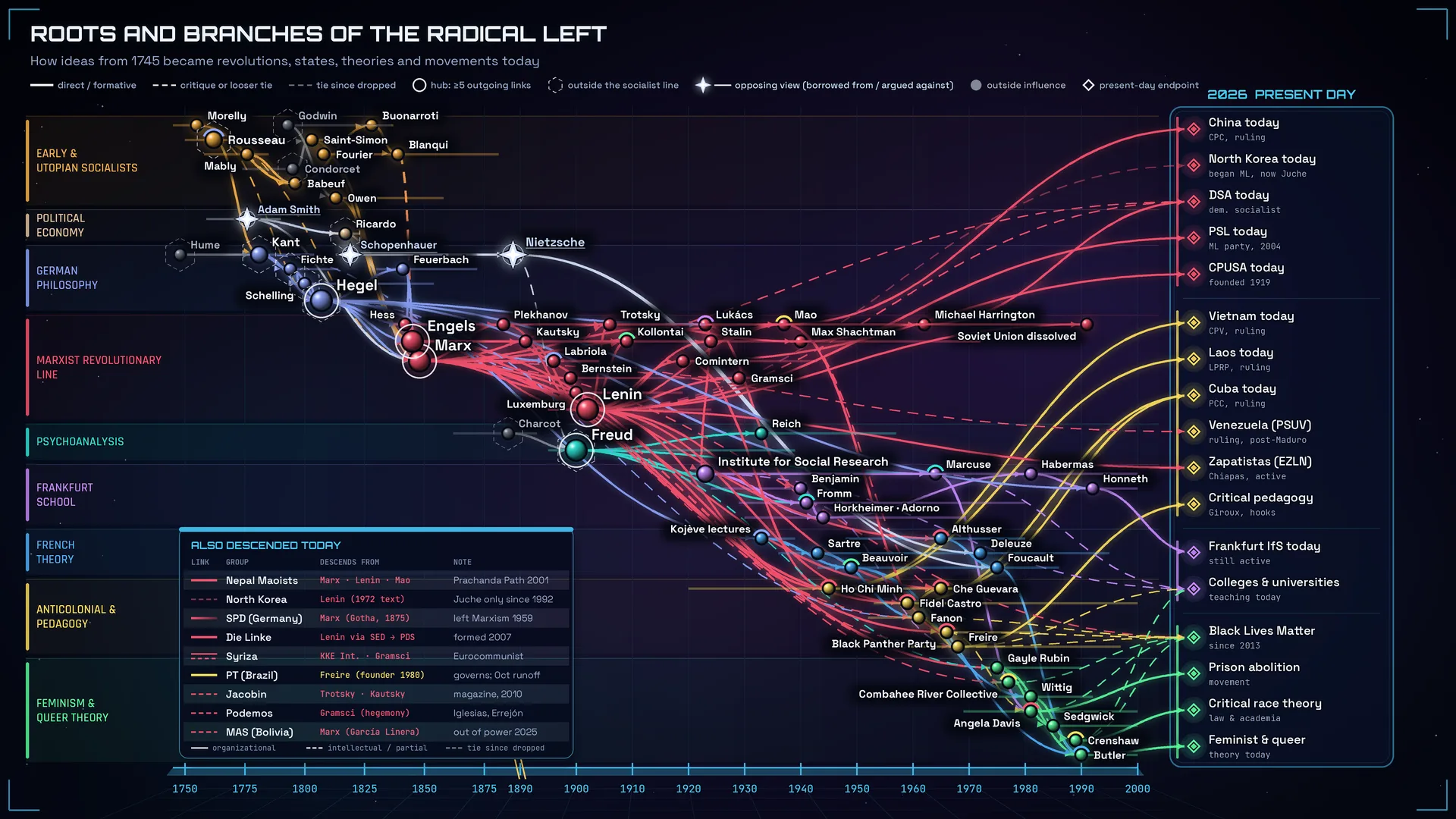 Roots and Branches of the Radical LeftHow ideas from 1745 became revolutions, states, theories and movements todayRead
 Before You Curse AmericaLiberty produces unequal outcomes because men are unequal in talent, judgment, appetite, luck, family, and will. Unequal outcomes produce comparison. Comparison can turn into envy.Read
My notes
Highlights on this page
None yet.
Spotted an error on this page? Email [email protected] and it will be checked against the sources.