
Saturday 7 November 2026
Nazino Island, 1933: The Island Stalin Filled With the Unwanted
In May 1933 the Soviet secret police deported about 6,700 people rounded up in Moscow and Leningrad, many for having no passport papers, and abandoned them on Nazino Island in Siberia's Ob River with flour and nothing else. Within thirteen weeks more than 4,000 were dead, and the starving survivors had turned to cannibalism.
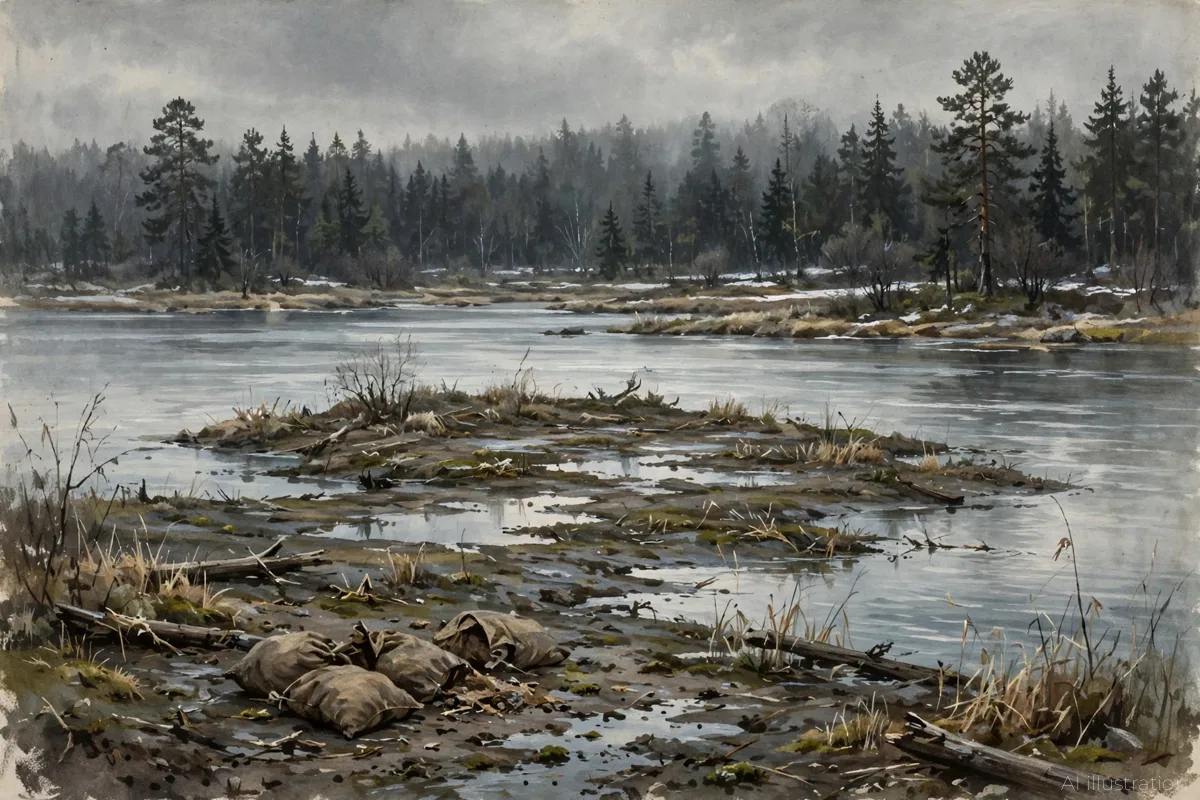
Among the darkest episodes of Stalin's regime was the Nazino affair of May 1933, a horrifying human experiment in the remote, uninhabited taiga of Western Siberia. As part of Stalin's sweeping campaign to purge the cities of "social undesirables" and passport violators, the Soviet secret police rounded up thousands of destitute people in Moscow and Leningrad, many of whom had simply been caught without their internal identification papers, and deported them to Nazino Island, a desolate spit of land in the Ob River surrounded by freezing, swollen water.
The barges unloaded 6,114 deportees onto the island on May 18, 1933, and a further five to six hundred followed, about 6,700 people in all. The deportees were dropped onto the swampy island with virtually no food, tools, shelter, or warm clothing. Twenty tons of flour came with the barges, about four kilograms for each person, but the barges carried no other food and nothing to cook with, and no food was handed out for the first four days. It snowed the first night. When flour was finally distributed, the starving deportees ate it raw, mixed with river water, and hundreds sickened and died from it.
The situation immediately deteriorated into sheer chaos. Within days, human life completely unraveled under the brutal conditions. Driven by unimaginable starvation, desperation, and madness, cannibalism broke out among the survivors, with guards and desperate inmates witnessing acts of horrific violence and flesh-selling. Within just thirteen weeks, over 4,000 people had died or disappeared, from starvation, exposure, and disease, or shot by guards attempting to control the chaos. The local party instructor Vasily Velichko, sent to report on the settlement, counted about 2,200 people still alive out of the roughly 6,700 who had been landed.
Velichko wrote his report to Stalin in 1933, and it was buried in an archive in Novosibirsk. The Nazino Island tragedy remained a heavily guarded state secret for decades, until the human rights organization Memorial brought the report to light in 1988 and published the records of the September 1933 special commission in 2002. The French historian Nicolas Werth told the full story from the documents in his 2006 book Cannibal Island. The island stands as a chilling testament to the mechanized cruelty and callous disregard for human life that characterized Stalinist rule: thousands of people were arrested for lacking a piece of paper, shipped to an empty island, and left to die.
Sources
Primary sources
- The deportation to Nazino Island, the conditions on the island, and about 2,200 survivors of roughly 6,700 deportees Vasily A. Velichko, Report to Joseph Stalin on the Nazino settlement (1933).
- Publication of the September 1933 special commission reports on Nazino Memorial, Nazino commission records (2002).
Secondary sources
- The full documented history of the Nazino affair Nicolas Werth, Cannibal Island: Death in a Siberian Gulag (2006).