
Saturday 10 October 2026
The Sack of Athens and the Themistoclean Wall, 480–478 BC
In 480 BC, Xerxes’ Persian forces invaded Athens, reducing the Acropolis and the sacred temples to ash.
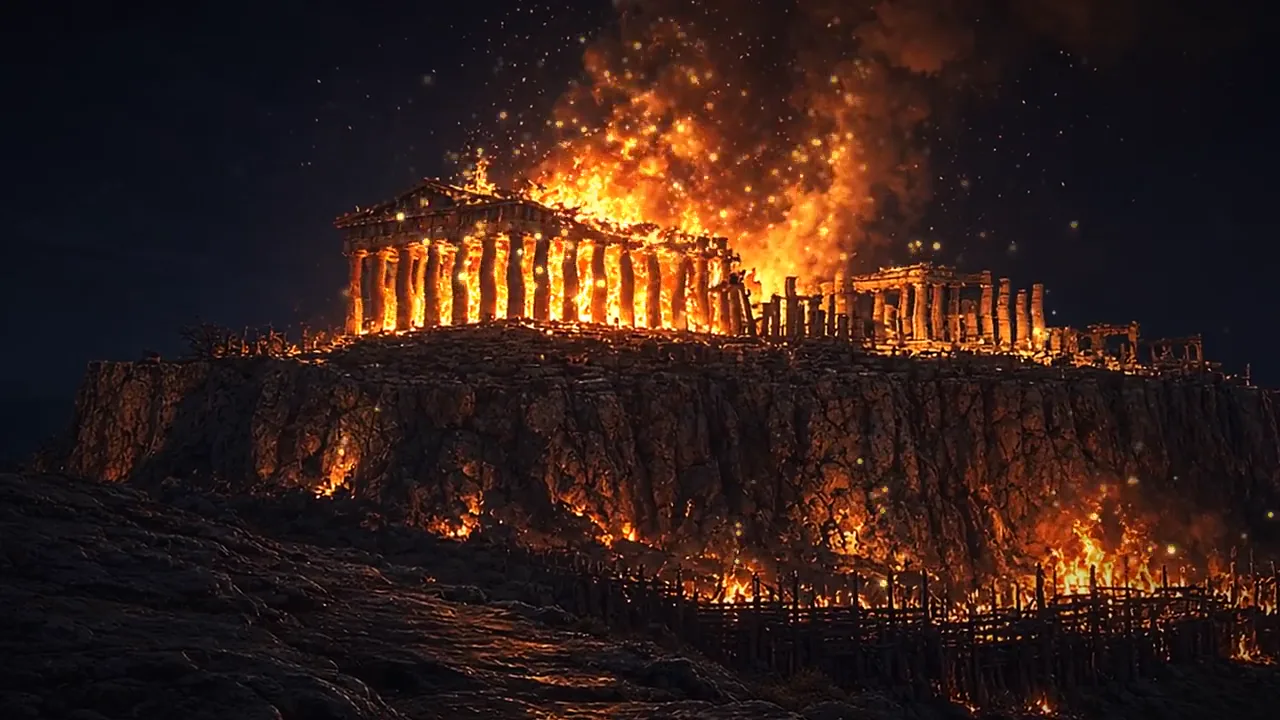
In 480 BC, Xerxes’ Persian forces invaded Athens, reducing the Acropolis and the sacred temples to ash.
Following Greece’s decisive victory at Salamis, the Athenians returned to find their homes in ruins, and their first task was to secure their future.
Under the direction of Themistocles, the citizens built a defensive perimeter known as the Themistoclean Wall. Fearing a fortified Athens would dominate Greece, rival Sparta urgently demanded they halt construction. Recognizing the threat to Athenian sovereignty, Themistocles used tactical deception.
He traveled to Sparta to negotiate, deliberately stalling discussions while every Athenian, man, woman, and child worked frantically around the clock using recycled rubble, tombstones, and shattered temple columns.
By the time Sparta realized the ploy, the fortifications were already high enough to withstand a siege. The wall gave the rebuilt city a defensible circuit, and its building told Sparta that Athens would answer to no one. The naval empire rested on other foundations: the two hundred triremes the Laurion silver had bought in 483 BC, and the Delian League founded in 478 BC, whose tribute paid for the fleet and, in time, for the building of the golden age. A generation later the Long Walls joined Athens to its port at Piraeus, and that corridor, not the city wall alone, let Athens live by sea through a siege.
Sources
Primary sources
- The Themistoclean Wall built in haste from rubble and tombstones while Themistocles stalled the Spartan embassy Thucydides, History of the Peloponnesian War, Book 1 (1.89–1.93) (late 5th century BC).
- The evacuation of Athens and the Persian burning of the city in 480 BC Herodotus, Histories, Book 8 (5th century BC).
- Themistocles' career and his deception of the Spartans Plutarch, Life of Themistocles (c. AD 100).