

Ruler · Classical antiquity · Classical Athens · Greece
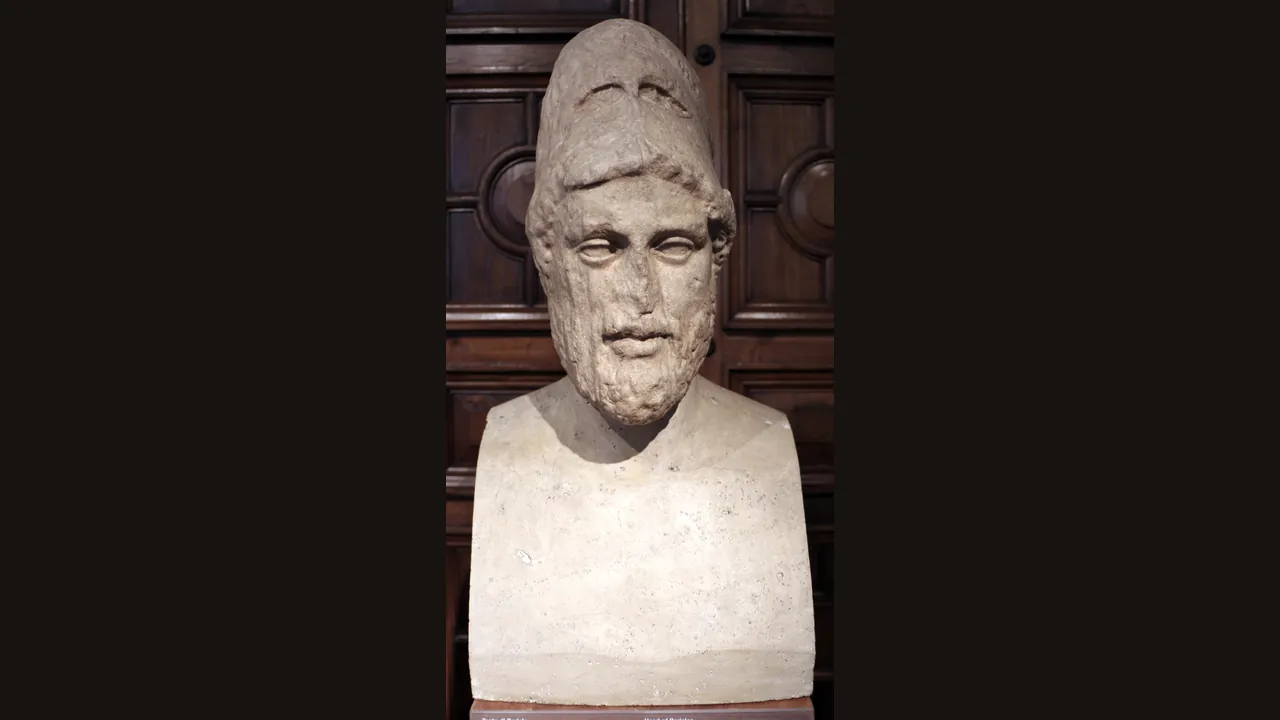
Pericles
c. 495–429 BC
Athenian statesman and general, dominant in Athens from about 461 to his death in 429 BC. Under him Athens reached the height of its power and built the Parthenon, and democracy paid its citizens to serve on juries and row in the fleet. He died of the plague in the second year of the Peloponnesian War.
Pericles came to the front of Athenian politics about 461 BC, working with the reformer Ephialtes, and he held influence in the city until his death in 429 BC. Athens had no kingship for him to hold. He was elected strategos, one of ten generals, year after year from 443 BC, and the assembly voted on his proposals in the open.
Under his leadership Athens paid citizens to serve on juries and hold public offices. His citizenship law of 451 BC limited citizenship to men with an Athenian father and an Athenian mother. The treasury of the Delian League had been moved to Athens in 454 BC, and league money paid for the building program he directed on the Acropolis, the Parthenon, begun in 447 BC, the Propylaea, and the Odeon. Athens tightened its grip on the allies of the league, planted settlements of Athenian citizens on allied land, and crushed the revolt of Samos in 440 to 439 BC. When war with Sparta opened in 431 BC, Pericles kept the population behind the city walls and trusted the fleet, refusing battle on land. Plague entered the crowded city in 430 BC and killed a large share of its people. The assembly fined him and removed him from office, then elected him again.
Pericles died of the plague in 429 BC, in the third year of the war.
Watch
The Sack of Athens and the Themistoclean Wall, 480–478 BC
Events · 2026-10-10
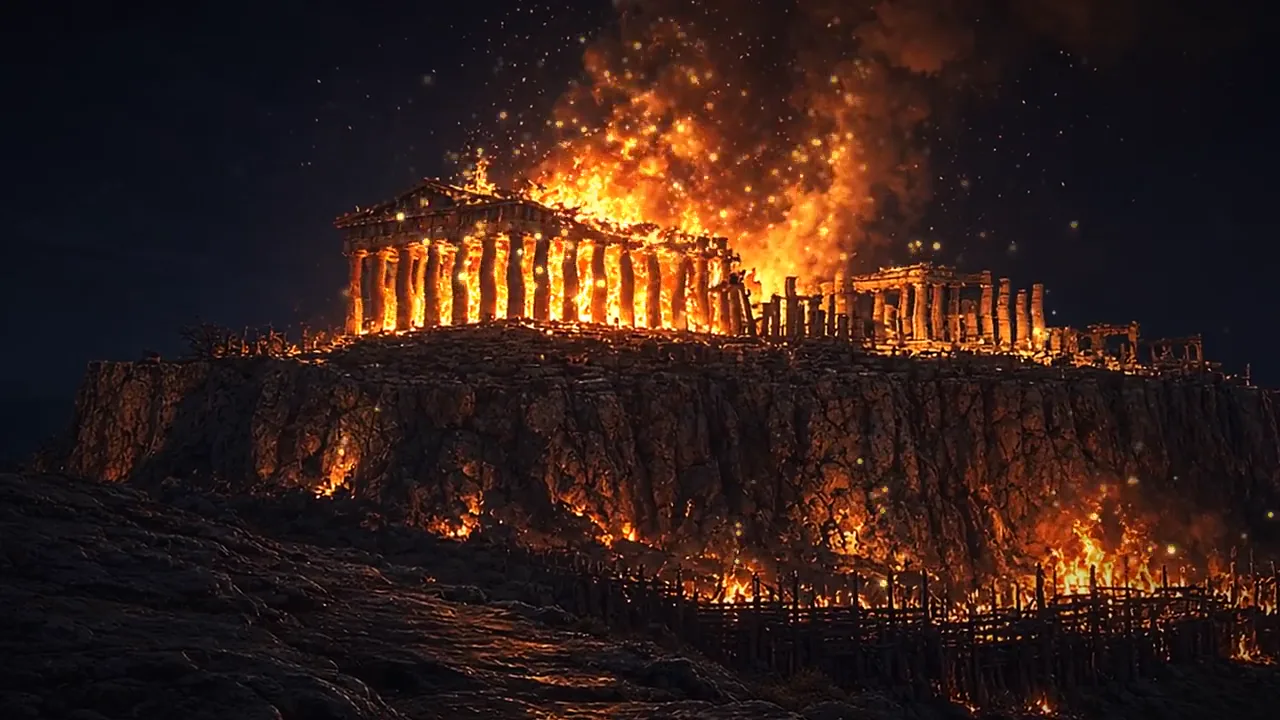
In 480 BC, Xerxes’ Persian forces invaded Athens, reducing the Acropolis and the sacred temples to ash.
Following Greece’s decisive victory at Salamis, the Athenians returned to find their homes in ruins, and their first task was to secure their future.
Under the direction of Themistocles, the citizens built a defensive perimeter known as the Themistoclean Wall. Fearing a fortified Athens would dominate Greece, rival Sparta urgently demanded they halt construction. Recognizing the threat to Athenian sovereignty, Themistocles used tactical deception.
He traveled to Sparta to negotiate, deliberately stalling discussions while every Athenian, man, woman, and child worked frantically around the clock using recycled rubble, tombstones, and shattered temple columns.
By the time Sparta realized the ploy, the fortifications were already high enough to withstand a siege. The wall gave the rebuilt city a defensible circuit, and its building told Sparta that Athens would answer to no one. The naval empire rested on other foundations: the two hundred triremes the Laurion silver had bought in 483 BC, and the Delian League founded in 478 BC, whose tribute paid for the fleet and, in time, for the building of the golden age. A generation later the Long Walls joined Athens to its port at Piraeus, and that corridor, not the city wall alone, let Athens live by sea through a siege.
Facts
- Born
- About 495 BC, Athens.
- Source: Encyclopaedia Britannica, Pericles
- Died
- 429 BC, of plague, Athens.
- Source: Encyclopaedia Britannica, Pericles
- Office
- Strategos, elected general, for many years from 443 BC.
- Source: Encyclopaedia Britannica, Pericles
- Known for
- The Age of Pericles, the Parthenon, and the Funeral Oration recorded by Thucydides.
- Source: Encyclopaedia Britannica, Pericles
Sources
- Encyclopaedia Britannica, Pericles Source
Source links accessed 22 November 2026.
Images
Related
- GreeceConnected
- Classical AthensConnected
- ProtagorasSame civilization
- SocratesSame civilization
- DemocritusSame civilization
- PlatoSame civilization
What happened elsewhere
Pairings are by recorded year, not exact simultaneity.
- Roman RepublicWhile Pericles (around 509 BC)
- ParmenidesWhile Pericles (around 515 BC)
- MoziWhile Pericles (around 470 BC)
- Darius IWhile Pericles (around 522 BC)
- HeraclitusWhile Pericles (around 535 BC)
Meanwhile
Meanwhile, around the world — drag to spin, click a pulsing marker.
Keep reading
Test yourself
When was Pericles born?
- About 495 BC, Athens
- 63 BC, Rome
- About 272, Naissus (now Nis in Serbia)
- 100 BC, Rome
Answer
About 495 BC, Athens — Born: About 495 BC, Athens.
When did Pericles die?
- 429 BC, of plague, Athens
- 337, near Nicomedia
- 14 AD, Nola
- 323 BC, Babylon
Answer
429 BC, of plague, Athens — Died: 429 BC, of plague, Athens.
What is Pericles known for?
- The Age of Pericles, the Parthenon, and the Funeral Oration recorded by Thucydides
- The unification of China and the terracotta army guarding his tomb
- The Kalinga war, the rock and pillar edicts, and the spread of Buddhism
- The Edict of Milan (313), Constantinople, and the Council of Nicaea (325)
Answer
The Age of Pericles, the Parthenon, and the Funeral Oration recorded by Thucydides — Known for: The Age of Pericles, the Parthenon, and the Funeral Oration recorded by Thucydides.
True or false: Athenian statesman and general, dominant in Athens from about 461 to his death in 429 BC.
- True
- False
Answer
True — True. Athenian statesman and general, dominant in Athens from about 461 to his death in 429 BC.
Articles
My notes
Highlights on this page
None yet.
Myth vs. evidence
The myth
Athens under Pericles was a democracy in which the people ruled.
The evidence
Citizens could vote in the assembly, but citizens were a minority of the people living in Athens. Women, enslaved people, and resident foreigners were excluded, so perhaps one resident in eight or ten held a vote.
Sources: Thucydides, History of the Peloponnesian War 2.65; Mogens Herman Hansen, The Athenian Democracy in the Age of Demosthenes
Spotted an error on this page? Email [email protected] and it will be checked against the sources.