
Country · Greece
Greece
1830–
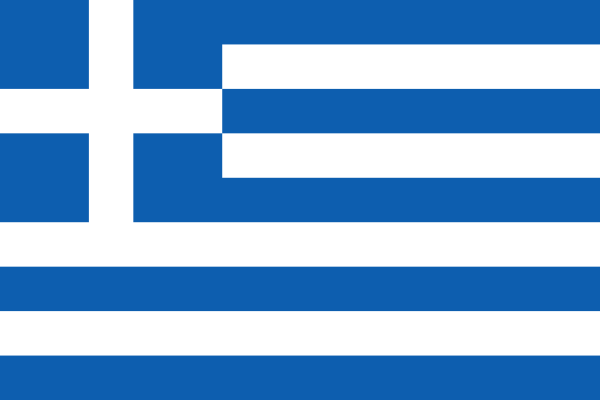
Greece is a Balkan country of peninsulas and islands, heir to the ancient Greek world. It won independence from the Ottoman Empire in a war that began in 1821. The modern state is a parliamentary republic.
Athens is the capital of Greece, a parliamentary republic at the southern end of the Balkan Peninsula. Greek is the official language, and about 10.3 million people lived in the country in 2024 estimates. Greece holds thousands of islands in the Aegean and Ionian seas.
The ancient Greek city states produced the classical culture of Athens and Sparta, and Alexander of Macedon spread Greek rule across the eastern Mediterranean and Persia. Rome absorbed the Greek lands, and after the Roman Empire split, the Greek speaking Byzantine Empire governed them for a thousand years. The Ottoman Empire conquered the mainland in the fifteenth century and ruled most Greek lands into the nineteenth century.
The war of independence began in 1821, and Britain, France, and Russia recognized an independent Greek kingdom in 1830. Greece expanded through the Balkan Wars and the First World War, then lost its position in Asia Minor after defeat by Turkey in 1922, and about 1.5 million people moved in a compulsory exchange of populations between the two countries. Germany, Italy, and Bulgaria occupied Greece from 1941 to 1944, and a civil war between communists and the government followed from 1946 to 1949. A military junta ruled from 1967 to 1974. Democracy then returned, and Greece joined the European Community in 1981.
Watch
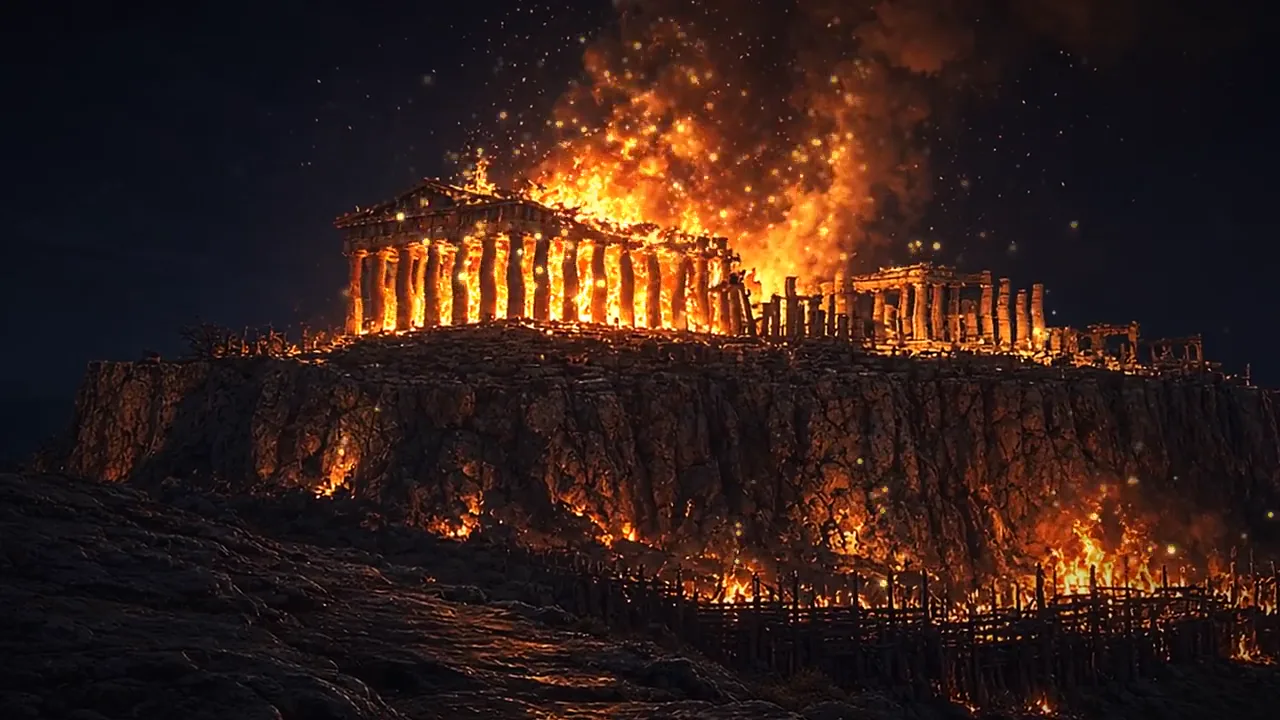
The Sack of Athens and the Themistoclean Wall, 480–478 BC
Events · 2026-10-10
In 480 BC, Xerxes’ Persian forces invaded Athens, reducing the Acropolis and the sacred temples to ash.
Following Greece’s decisive victory at Salamis, the Athenians returned to find their homes in ruins, and their first task was to secure their future.
Under the direction of Themistocles, the citizens built a defensive perimeter known as the Themistoclean Wall. Fearing a fortified Athens would dominate Greece, rival Sparta urgently demanded they halt construction. Recognizing the threat to Athenian sovereignty, Themistocles used tactical deception.
He traveled to Sparta to negotiate, deliberately stalling discussions while every Athenian, man, woman, and child worked frantically around the clock using recycled rubble, tombstones, and shattered temple columns.
By the time Sparta realized the ploy, the fortifications were already high enough to withstand a siege. The wall gave the rebuilt city a defensible circuit, and its building told Sparta that Athens would answer to no one. The naval empire rested on other foundations: the two hundred triremes the Laurion silver had bought in 483 BC, and the Delian League founded in 478 BC, whose tribute paid for the fleet and, in time, for the building of the golden age. A generation later the Long Walls joined Athens to its port at Piraeus, and that corridor, not the city wall alone, let Athens live by sea through a siege.
Facts
- Founded
- 1830, independence recognized after the war of 1821 to 1829 against the Ottoman Empire.
- Source: CIA World Factbook
- Capital
- Athens.
- Source: CIA World Factbook
- Major rulers
- Pericles, the statesman of classical Athens; Alexander the Great, the Macedonian conqueror; Eleftherios Venizelos, the statesman of the early twentieth century.
- Source: Encyclopaedia Britannica, Greece
- Government
- Parliamentary republic.
- Source: CIA World Factbook
Sources
Source links accessed 22 November 2026.
Images
Related
- Classical GreeceConnected
- Classical AthensConnected
- SocratesConnected
- PlatoConnected
- AristotleConnected
- RepublicConnected
What happened elsewhere
Pairings are by recorded year, not exact simultaneity.
Meanwhile
Meanwhile, around the world — drag to spin, click a pulsing marker.
Keep reading
Test yourself
What was the capital?
- Athens
- Astana
- Castries
- Taipei
Answer
Athens — Capital: Athens.
When was Greece founded?
- 1830, independence recognized after the war of 1821 to 1829 against the Ottoman Empire
- 1811, independence declared from Spain
- 18 February 1965, independence from Britain
- 12 July 1975, independence from Portugal
Answer
1830, independence recognized after the war of 1821 to 1829 against the Ottoman Empire — Founded: 1830, independence recognized after the war of 1821 to 1829 against the Ottoman Empire.
What form of government does Greece have?
- Parliamentary republic
- Absolute monarchy under the sultan
- Parliamentary coprincipality; the only state with two princes ruling together
- Presidential republic under long authoritarian rule
Answer
Parliamentary republic — Government: Parliamentary republic.
True or false: Greece is a Balkan country of peninsulas and islands, heir to the ancient Greek world.
- True
- False
Answer
True — True. Greece is a Balkan country of peninsulas and islands, heir to the ancient Greek world.
Articles
 The Sack of Athens and the Themistoclean Wall, 480–478 BCIn 480 BC, Xerxes’ Persian forces invaded Athens, reducing the Acropolis and the sacred temples to ash.Read
 HypatiaIn the year AD 415, in the ancient city of Alexandria, one of the most respected intellectuals of the Roman world was pulled from her carriage and killed by a violent mob. Her name was Hypatia.Read
 Before You Curse AmericaLiberty produces unequal outcomes because men are unequal in talent, judgment, appetite, luck, family, and will. Unequal outcomes produce comparison. Comparison can turn into envy.Read
My notes
Highlights on this page
None yet.
Spotted an error on this page? Email [email protected] and it will be checked against the sources.