

Civilization · Classical antiquity · Roman Republic
Roman Republic
509–27 BCE
The Roman Republic grew from a city state into the master of the Mediterranean. Its system of consuls, Senate, and assemblies balanced power for centuries. Civil wars destroyed it, and Augustus made himself emperor in 27 BCE.
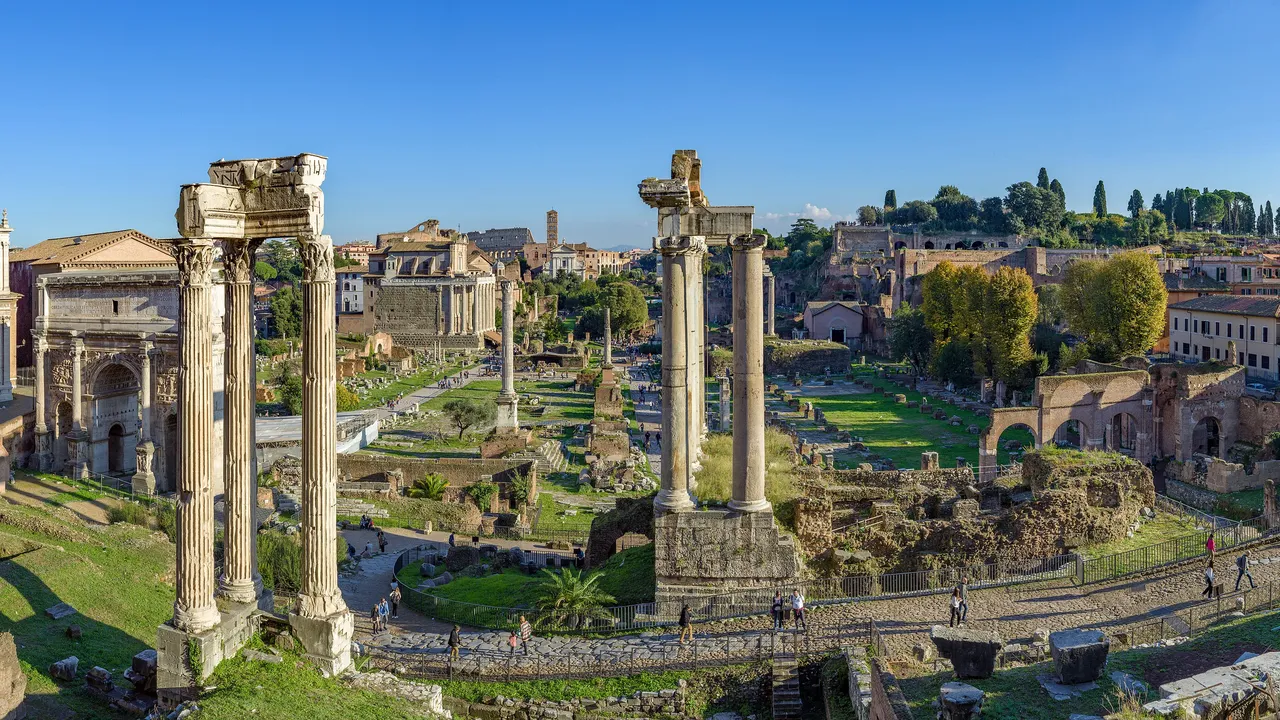
The Roman Republic began in 509 BCE, by Roman tradition the year the last king was expelled. Rome was then a small city state on the Tiber. Two consuls, elected each year, commanded the armies and presided over the Senate, a council of former magistrates. Assemblies of citizens voted laws and elected officials. The Twelve Tables, published about 449 BCE, gave Rome its written law code, posted in the Forum.
By 275 BCE Rome ruled the Italian peninsula. Three wars against Carthage from 264 to 146 BCE won Sicily, Spain, and North Africa, and wars in the east brought Macedonia and Greece under Roman rule by 146 BCE. Governors taxed the provinces, and colonies spread Latin across the west. The Italian allies gained full Roman citizenship after the Social War of 91 to 88 BCE.
Armies stayed under commanders for years at a time, and soldiers looked to their generals for land and pay. Sulla marched his army on Rome in 88 BCE and ruled as dictator. Julius Caesar conquered Gaul from 58 to 50 BCE, crossed the Rubicon in 49 BCE, won the civil war, and was assassinated in 44 BCE. His heir Octavian defeated Mark Antony at Actium in 31 BCE. In 27 BCE the Senate granted Octavian the name Augustus and voted him command of the armies and the frontier provinces. The republican offices and assemblies continued.
Facts
- Founded
- 509 BCE, the kings expelled; the republic proclaimed.
- Source: Encyclopaedia Britannica, Roman Republic
- Ended
- 27 BCE, Augustus established the empire.
- Source: Encyclopaedia Britannica, Roman Republic
- Heartland
- Italy, capital Rome.
- Source: Encyclopaedia Britannica, Roman Republic
- Major rulers
- Scipio Africanus, who beat Hannibal; Julius Caesar, whose conquests and murder ended the republic; Cicero, its great orator.
- Source: Encyclopaedia Britannica, Roman Republic
Sources
- Encyclopaedia Britannica, Roman Republic Source
Source links accessed 22 November 2026.
Images
Related
- CiceroSame civilization
- Julius CaesarSame civilization
- ParmenidesSame era
- PericlesSame era
- ProtagorasSame era
- MoziSame era
What happened elsewhere
Pairings are by recorded year, not exact simultaneity.
- ParmenidesWhile Roman Republic (around 515 BC)
- Classical GreeceWhile Roman Republic (500 BC)
- Classical AthensWhile Roman Republic (500 BC)
- Darius IWhile Roman Republic (522 BC)
- PericlesWhile Roman Republic (around 495 BC)
Meanwhile
Meanwhile, around the world — drag to spin, click a pulsing marker.
Keep reading
Test yourself
When was Roman Republic founded?
- 509 BCE, the kings expelled; the republic proclaimed
- 247 BCE, Arsaces I founded the dynasty
- 27 BCE, Augustus became the first emperor
- 224 CE, Ardashir I overthrew the Parthians
Answer
509 BCE, the kings expelled; the republic proclaimed — Founded: 509 BCE, the kings expelled; the republic proclaimed.
When did Roman Republic end?
- 27 BCE, Augustus established the empire
- 224 CE, overthrown by the Sassanian Ardashir I
- 185 BCE, the last Mauryan assassinated
- 651 CE, the last king killed; Persia became Muslim
Answer
27 BCE, Augustus established the empire — Ended: 27 BCE, Augustus established the empire.
Where was the heartland of Roman Republic?
- Italy, capital Rome
- Persia and Mesopotamia, capital Ctesiphon
- Northern India, capital Pataliputra
- Persia and Mesopotamia, capital Ctesiphon, in present day Iran and Iraq
Answer
Italy, capital Rome — Heartland: Italy, capital Rome.
True or false: The Roman Republic grew from a city state into the master of the Mediterranean.
- True
- False
Answer
True — True. The Roman Republic grew from a city state into the master of the Mediterranean.
My notes
Highlights on this page
None yet.
Spotted an error on this page? Email [email protected] and it will be checked against the sources.