

Philosopher · Classical antiquity · Greek colonies · Italy
Parmenides
c. 515–c. 450 BC
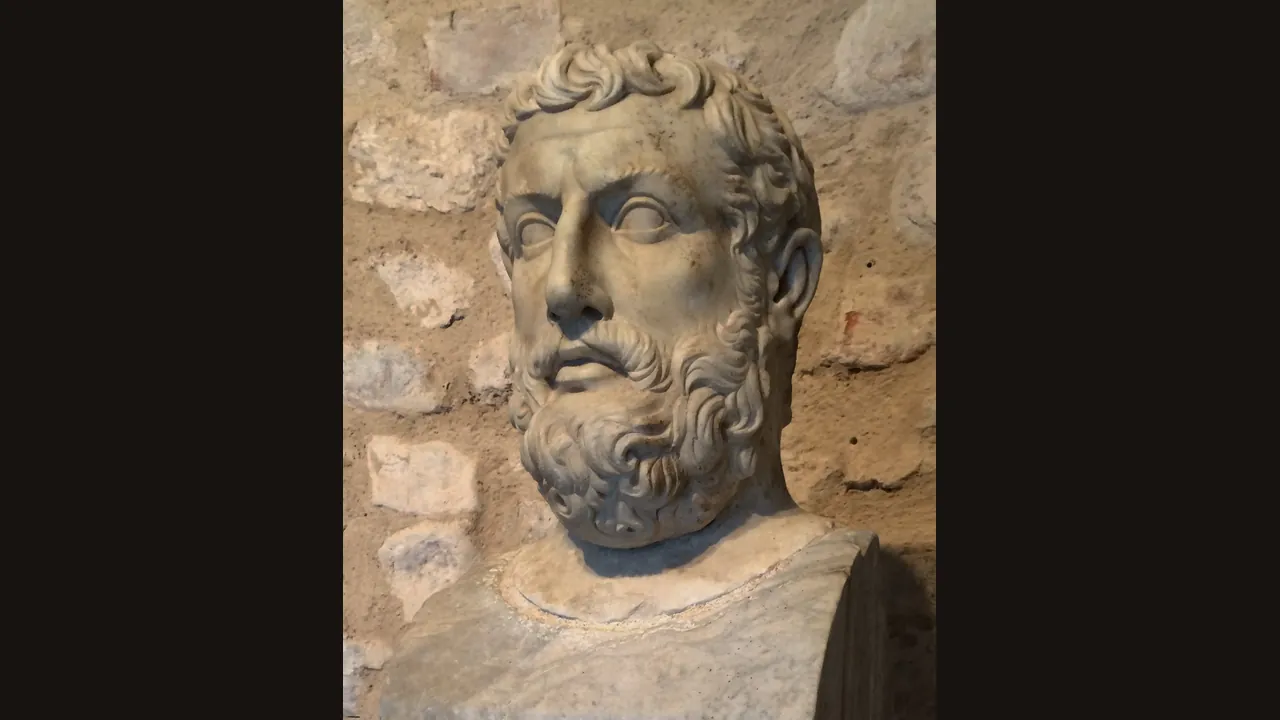
Greek thinker of Elea in southern Italy who argued, against the senses, that being is one, whole, and unchanging. His poem On Nature survives in large fragments. He lived about 515 to 450 BC and founded the Eleatic school.
Parmenides came from Elea, a Greek colony in southern Italy, and flourished in the early fifth century BC. Plato portrays the young Socrates meeting him at Athens when Parmenides was about sixty five years old, which places his birth near 515 BC. He wrote one work, a poem in hexameter verse known by the title On Nature. Large extracts survive because Simplicius, a commentator of the sixth century AD, quoted them to keep a rare text in circulation.
The poem opens with a journey. A young man rides in a chariot to the house of a goddess, who sets before him the way of truth and the way of mortal opinion. The way of truth argues from a single point: what is, is, and what is not cannot be thought or said. Being therefore cannot arise, cannot perish, and cannot change or move, because change would require it to become what it is not. The poem concludes that being is one, whole, alike in every part, and at rest, and that the changing world of the senses is a deception. The second part gives an account of appearances built on two forms, light and night.
Plato named a dialogue for Parmenides and argued with his doctrine elsewhere, and the question he forced, how change and manyness are possible at all, is the question Democritus, Plato, and Aristotle each set out to answer.
Facts
- Born
- About 515 BC, Elea, in southern Italy.
- Source: Encyclopaedia Britannica, Parmenides
- Died
- About 450 BC.
- Source: Encyclopaedia Britannica, Parmenides
- School
- Eleatic school, the strict logic of being.
- Source: Encyclopaedia Britannica, Parmenides
- Known for
- The poem On Nature, which reasons that what is cannot come from what is not, so change and plurality are illusion.
- Source: Encyclopaedia Britannica, Parmenides
Sources
- Encyclopaedia Britannica, Parmenides Source
Source links accessed 22 November 2026.
Images
Related
- ItalyConnected
- GreeceConnected
- PythagorasSame civilization
- Roman RepublicSame era
- PericlesSame era
- ProtagorasSame era
What happened elsewhere
Pairings are by recorded year, not exact simultaneity.
- Roman RepublicWhile Parmenides (around 509 BC)
- Darius IWhile Parmenides (around 522 BC)
- Classical GreeceWhile Parmenides (around 500 BC)
- Classical AthensWhile Parmenides (around 500 BC)
- HeraclitusWhile Parmenides (around 535 BC)
Meanwhile
Meanwhile, around the world — drag to spin, click a pulsing marker.
Keep reading
Test yourself
When was Parmenides born?
- About 515 BC, Elea, in southern Italy
- About 460 BC, Abdera, Greece
- About 490 BC, Abdera, Greece
- About 4 BC, Cordoba, Spain
Answer
About 515 BC, Elea, in southern Italy — Born: About 515 BC, Elea, in southern Italy.
When did Parmenides die?
- About 450 BC
- About 235 BC
- About 286 BC
- About 391 BC
Answer
About 450 BC — Died: About 450 BC.
What is Parmenides known for?
- The poem On Nature, which reasons that what is cannot come from what is not, so change and plurality are illusion
- The doctrine of the One, from which Intellect and Soul overflow, and the soul's return by contemplation
- Founding Stoicism: live according to nature, want only what is in your control, treat virtue as the sole good
- The Moral Letters, the essays on anger and the shortness of life, and tragedies that shaped Renaissance drama
Answer
The poem On Nature, which reasons that what is cannot come from what is not, so change and plurality are illusion — Known for: The poem On Nature, which reasons that what is cannot come from what is not, so change and plurality are illusion.
Which school of thought was Parmenides part of?
- Eleatic school, the strict logic of being
- Academic skepticism, with Stoic leanings in ethics
- Stoicism, named for the Stoa Poikile where he taught
- Epicureanism, taught in the Garden at Athens
Answer
Eleatic school, the strict logic of being — School: Eleatic school, the strict logic of being.
True or false: Greek thinker of Elea in southern Italy who argued, against the senses, that being is one, whole, and unchanging.
- True
- False
Answer
True — True. Greek thinker of Elea in southern Italy who argued, against the senses, that being is one, whole, and unchanging.
My notes
Highlights on this page
None yet.
Spotted an error on this page? Email [email protected] and it will be checked against the sources.