

Event · Twentieth century · Germany
The Stasi
1950–1990
Ministry for State Security of East Germany, 1950–1990. Roughly 91,000 full-time staff and on the order of 170,000–190,000 unofficial informants by 1988–89.
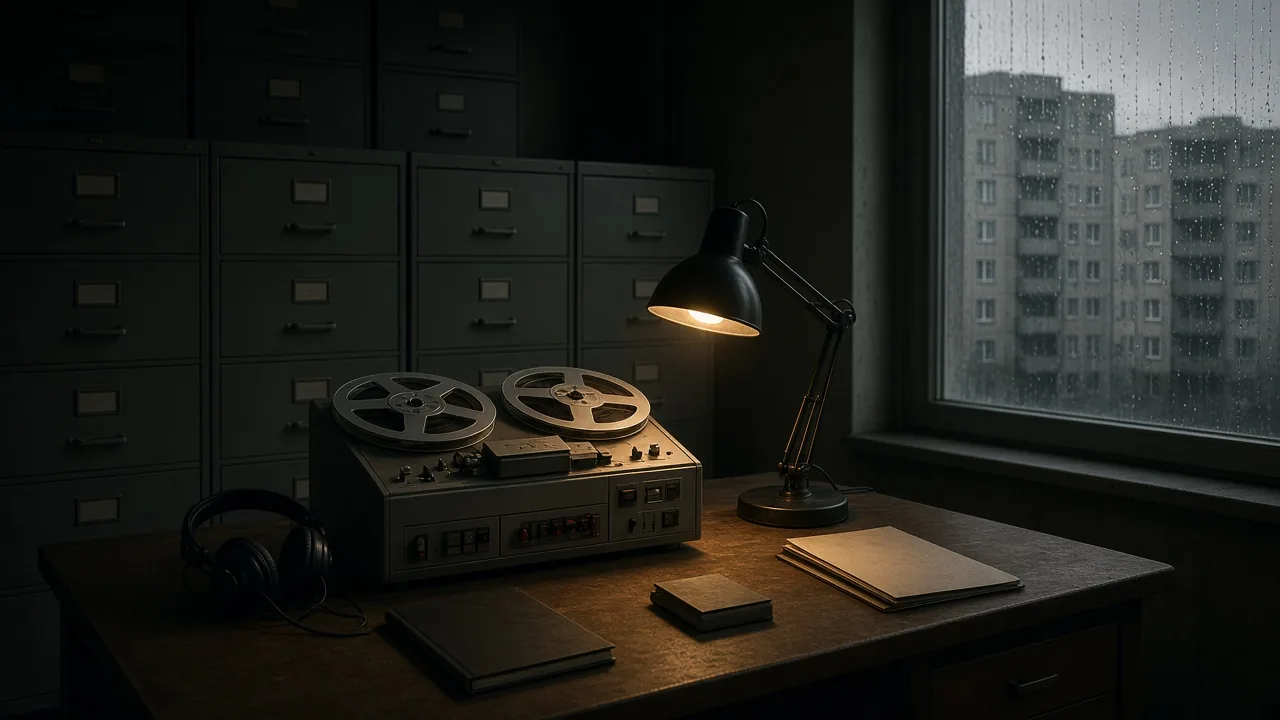
East Germany did not maintain control through a heavy armed presence on every street corner. Instead, it constructed a state apparatus built on files, covert listening devices, and formal pledges of cooperation. Founded on February 8, 1950, the Ministry for State Security, commonly known as the Stasi, was directed by Erich Mielke from November 1957 until his resignation on November 7, 1989, spanning thirty-two of the German Democratic Republic's forty-one years of existence. By 1989, the ministry employed roughly 91,000 full-time staff members. Supporting this permanent bureaucracy was a vast network of unofficial collaborators (Inoffizielle Mitarbeiter or IMs), which numbered 173,081 at the end of 1988 and reached 189,000 in 1989 according to studies by historian Helmut Müller-Enbergs accepted by the Stasi Records Archive. In a nation of approximately sixteen and a half million people, this meant roughly one active informer for every ninety citizens. Combined, full-time officers and active informers comprised between one and two percent of the total population. Popular claims alleging millions of simultaneous spies rest on a historical misconception that takes the roughly 624,000 individuals who served as IMs over the ministry's entire forty-year history and treats them as if they were active all at once.
The essence of the Stasi's control lay in its methods and technological operational capacity. At its operational peak, Department M intercepted, steamed open, inspected, and resealed approximately 90,000 letters and 4,000 packages every day, ensuring recipients remained entirely unaware that their mail had been compromised. Department 26 managed physical wiretaps and room surveillance, concealing microphones inside flowerpots and wall cavities, while deploying pinhole cameras drilled through adjacent apartment walls. The ministry also maintained a systematic scent archive (Geruchsproben). During interrogations or clandestine residential searches, agents pressed sterile cloth swatches against a suspect's clothing or chair cushions to capture body odor, sealing the samples inside airtight glass jars so tracking hounds could later follow the subject's trail. Historian Kristie Macrakis documented the use of a specialized "smell chair", an ordinary interrogation seat fitted with a removable cloth cushion that was immediately swapped and jarred the moment a subject stood up, transforming personal scent into a biological fingerprint.
Alongside its technological collection tools, the ministry operated under a specific strategic doctrine. In January 1976, Mielke issued Directive 1/76, formally establishing Zersetzung ("decomposition" or "psychological decay") as the main tool for suppressing political opposition. The strategic goal was the covert destruction of a target's life without resorting to formal arrest or trial. Directive 1/76 outlined systematic techniques: dismantling a person's social standing by blending true, damaging facts with unprovable, credible rumors; engineering targeted professional setbacks to shatter self-confidence; sowing mutual distrust inside political or social groups; and quietly severing personal relationships by reassigning targets or their associates to distant workplaces. In practice, this involved silent residential break-ins where nothing was stolen but household items were subtly moved, sending anonymous letters, sabotaging personal vehicles, mailing falsified incriminating photos to family members, and making late-night phone calls. The Stasi's official operational dictionary defined the goal of Zersetzung as fragmentation, paralysis, disorganization, and isolation. Because the state's role remained hidden, targets often suffered complete psychological breakdown, social isolation, or severe personal decline without realizing they were subjected to a government campaign.
Surveillance frequently operated within the most intimate social spheres. Civil rights activist Vera Lengsfeld, who was detained in the Hohenschönhausen remand prison and expelled to West Germany in 1988, discovered after the fall of the Berlin Wall that her husband, Knud Wollenberger, had systematically reported on her for years under the code name IM "Donald". His reports covered not only her political activities but also daily domestic conversations and details of their marriage. Lengsfeld divorced him in 1992. The ministry's reach extended into private households and family units.
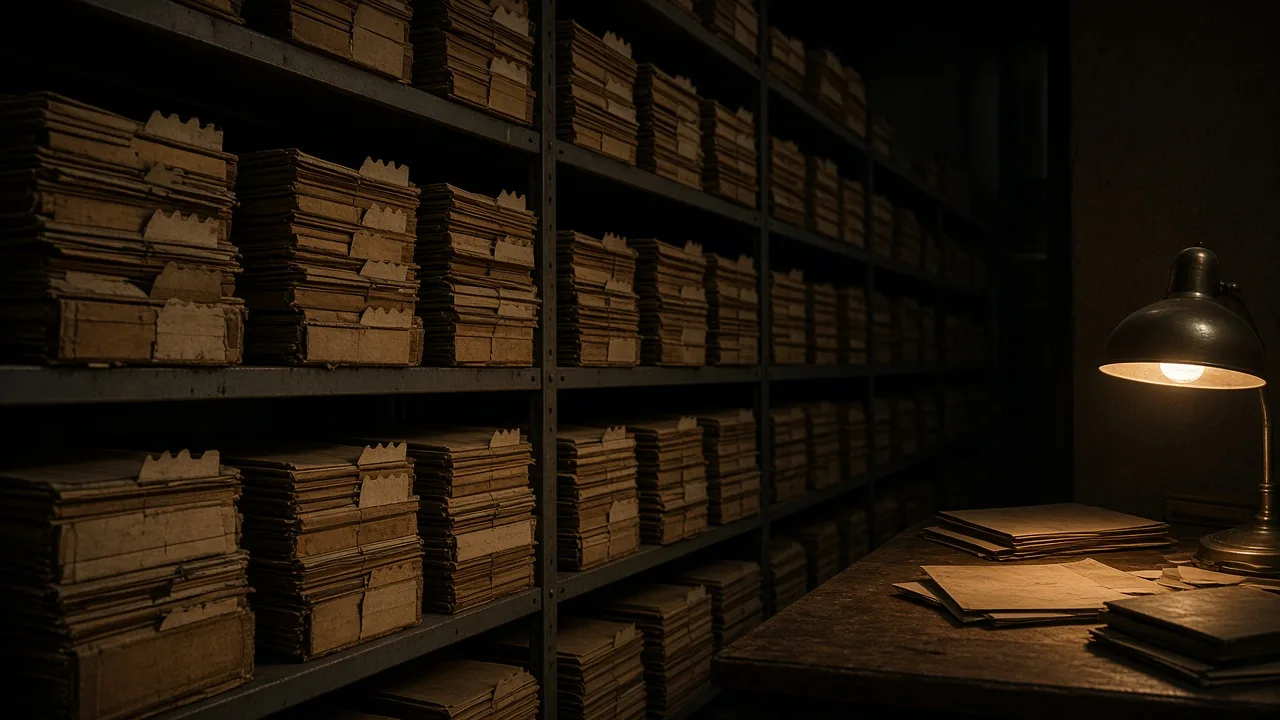
When the political system collapsed, public mobilization prevented the destruction of state records. On December 4, 1989, citizen groups occupied regional Stasi offices in Erfurt, Leipzig, and Rostock to halt the destruction of paper files. On January 15, 1990, thousands of protesters entered the central Stasi headquarters on Normannenstraße in East Berlin, seizing file rooms and establishing citizen guards to secure the archives. Although officers destroyed roughly five percent of the documentation, estimated at one billion sheets of paper, the vast majority of the record survived. The remaining archive contained 111 linear kilometers of paper files, 41 million index cards, over 1.7 million photographs, tens of thousands of audio recordings, and roughly 16,000 sacks of manually torn documents left behind when paper shredders failed.
In the aftermath of the regime's collapse, Germany implemented a unique framework for administrative transparency and historical accountability. The Stasi Records Act took effect on December 29, 1991, granting citizens legal authorization to review their personal surveillance files. Millions applied to review these records, with the agency processing nearly seven million total applications, including nearly three million requests from private citizens seeking to inspect their files. Prominent public figures uncovered extensive documentation: historian Timothy Garton Ash reviewed 325 pages compiled on him under the code name "Romeo," writer Jürgen Fuchs received thirty binders of material, and singer Wolf Biermann's file spanned forty thousand pages. The independent Stasi Records Agency operated until 2021, at which point oversight of the surviving archives was transferred to the German Federal Archives to ensure continued historical access. The Stasi was, in the end, a system of control over ordinary life.
Sources
Primary sources
- Garton Ash's own 325-page Stasi file, compiled on him under the code name 'Romeo' Timothy Garton Ash, The File: A Personal History (1997).
Secondary sources
- The Stasi's history, scale, methods, and the opening of the files after 1989 Jens Gieseke, The History of the Stasi: East Germany's Secret Police, 1945–1990 (2014).
- 173,081 unofficial collaborators at the end of 1988; about 624,000 people served as IMs across the ministry's whole history Helmut Müller-Enbergs, Inoffizielle Mitarbeiter des Ministeriums für Staatssicherheit, Teil 3: Statistiken (2008).
- Stasi spy technology, the systematic scent archive, and the 'smell chair' Kristie Macrakis, Seduced by Secrets: Inside the Stasi's Spy-Tech World (2008).
Facts
- Founded
- 8 February 1950.
- Source: Encyclopaedia Britannica, Stasi
- Minister
- Erich Mielke, November 1957–November 1989.
- Source: Stasi Records Archive / standard histories
- Scale
- About 91,000 full-time employees (1989); about 173,000–189,000 unofficial collaborators (IM) in 1988–89.
- Source: Helmut Müller-Enbergs; BStU figures
Sources
- Helmut Müller-Enbergs; BStU figures
- Stasi Records Archive / standard histories
- Encyclopaedia Britannica, Stasi Source
Source links accessed 22 November 2026.
Images
Related
- Berlin WallConnected
- GermanyConnected
- Twentieth centuryConnected
- People's Republic of ChinaSame era
- Great Leap ForwardSame era
- Second Sino-Japanese WarSame era
What happened elsewhere
Pairings are by recorded year, not exact simultaneity.
- GuamWhile The Stasi (1950)
- People's Republic of ChinaWhile The Stasi (1949)
- BhutanWhile The Stasi (1949)
- ChinaWhile The Stasi (1949)
- TaiwanWhile The Stasi (1949)
Meanwhile
Meanwhile, around the world — drag to spin, click a pulsing marker.
Keep reading
My notes
Highlights on this page
None yet.
Spotted an error on this page? Email [email protected] and it will be checked against the sources.