

Philosopher · Classical antiquity · Zhou dynasty · China
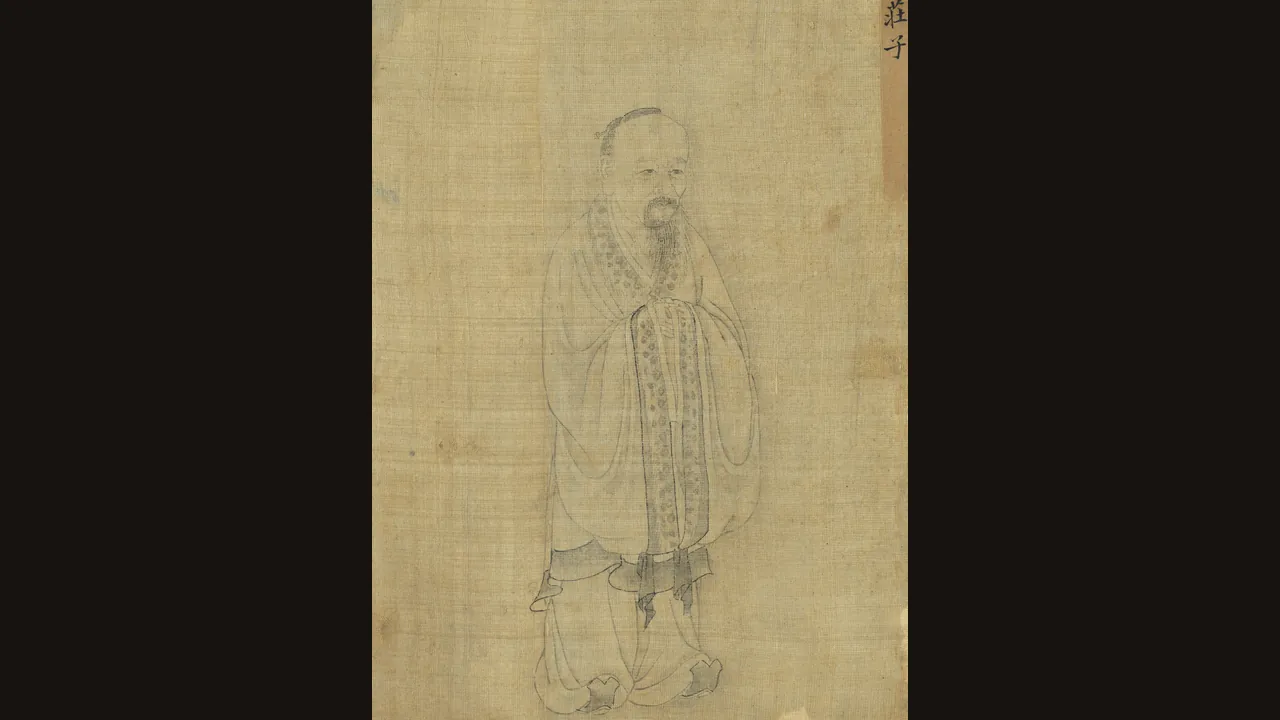
Zhuangzi
c. 369–c. 286 BC
Chinese Daoist thinker, second only to Laozi in the tradition, whose book of parables and dialogues is a masterpiece of world literature. He taught the relativity of all viewpoints. He lived about 369 to 286 BC.
Zhuangzi, Zhuang Zhou, lived about 369 to 286 BC and came from Meng, in the state of Song. Sima Qian's biography says he held a post at a lacquer garden and lived in poverty by choice. The same biography tells of an offer from the king of Chu, who offered him the chief ministry of the state. Zhuangzi is made to answer that he would rather drag his tail in the mud, like the sacred tortoise, than hold office and be bound.
The book that bears his name has 33 chapters. Scholars generally assign the first seven, the inner chapters, to Zhuangzi himself, and treat the outer and miscellaneous chapters as the work of followers and other hands. Zhuangzi argues through stories, dialogues, and jokes. The second chapter, on making all things equal, works through the claim that distinctions between right and wrong, great and small, life and death depend on the standpoint of the judge. It closes with the butterfly dream: Zhuangzi dreamed he was a butterfly, woke, and posed the question whether he had dreamed the butterfly or the butterfly was now dreaming him. Other pieces carry the same argument. The useless tree escapes the carpenter because its wood has no value, and Cook Ding carves an ox without dulling his blade because he follows the natural structure of the animal. The book counsels fasting of the mind.
Facts
- Born
- About 369 BC, in the state of Song, China.
- Source: Encyclopaedia Britannica, Zhuangzi
- Died
- About 286 BC.
- Source: Encyclopaedia Britannica, Zhuangzi
- School
- Daoism, its skeptical and literary wing.
- Source: Encyclopaedia Britannica, Zhuangzi
- Known for
- The butterfly dream: did he dream he was a butterfly, or is a butterfly dreaming it is him. And the useless tree that survives because no carpenter wants it.
- Source: Encyclopaedia Britannica, Zhuangzi
Sources
- Encyclopaedia Britannica, Zhuangzi Source
Source links accessed 22 November 2026.
Images
Related
What happened elsewhere
Pairings are by recorded year, not exact simultaneity.
- RepublicWhile Zhuangzi (around 375 BC)
- PyrrhoWhile Zhuangzi (around 360 BC)
- Alexander the GreatWhile Zhuangzi (around 356 BC)
- AristotleWhile Zhuangzi (around 384 BC)
- EpicurusWhile Zhuangzi (around 341 BC)
Meanwhile
Meanwhile, around the world — drag to spin, click a pulsing marker.
Keep reading
Test yourself
When was Zhuangzi born?
- About 369 BC, in the state of Song, China
- About 490 BC, Abdera, Greece
- 341 BC, Samos, Greece
- About 204, probably Lycopolis, Egypt
Answer
About 369 BC, in the state of Song, China — Born: About 369 BC, in the state of Song, China.
When did Zhuangzi die?
- About 286 BC
- About 235 BC
- About 270 BC
- About 289 BC
Answer
About 286 BC — Died: About 286 BC.
Which school of thought was Zhuangzi part of?
- Daoism, its skeptical and literary wing
- Cynicism, the practice of shamelessness and self sufficiency
- Stoicism, practiced from the throne
- Stoicism, freed from theory into practice
Answer
Daoism, its skeptical and literary wing — School: Daoism, its skeptical and literary wing.
True or false: Chinese Daoist thinker, second only to Laozi in the tradition, whose book of parables and dialogues is a masterpiece of world literature.
- True
- False
Answer
True — True. Chinese Daoist thinker, second only to Laozi in the tradition, whose book of parables and dialogues is a masterpiece of world literature.
My notes
Highlights on this page
None yet.
Spotted an error on this page? Email [email protected] and it will be checked against the sources.