

Philosopher · Classical antiquity · Zhou dynasty · China
Mencius
c. 372–c. 289 BC
Chinese Confucian thinker, the second sage of the tradition after Confucius, who taught that human nature is good and that a ruler who fails to secure the people's welfare loses the Mandate of Heaven. His conversations with kings were collected as the book Mencius. He lived about 372 to 289 BC.
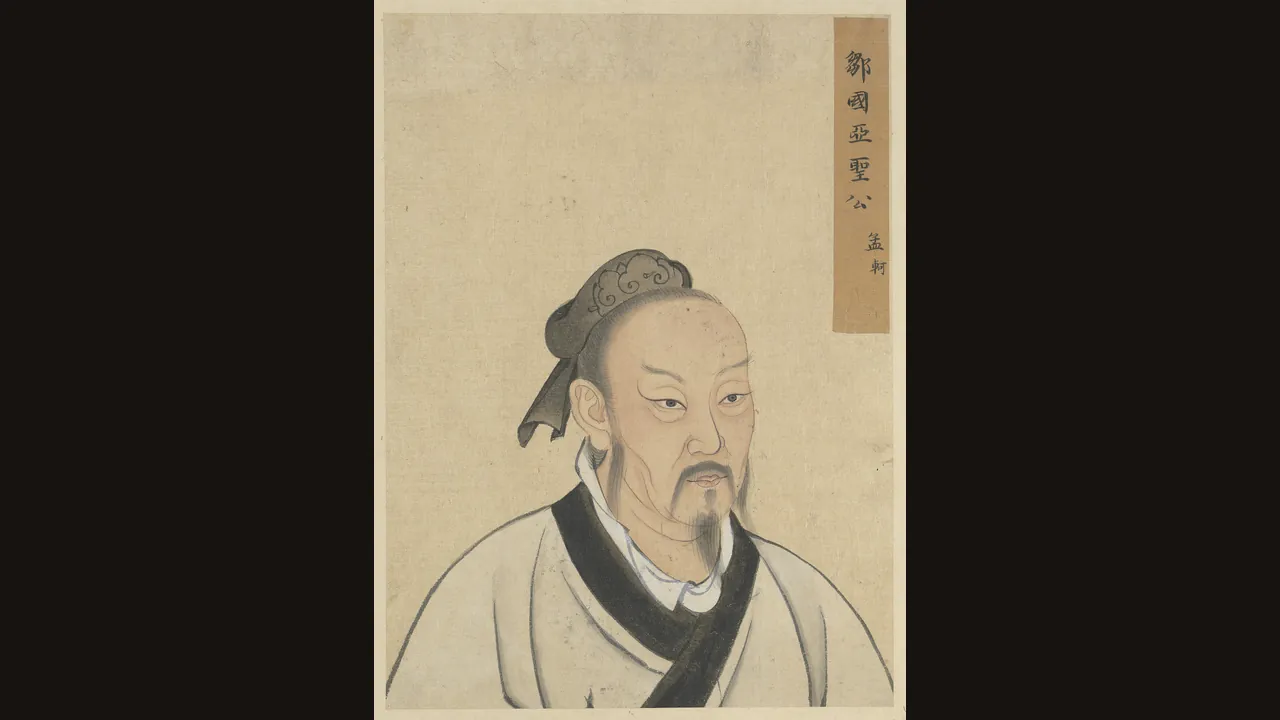
Mencius, Meng Ke, lived about 372 to 289 BC and came from Zou, a small state near the home of Confucius. Tradition places his schooling in the line of teaching that ran from Zisi, the grandson of Confucius. He travelled from court to court offering counsel to rulers, among them King Hui of Liang and King Xuan of Qi. He retired and taught students, and his conversations were gathered after his death into the book that carries his name, arranged in seven books.
Mencius taught that human nature is good. He held that every person carries four sprouts of virtue: compassion, the sprout of benevolence; shame and dislike, the sprout of righteousness; courtesy and deference, the sprout of ritual propriety; and approval and disapproval, the sprout of wisdom. He offered the case of a man who sees a child about to fall into a well and feels alarm without thought of reward. He taught that a ruler must give the people a constant livelihood through well ordered fields and light taxes before schools can teach them, and that rule by moral force defeats rule by arms. Asked about the killing of the tyrant Zhou, he answered that a man who mutilates benevolence and righteousness is a mere fellow, and that he had heard of the punishment of the fellow Zhou and not of the murder of a ruler.
Facts
- Born
- About 372 BC, in the state of Zou, China.
- Source: Encyclopaedia Britannica, Mencius
- Died
- About 289 BC.
- Source: Encyclopaedia Britannica, Mencius
- School
- Confucianism, its idealist wing.
- Source: Encyclopaedia Britannica, Mencius
- Known for
- The doctrine that human nature tends to good as water tends downhill, and that a ruler who starves his people loses the mandate to rule.
- Source: Encyclopaedia Britannica, Mencius
Sources
- Encyclopaedia Britannica, Mencius Source
Source links accessed 22 November 2026.
Images
Related
What happened elsewhere
Pairings are by recorded year, not exact simultaneity.
- RepublicWhile Mencius (around 375 BC)
- AristotleWhile Mencius (around 384 BC)
- PyrrhoWhile Mencius (around 360 BC)
- Alexander the GreatWhile Mencius (around 356 BC)
- EpicurusWhile Mencius (around 341 BC)
Meanwhile
Meanwhile, around the world — drag to spin, click a pulsing marker.
Keep reading
Test yourself
When was Mencius born?
- About 372 BC, in the state of Zou, China
- About 515 BC, Elea, in southern Italy
- About 490 BC, Abdera, Greece
- About 334 BC, Citium, Cyprus
Answer
About 372 BC, in the state of Zou, China — Born: About 372 BC, in the state of Zou, China.
When did Mencius die?
- About 289 BC
- About 270 BC
- About 391 BC
- About 370 BC
Answer
About 289 BC — Died: About 289 BC.
What is Mencius known for?
- The doctrine that human nature tends to good as water tends downhill, and that a ruler who starves his people loses the mandate to rule
- The Meditations, twelve books of self examination, and the last of the Five Good Emperors
- Impartial care, the condemnation of aggressive war, frugality in ritual, and early work on logic and optics
- The doctrine of the One, from which Intellect and Soul overflow, and the soul's return by contemplation
Answer
The doctrine that human nature tends to good as water tends downhill, and that a ruler who starves his people loses the mandate to rule — Known for: The doctrine that human nature tends to good as water tends downhill, and that a ruler who starves his people loses the mandate to rule.
Which school of thought was Mencius part of?
- Confucianism, its idealist wing
- Academic skepticism, with Stoic leanings in ethics
- Stoicism, named for the Stoa Poikile where he taught
- Pyrrhonist skepticism
Answer
Confucianism, its idealist wing — School: Confucianism, its idealist wing.
My notes
Highlights on this page
None yet.
Spotted an error on this page? Email [email protected] and it will be checked against the sources.