

Civilization · Classical antiquity · Mauryan Empire
Mauryan Empire
c. 322–185 BCE
The Mauryan Empire was the first to unite nearly all of India. Chandragupta founded it as Alexander's empire crumbled. His grandson Ashoka, after a bloody conquest, embraced Buddhism and ruled by moral law.
Chandragupta Maurya founded the Mauryan Empire about 322 BCE by overthrowing the Nanda dynasty of Magadha in the Ganges valley. About 305 BCE he made a treaty with Seleucus, the Greek king of Babylon, taking the lands west of the Indus in return for 500 elephants. From his capital at Pataliputra, near modern Patna, he ruled most of the subcontinent.
The empire governed through royal princes posted to provincial capitals, district officers who collected land revenue, and a standing army paid from the treasury. A treatise on statecraft, the Arthashastra, passed down under the name of Chandragupta's minister Kautilya, describes tax rates, state monopolies, courts, and networks of spies. Megasthenes, the Seleucid envoy at court, described Pataliputra's wooden walls and committees of officials in a work that survives in quotations.
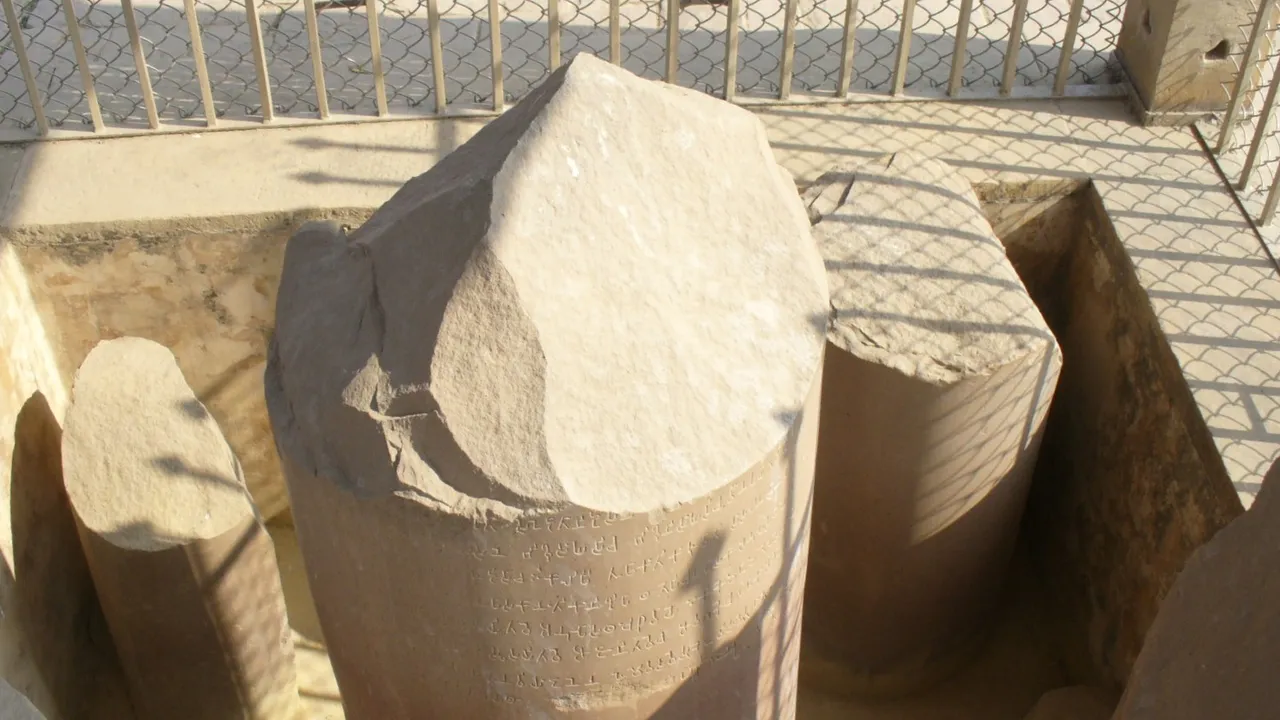
Chandragupta's grandson Ashoka, who reigned about 268 to 232 BCE, conquered Kalinga on the east coast. His own rock edict states that the war killed 100,000 people and carried off 150,000 more. Ashoka then published edicts in Prakrit, Greek, and Aramaic across the empire, ordering fair treatment of subjects and funding wells, roads, and medical care. After his death the empire shrank under later kings, and in 185 BCE the commander Pushyamitra killed the last Mauryan king and took the throne.
Facts
- Founded
- c. 322 BCE, Chandragupta Maurya seized power.
- Source: Encyclopaedia Britannica, Mauryan Empire
- Ended
- 185 BCE, the last Mauryan assassinated.
- Source: Encyclopaedia Britannica, Mauryan Empire
- Heartland
- Northern India, capital Pataliputra.
- Source: Encyclopaedia Britannica, Mauryan Empire
- Major rulers
- Chandragupta Maurya, the founder; Ashoka the Great, who spread Buddhism across Asia.
- Source: Encyclopaedia Britannica, Mauryan Empire
Sources
- Encyclopaedia Britannica, Mauryan Empire Source
Source links accessed 22 November 2026.
Images
Related
- Zeno of CitiumSame era
- XunziSame era
- EpicurusSame era
- Alexander the GreatSame era
- PyrrhoSame era
- Han FeiziSame era
What happened elsewhere
Pairings are by recorded year, not exact simultaneity.
- Zeno of CitiumWhile Mauryan Empire (around 334 BC)
- XunziWhile Mauryan Empire (around 310 BC)
- EpicurusWhile Mauryan Empire (around 341 BC)
- Alexander the GreatWhile Mauryan Empire (around 356 BC)
- PyrrhoWhile Mauryan Empire (around 360 BC)
Meanwhile
Meanwhile, around the world — drag to spin, click a pulsing marker.
Keep reading
Test yourself
When was Mauryan Empire founded?
- c. 322 BCE, Chandragupta Maurya seized power
- 224 CE, Ardashir I overthrew the Parthians
- 247 BCE, Arsaces I founded the dynasty
- c. 320 CE, Chandragupta I founded the dynasty
Answer
c. 322 BCE, Chandragupta Maurya seized power — Founded: c. 322 BCE, Chandragupta Maurya seized power.
When did Mauryan Empire end?
- 185 BCE, the last Mauryan assassinated
- 224 CE, overthrown by the Sassanian Ardashir I
- 651 CE, the last king killed; Persia became Muslim
- 206 BCE, collapsed in rebellion after the emperor's death
Answer
185 BCE, the last Mauryan assassinated — Ended: 185 BCE, the last Mauryan assassinated.
Where was the heartland of Mauryan Empire?
- Northern India, capital Pataliputra
- Italy, capital Rome
- The Mediterranean, capital Rome, later Constantinople in the east
- Persia and Mesopotamia, capital Ctesiphon
Answer
Northern India, capital Pataliputra — Heartland: Northern India, capital Pataliputra.
True or false: The Mauryan Empire was the first to unite nearly all of India.
- True
- False
Answer
True — True. The Mauryan Empire was the first to unite nearly all of India.
My notes
Highlights on this page
None yet.
Spotted an error on this page? Email [email protected] and it will be checked against the sources.