

Philosopher · Classical antiquity · Qin dynasty · China
Han Feizi
c. 280–233 BC
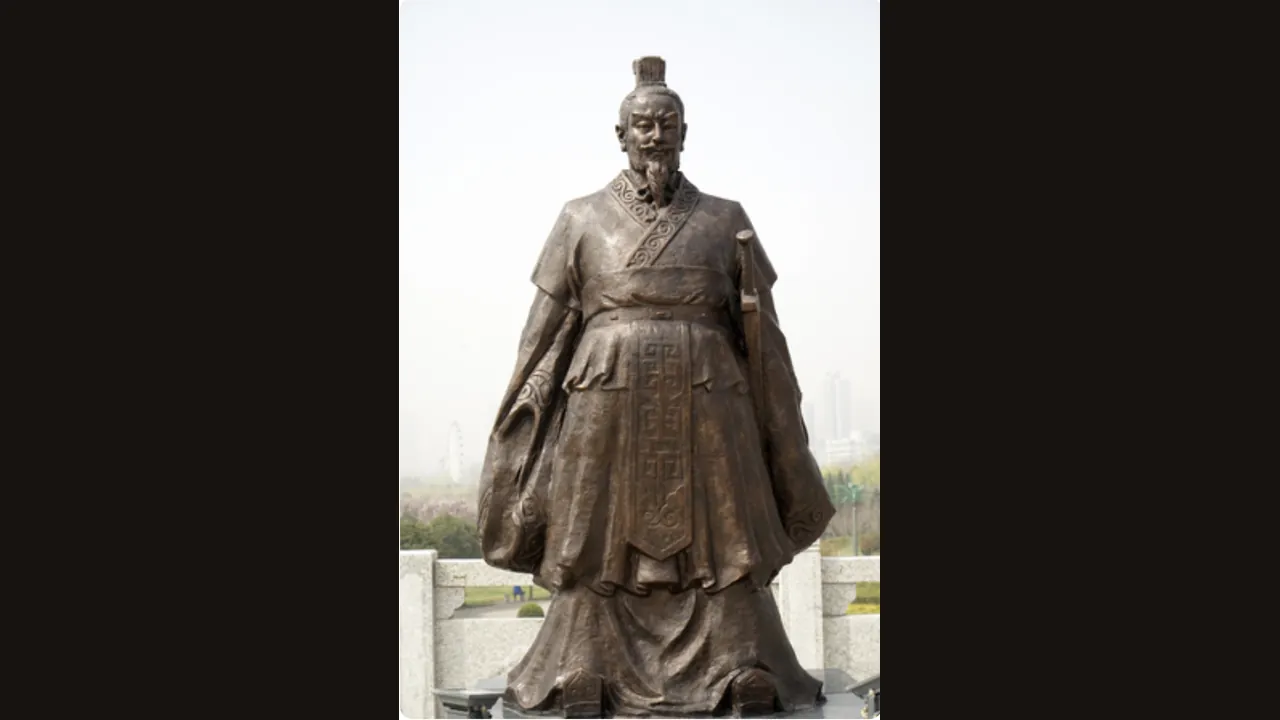
Chinese thinker of the royal house of the Han state who wrote the classic of Legalism, teaching that the ruler holds power by law, method, and position. He died in a Qin prison in 233 BC, likely forced to suicide by his fellow student Li Si.
Han Feizi, Han Fei, lived about 280 to 233 BC and was a prince of the royal house of Han. He studied under Xunzi together with Li Si. Sima Qian reports that he stammered and argued in writing instead of speech. In 234 BC the king sent him as an envoy to Qin. Li Si and Yao Jia argued against trusting him at the Qin court, and he was imprisoned. Sima Qian's account says Li Si sent him poison and he died in prison in 233 BC. His writings survive as the Han Feizi, 55 chapters.
The Han Feizi presents a complete statement of Legalism, joining three elements from earlier thinkers. Fa is law: published standards, rewards, and penalties applied to all without exception for rank. Shu is method: the technique by which the ruler controls his officials and the holding of the two handles of reward and punishment in the ruler's own hands. Shi is the power of position: authority flows from the throne a man occupies, and even an average ruler holds his state when he keeps to his position. Ministers and subjects act from calculation of profit and harm, so the ruler conceals his likes and dislikes and never relies on men being good. He argued that times change and old methods fail with them, mocking the man who waits by a stump for a second rabbit.
Facts
- Born
- About 280 BC, of the royal house of the Han state, China.
- Source: Encyclopaedia Britannica, Han Feizi
- Died
- 233 BC, in prison in the state of Qin.
- Source: Encyclopaedia Britannica, Han Feizi
- School
- Legalism, the doctrine of the strong state.
- Source: Encyclopaedia Britannica, Han Feizi
- Known for
- The book Han Feizi: rule by published law, secret method, and the sheer position of power, with no trust in virtue.
- Source: Encyclopaedia Britannica, Han Feizi
Sources
- Encyclopaedia Britannica, Han Feizi Source
Source links accessed 22 November 2026.
Images
Related
- XunziConnected
- ChinaConnected
- Qin Shi HuangSame civilization
- Qin dynastySame civilization
- AshokaSame era
- Parthian EmpireSame era
What happened elsewhere
Pairings are by recorded year, not exact simultaneity.
- AshokaWhile Han Feizi (around 268 BC)
- Parthian EmpireWhile Han Feizi (around 247 BC)
- Mauryan EmpireWhile Han Feizi (around 322 BC)
- Zeno of CitiumWhile Han Feizi (around 334 BC)
- EpicurusWhile Han Feizi (around 341 BC)
Meanwhile
Meanwhile, around the world — drag to spin, click a pulsing marker.
Keep reading
Test yourself
When was Han Feizi born?
- About 280 BC, of the royal house of the Han state, China
- About 360 BC, Elis, Greece
- About 4 BC, Cordoba, Spain
- About 515 BC, Elea, in southern Italy
Answer
About 280 BC, of the royal house of the Han state, China — Born: About 280 BC, of the royal house of the Han state, China.
When did Han Feizi die?
- 233 BC, in prison in the state of Qin
- About 262 BC, Athens
- 270, in Campania, Italy
- 270 BC, Athens
Answer
233 BC, in prison in the state of Qin — Died: 233 BC, in prison in the state of Qin.
What is Han Feizi known for?
- The book Han Feizi: rule by published law, secret method, and the sheer position of power, with no trust in virtue
- Living in a tub, carrying a lantern in daylight looking for an honest man, and telling Alexander to stand out of his sunlight. The stories are later, not records
- The doctrine that human nature tends to good as water tends downhill, and that a ruler who starves his people loses the mandate to rule
- The poem On Nature, which reasons that what is cannot come from what is not, so change and plurality are illusion
Answer
The book Han Feizi: rule by published law, secret method, and the sheer position of power, with no trust in virtue — Known for: The book Han Feizi: rule by published law, secret method, and the sheer position of power, with no trust in virtue.
Which school of thought was Han Feizi part of?
- Legalism, the doctrine of the strong state
- Cynicism, the practice of shamelessness and self sufficiency
- Atomism, developed from his teacher Leucippus
- Stoicism, named for the Stoa Poikile where he taught
Answer
Legalism, the doctrine of the strong state — School: Legalism, the doctrine of the strong state.
True or false: Chinese thinker of the royal house of the Han state who wrote the classic of Legalism, teaching that the ruler holds power by law, method, and position.
- True
- False
Answer
True — True. Chinese thinker of the royal house of the Han state who wrote the classic of Legalism, teaching that the ruler holds power by law, method, and position.
My notes
Highlights on this page
None yet.
Spotted an error on this page? Email [email protected] and it will be checked against the sources.