

Philosopher · Classical antiquity · Roman Empire · Spain
Seneca
c. 4 BC–65 AD
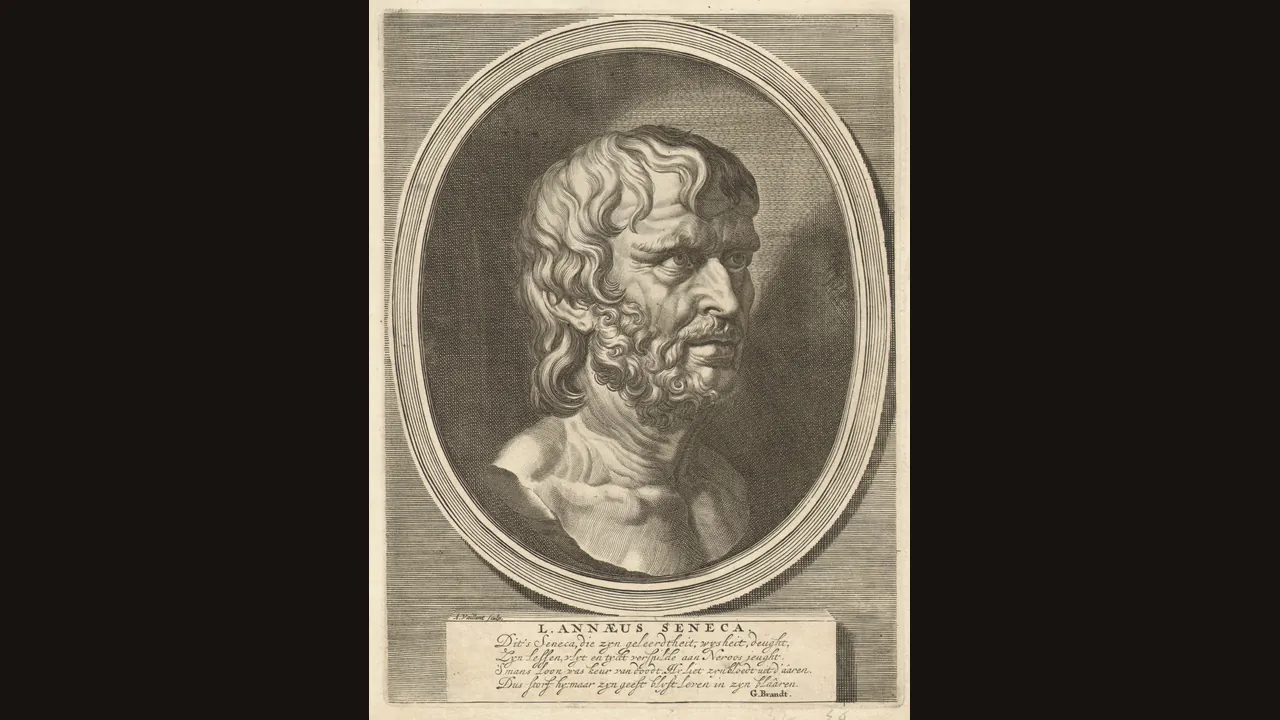
Roman Stoic born at Cordoba in Spain who became tutor and then chief minister to the emperor Nero. His Letters to Lucilius are the most readable Stoic text from antiquity. Accused of plotting against Nero, he was ordered to take his own life in 65 AD.
Seneca was born at Cordoba in Spain in about 4 BC and was educated at Rome, where his teachers included the Stoic Papirius Fabianus. In 41 AD the emperor Claudius exiled him to Corsica on a charge of adultery. Recalled in 49, he became tutor to the young Nero and, once Nero took the throne in 54, his adviser and speechwriter. He grew rich in imperial service, withdrew from court in 62, and in 65, after the failed Pisonian conspiracy, Nero ordered him to take his own life. He obeyed.
Seneca's surviving works are the essays called the Dialogues, the treatise On Clemency addressed to Nero, On Benefits, the Natural Questions on weather and the heavens, and 124 Letters to Lucilius from his retirement. He taught Stoic doctrine in a practical form. Virtue alone secures happiness, and wealth, health, and reputation are indifferents, preferred or dispreferred, rather than goods and evils. The Letters press the use of time, the nightly review of one's deeds, and the rehearsal of death and poverty as training against fortune. On Anger calls anger a brief madness and urges delay before punishment. His tragedies, among them Medea and Thyestes, stage passion and revenge in verse.
Facts
- Born
- About 4 BC, Cordoba, Spain.
- Source: Encyclopaedia Britannica, Seneca
- Died
- 65 AD, ordered to commit suicide after the Pisonian conspiracy.
- Source: Encyclopaedia Britannica, Seneca
- School
- Stoicism, in its Roman practical form.
- Source: Encyclopaedia Britannica, Seneca
- Known for
- The Moral Letters, the essays on anger and the shortness of life, and tragedies that shaped Renaissance drama.
- Source: Encyclopaedia Britannica, Seneca
Sources
- Encyclopaedia Britannica, Seneca Source
Source links accessed 22 November 2026.
Images
Related
- ItalyConnected
- Zeno of CitiumConnected
- EpictetusConnected
- Marcus AureliusConnected
- Roman EmpireSame civilization
- AugustusSame civilization
Meanwhile
Meanwhile, around the world — drag to spin, click a pulsing marker.
Keep reading
Test yourself
When was Seneca born?
- About 4 BC, Cordoba, Spain
- 106 BC, Arpinum, Italy
- About 280 BC, of the royal house of the Han state, China
- 121, Rome, Italy
Answer
About 4 BC, Cordoba, Spain — Born: About 4 BC, Cordoba, Spain.
When did Seneca die?
- 65 AD, ordered to commit suicide after the Pisonian conspiracy
- About 420 BC
- About 262 BC, Athens
- About 235 BC
Answer
65 AD, ordered to commit suicide after the Pisonian conspiracy — Died: 65 AD, ordered to commit suicide after the Pisonian conspiracy.
What is Seneca known for?
- The Moral Letters, the essays on anger and the shortness of life, and tragedies that shaped Renaissance drama
- Living in a tub, carrying a lantern in daylight looking for an honest man, and telling Alexander to stand out of his sunlight. The stories are later, not records
- Suspension of judgment: since things are undecidable, the wise withhold assent and gain tranquility
- The book Han Feizi: rule by published law, secret method, and the sheer position of power, with no trust in virtue
Answer
The Moral Letters, the essays on anger and the shortness of life, and tragedies that shaped Renaissance drama — Known for: The Moral Letters, the essays on anger and the shortness of life, and tragedies that shaped Renaissance drama.
Which school of thought was Seneca part of?
- Stoicism, in its Roman practical form
- Academic skepticism, with Stoic leanings in ethics
- Neoplatonism, built from Plato with Stoic and Aristotelian parts
- Eleatic school, the strict logic of being
Answer
Stoicism, in its Roman practical form — School: Stoicism, in its Roman practical form.
True or false: Roman Stoic born at Cordoba in Spain who became tutor and then chief minister to the emperor Nero.
- True
- False
Answer
True — True. Roman Stoic born at Cordoba in Spain who became tutor and then chief minister to the emperor Nero.
My notes
Highlights on this page
None yet.
Spotted an error on this page? Email [email protected] and it will be checked against the sources.