

Philosopher · High and Late Middle Ages · Al Andalus · Spain
Maimonides
1138–1204
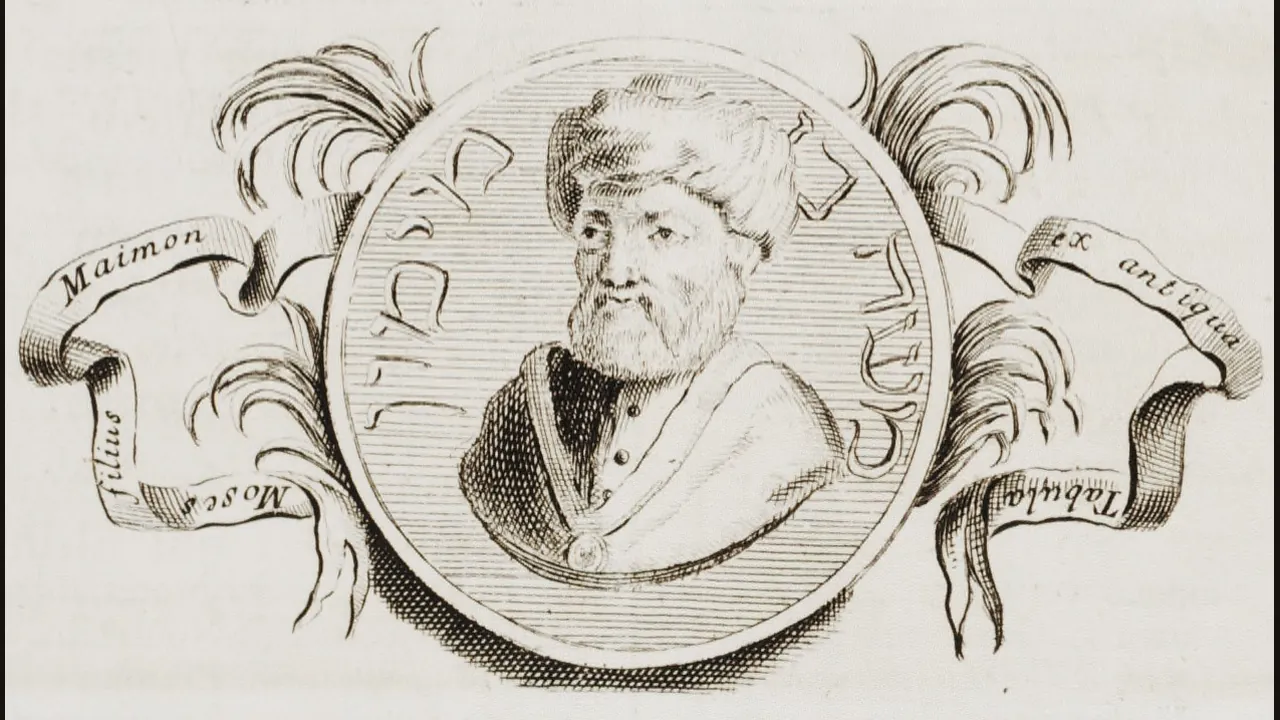
Jewish philosopher, rabbi, and physician born at Cordoba who fled persecution and settled at Fustat in Egypt, where he served Saladin's court. His Guide for the Perplexed joins Aristotle to the Torah. He lived 1138 to 1204.
Maimonides, Moses ben Maimon, was born at Cordoba in 1138. The Almohad conquest of the city in 1148 set his family moving for years through Spain and Morocco. About 1165 he settled at Fustat, beside Cairo, and spent the rest of his life there. He became head of the Jewish community of Egypt and a widely consulted authority on Jewish law. He also practised medicine, serving as physician to al Qadi al Fadil, chief minister of Saladin. He wrote most of his works in Judeo Arabic, Arabic in Hebrew letters, and his great code in Hebrew. He died at Fustat in 1204.
His Commentary on the Mishnah, finished in 1168, contains his thirteen principles of faith, among them the existence and unity of God and the truth of prophecy. The Mishneh Torah, completed about 1180, arranges Jewish law in fourteen books by subject. The Guide for the Perplexed, finished about 1190, addresses readers trained in philosophy who find scripture at odds with reason. He taught that biblical words spoken of God, such as hand or anger, carry none of their human sense when applied to him, and that God is described most safely by negations. He held that Aristotle had not demonstrated the eternity of the world, treated prophecy as a perfection of intellect and imagination together. His Eight Chapters presents ethics as the mean between extremes of character.
Facts
- Born
- 1138, Cordoba, Spain.
- Source: Encyclopaedia Britannica, Maimonides
- Died
- 1204, Fustat, Egypt.
- Source: Encyclopaedia Britannica, Maimonides
- School
- Jewish Aristotelianism.
- Source: Encyclopaedia Britannica, Maimonides
- Known for
- The Guide for the Perplexed, the Mishneh Torah code of Jewish law, and the thirteen principles of faith.
- Source: Encyclopaedia Britannica, Maimonides
Sources
- Encyclopaedia Britannica, Maimonides Source
Source links accessed 22 November 2026.
Images
Related
What happened elsewhere
Pairings are by recorded year, not exact simultaneity.
- SaladinWhile Maimonides (around 1137)
- PortugalWhile Maimonides (1139)
- Zhu XiWhile Maimonides (1130)
- Frederick BarbarossaWhile Maimonides (around 1122)
- Genghis KhanWhile Maimonides (around 1162)
Meanwhile
Meanwhile, around the world — drag to spin, click a pulsing marker.
Keep reading
Test yourself
When was Maimonides born?
- 1138, Cordoba, Spain
- About 1287, Ockham, Surrey, England
- 1225, Roccasecca, near Aquino, Italy
- 1130, Youxi, Fujian, China
Answer
1138, Cordoba, Spain — Born: 1138, Cordoba, Spain.
When did Maimonides die?
- 1204, Fustat, Egypt
- 1406, Cairo, Egypt
- 1198, Marrakesh, Morocco
- 1111, Tus
Answer
1204, Fustat, Egypt — Died: 1204, Fustat, Egypt.
What is Maimonides known for?
- The Guide for the Perplexed, the Mishneh Torah code of Jewish law, and the thirteen principles of faith
- The great commentaries on Aristotle and The Incoherence of the Incoherence, his reply to Al Ghazali defending philosophy
- The ontological argument: God, defined as that than which nothing greater can be thought, must exist even in reality. Also Cur Deus Homo, on why God became man
- The Muqaddimah and its theory of asabiyyah, group feeling, which binds tribes into states and loosens as luxury corrupts them
Answer
The Guide for the Perplexed, the Mishneh Torah code of Jewish law, and the thirteen principles of faith — Known for: The Guide for the Perplexed, the Mishneh Torah code of Jewish law, and the thirteen principles of faith.
Which school of thought was Maimonides part of?
- Jewish Aristotelianism
- Scholasticism; nominalism, the denial that universals exist outside the mind
- Neo Confucianism, the school of principle
- Asharite theology, joined to Sufi mysticism
Answer
Jewish Aristotelianism — School: Jewish Aristotelianism.
True or false: Jewish philosopher, rabbi, and physician born at Cordoba who fled persecution and settled at Fustat in Egypt, where he served Saladin's court.
- True
- False
Answer
True — True. Jewish philosopher, rabbi, and physician born at Cordoba who fled persecution and settled at Fustat in Egypt, where he served Saladin's court.
My notes
Highlights on this page
None yet.
Spotted an error on this page? Email [email protected] and it will be checked against the sources.