

Philosopher · High and Late Middle Ages · Al Andalus · Spain
Averroes
1126–1198
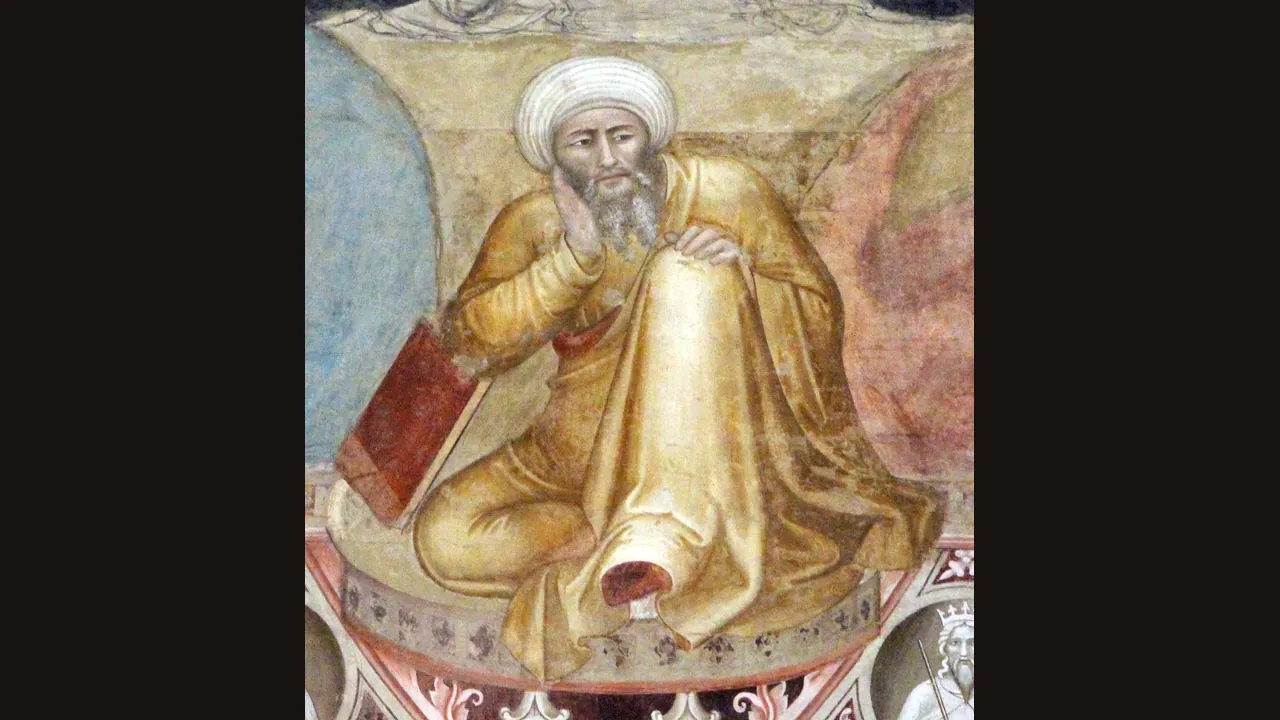
Cordoban philosopher, judge, and physician whose line by line commentaries on Aristotle earned him the Latin name the Commentator. He argued that philosophy and revelation agree. He lived 1126 to 1198 and ended his life in disfavor.
Averroes was born at Cordoba in 1126 into a family of Maliki judges; his grandfather had served as chief judge of the city. He studied law, medicine, and philosophy, and in 1169 he became judge of Seville and later chief judge of Cordoba. The Almohad caliph Abu Yusuf Yaqub set him to work on Aristotle as his court physician. About 1195 the caliph's court turned against philosophy: Averroes was exiled to Lucena, and copies of his books were burned. He returned to favor before his death at Marrakesh in 1198.
Averroes wrote short, middle, and long commentaries on nearly all of Aristotle, paraphrasing the text in the short works and quoting and explaining it passage by passage in the long ones. His Decisive Treatise argues from the Quran itself that the law commands the study of philosophy for those trained in demonstration, and that where a demonstrated conclusion and the plain sense of scripture part, scripture admits interpretation, a task reserved to the demonstrative class. The Incoherence of the Incoherence answers Al Ghazali's attack on the philosophers point by point and defends necessary causation. On the intellect he taught that the material intellect, which receives the intelligible forms, is one separate substance shared by all human beings, while the powers bound to each body perish with it. His medical summa, the Colliget, sets out anatomy, health, and disease.
Facts
- Born
- 1126, Cordoba, Spain.
- Source: Encyclopaedia Britannica, Averroës
- Died
- 1198, Marrakesh, Morocco.
- Source: Encyclopaedia Britannica, Averroës
- School
- Islamic Aristotelianism, against the theologians.
- Source: Encyclopaedia Britannica, Averroës
- Known for
- The great commentaries on Aristotle and The Incoherence of the Incoherence, his reply to Al Ghazali defending philosophy.
- Source: Encyclopaedia Britannica, Averroës
Sources
- Encyclopaedia Britannica, Averroës Source
Source links accessed 22 November 2026.
Images
Related
- AristotleConnected
- AvicennaConnected
- Al GhazaliConnected
- Thomas AquinasConnected
- MaimonidesSame civilization
- Zhu XiSame era
What happened elsewhere
Pairings are by recorded year, not exact simultaneity.
- Zhu XiWhile Averroes (1130)
- Frederick BarbarossaWhile Averroes (around 1122)
- SaladinWhile Averroes (around 1137)
- PortugalWhile Averroes (1139)
Meanwhile
Meanwhile, around the world — drag to spin, click a pulsing marker.
Keep reading
Test yourself
When was Averroes born?
- 1126, Cordoba, Spain
- 1033, Aosta, in what is now Italy
- 1225, Roccasecca, near Aquino, Italy
- About 1287, Ockham, Surrey, England
Answer
1126, Cordoba, Spain — Born: 1126, Cordoba, Spain.
When did Averroes die?
- 1198, Marrakesh, Morocco
- 1204, Fustat, Egypt
- 1406, Cairo, Egypt
- 1109, Canterbury, England
Answer
1198, Marrakesh, Morocco — Died: 1198, Marrakesh, Morocco.
What is Averroes known for?
- The great commentaries on Aristotle and The Incoherence of the Incoherence, his reply to Al Ghazali defending philosophy
- The ontological argument: God, defined as that than which nothing greater can be thought, must exist even in reality. Also Cur Deus Homo, on why God became man
- The Summa Theologiae, the five ways of proving God's existence by reason, and the claim that grace perfects nature instead of destroying it
- Ockham's razor, the principle of parsimony, and writings against papal power in politics
Answer
The great commentaries on Aristotle and The Incoherence of the Incoherence, his reply to Al Ghazali defending philosophy — Known for: The great commentaries on Aristotle and The Incoherence of the Incoherence, his reply to Al Ghazali defending philosophy.
Which school of thought was Averroes part of?
- Islamic Aristotelianism, against the theologians
- No school; the founder of historiography and early sociology
- Scholasticism, at its beginning
- Jewish Aristotelianism
Answer
Islamic Aristotelianism, against the theologians — School: Islamic Aristotelianism, against the theologians.
True or false: Cordoban philosopher, judge, and physician whose line by line commentaries on Aristotle earned him the Latin name the Commentator.
- True
- False
Answer
True — True. Cordoban philosopher, judge, and physician whose line by line commentaries on Aristotle earned him the Latin name the Commentator.
My notes
Highlights on this page
None yet.
Spotted an error on this page? Email [email protected] and it will be checked against the sources.