

Philosopher · Early Middle Ages · Samanid Persia · Uzbekistan
Avicenna
980–1037
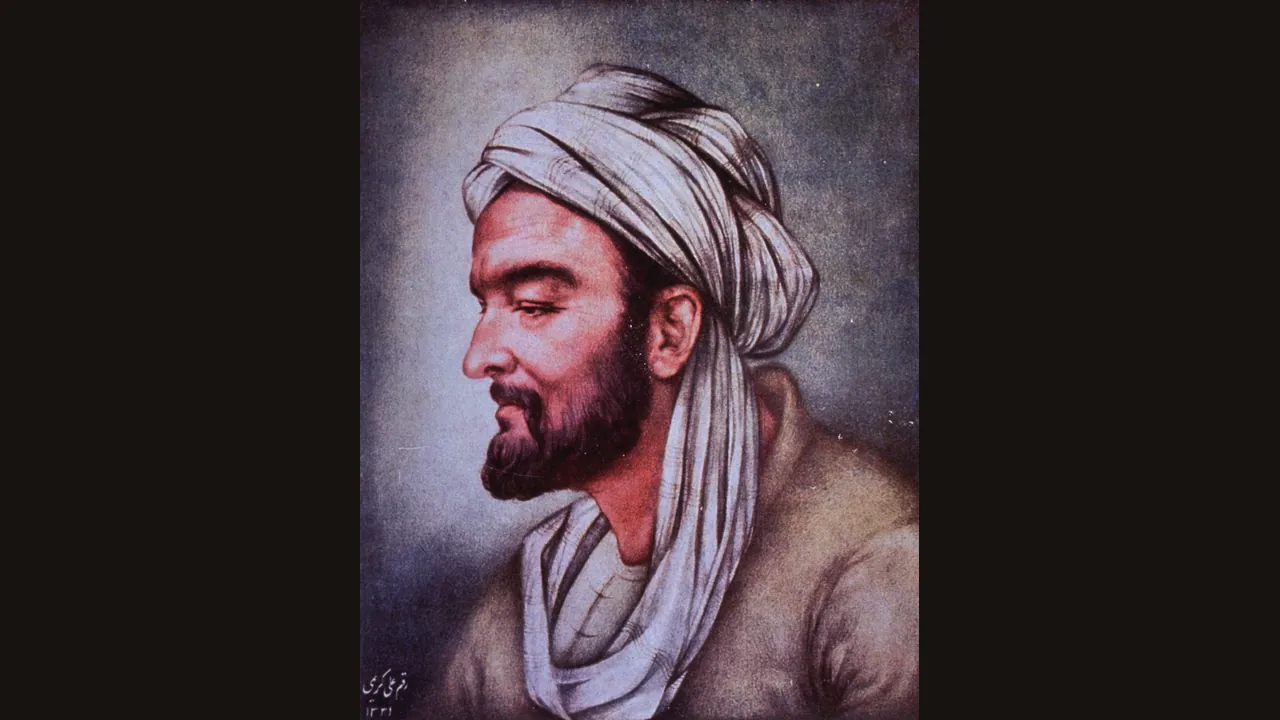
Persian polymath born near Bukhara, in modern Uzbekistan, whose Canon of Medicine was the standard medical text in Europe for centuries. His Book of Healing systematized all philosophy. He lived 980 to 1037, serving princes as physician and minister.
Avicenna was born in 980 at Afshana near Bukhara, in what is now Uzbekistan. His autobiography reports that he had mastered the Quran by ten and medicine by sixteen, and that the Samanid emir Nuh ibn Mansur, cured by his treatment, gave him the run of the royal library. He spent his adult life moving among the courts of Persia as physician and minister, served as vizier at Hamadan, endured a term in prison, and died at Hamadan in 1037.
His Book of Healing covers logic, natural science, mathematics, and metaphysics in one system, and his Canon of Medicine, in five books, organizes diseases, drugs, and treatments. In metaphysics he separates the essence of a thing from its existence: every contingent thing receives existence from another, and the chain of causes ends in a Necessary Existent, God, whose essence is existence itself. He pictured creation as an eternal procession through a series of intellects and celestial souls. His flying man argument asks the reader to picture a man created in midair with his senses covered: the man would affirm his own existence without affirming any part of his body, and Avicenna drew from this the soul's awareness of itself apart from the body.
Facts
- Born
- 980, near Bukhara, in what is now Uzbekistan.
- Source: Encyclopaedia Britannica, Avicenna
- Died
- 1037, Hamadan, Iran.
- Source: Encyclopaedia Britannica, Avicenna
- School
- Islamic Peripatetic philosophy, reshaped by his own metaphysics.
- Source: Encyclopaedia Britannica, Avicenna
- Known for
- The Canon of Medicine, the distinction between essence and existence, and the flying man thought experiment on self awareness.
- Source: Encyclopaedia Britannica, Avicenna
Sources
- Encyclopaedia Britannica, Avicenna Source
Source links accessed 22 November 2026.
Images
Related
- AristotleConnected
- Al FarabiConnected
- IranConnected
- Augustine of HippoConnected
- Thomas AquinasConnected
- Al GhazaliConnected
What happened elsewhere
Pairings are by recorded year, not exact simultaneity.
- DenmarkWhile Avicenna (around 965)
- Holy Roman EmpireWhile Avicenna (962)
- HungaryWhile Avicenna (1000)
Meanwhile
Meanwhile, around the world — drag to spin, click a pulsing marker.
Keep reading
Test yourself
When was Avicenna born?
- 980, near Bukhara, in what is now Uzbekistan
- About 480, Rome, Italy, into an old senatorial family
- About 801, Kufa, Iraq
- About 872, Farab, in what is now Kazakhstan
Answer
980, near Bukhara, in what is now Uzbekistan — Born: 980, near Bukhara, in what is now Uzbekistan.
When did Avicenna die?
- 1037, Hamadan, Iran
- 180, on the Danube frontier, likely of plague
- About 262 BC, Athens
- Late 1476 or early 1477, in battle near Bucharest
Answer
1037, Hamadan, Iran — Died: 1037, Hamadan, Iran.
What is Avicenna known for?
- The Canon of Medicine, the distinction between essence and existence, and the flying man thought experiment on self awareness
- The Consolation of Philosophy, written in prison, and translations of Aristotle's logical works that the Middle Ages studied for centuries
- Over 260 works on metaphysics, optics, music, and medicine, and the first known use of frequency analysis to break ciphers
- Commentaries on Aristotle and Plato, and The Virtuous City, on the perfect state ruled by the philosopher
Answer
The Canon of Medicine, the distinction between essence and existence, and the flying man thought experiment on self awareness — Known for: The Canon of Medicine, the distinction between essence and existence, and the flying man thought experiment on self awareness.
Which school of thought was Avicenna part of?
- Islamic Peripatetic philosophy, reshaped by his own metaphysics
- Islamic Peripatetic philosophy, with Platonic political theory
- Islamic Peripatetic philosophy, from Aristotle and Neoplatonism
- Late ancient Platonism, transmitting Aristotle to the Latin West
Answer
Islamic Peripatetic philosophy, reshaped by his own metaphysics — School: Islamic Peripatetic philosophy, reshaped by his own metaphysics.
True or false: Persian polymath born near Bukhara, in modern Uzbekistan, whose Canon of Medicine was the standard medical text in Europe for centuries.
- True
- False
Answer
True — True. Persian polymath born near Bukhara, in modern Uzbekistan, whose Canon of Medicine was the standard medical text in Europe for centuries.
My notes
Highlights on this page
None yet.
Spotted an error on this page? Email [email protected] and it will be checked against the sources.