
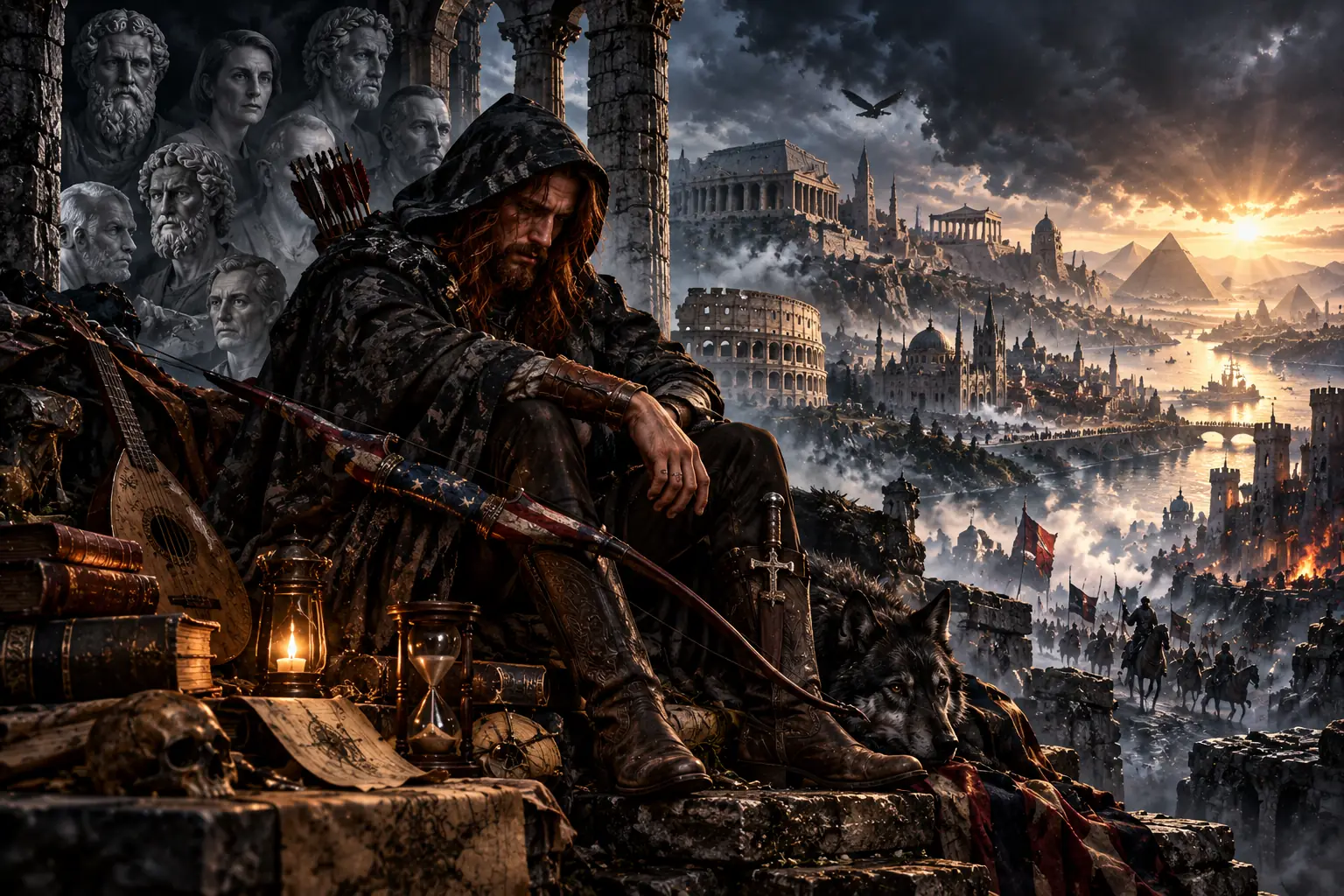
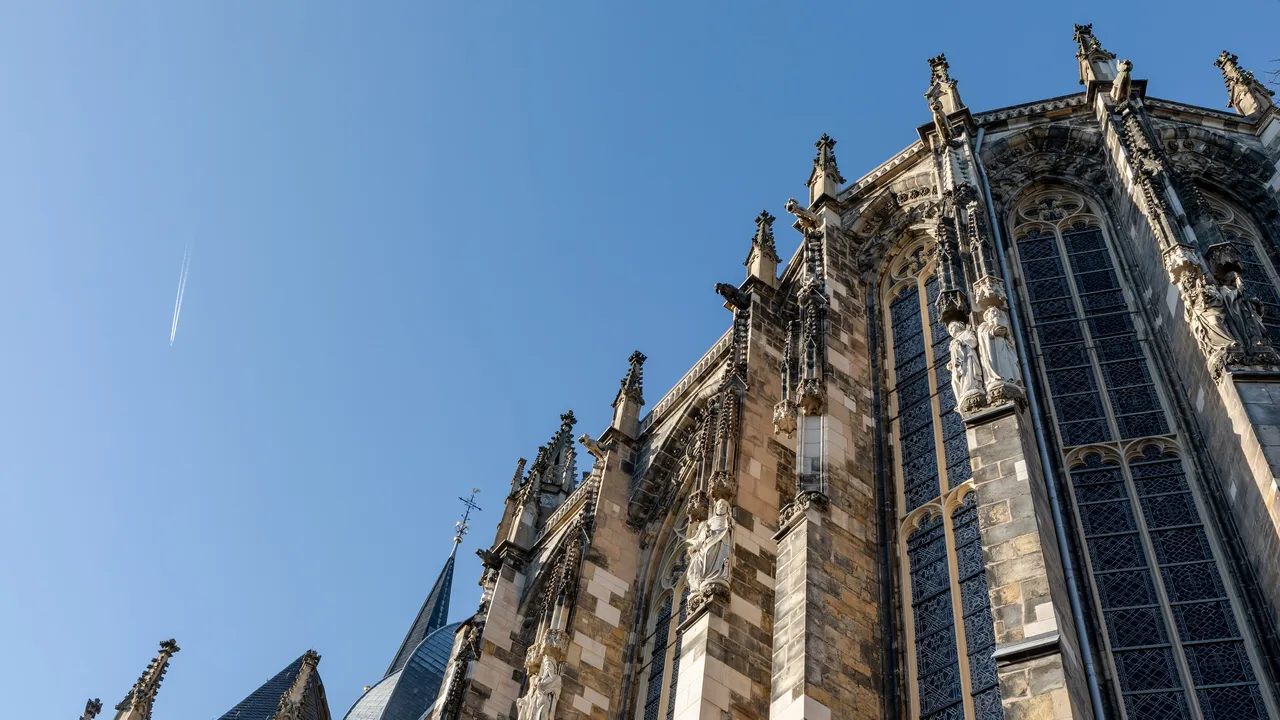
Civilization · Early Middle Ages · Holy Roman Empire
Holy Roman Empire
962–1806
The Holy Roman Empire was the great medieval empire of central Europe, neither holy, nor Roman, nor an empire, as Voltaire joked. It lasted 844 years from Otto the Great's coronation to Napoleon's dissolution of it in 1806.
Otto I of Germany was crowned emperor in Rome in 962, and his empire covered the German lands, Bohemia, and northern and central Italy. Its peoples spoke German, Czech, Italian, Dutch, and French. It was never a single state. The emperor shared power with dukes, counts, prince bishops, abbots, and free cities, and by the eighteenth century the empire contained several hundred separate territories.
The emperor was chosen by election. The Golden Bull of 1356 fixed the voters as seven prince electors, and from 1438 the Habsburg family held the imperial title with one short interruption. An imperial diet of princes and cities met to vote taxes and laws, and imperial courts heard disputes between territories. Emperors fought the popes over the appointment of bishops in the eleventh and twelfth centuries, and they campaigned to hold Italy. The Protestant Reformation split the empire's states by religion; the settlement of Augsburg in 1555 let each prince set the religion of his own territory. The Thirty Years' War from 1618 to 1648 killed a large share of the German lands' population, and the Peace of Westphalia confirmed the territories' right to govern themselves and make their alliances.
In 1806, after defeats by Napoleon, sixteen German states left the empire to form his Confederation of the Rhine. Francis II then renounced the imperial crown on 6 August 1806, and the empire ended.
Facts
- Founded
- 962, Otto I crowned emperor by the Pope.
- Source: Encyclopaedia Britannica, Holy Roman Empire
- Ended
- 1806, Francis II dissolved it under Napoleon's pressure.
- Source: Encyclopaedia Britannica, Holy Roman Empire
- Heartland
- Central Europe, above all Germany and northern Italy.
- Source: Encyclopaedia Britannica, Holy Roman Empire
- Major rulers
- Charlemagne, the model; Frederick Barbarossa; Charles V, who ruled half the world.
- Source: Encyclopaedia Britannica, Holy Roman Empire
Sources
- Encyclopaedia Britannica, Holy Roman Empire Source
Source links accessed 22 November 2026.
Images
Related
- Otto ISame civilization
- Frederick BarbarossaSame civilization
- AvicennaSame era
- Al FarabiSame era
- Alfred the GreatSame era
- Al KindiSame era
What happened elsewhere
Pairings are by recorded year, not exact simultaneity.
Meanwhile
Meanwhile, around the world — drag to spin, click a pulsing marker.
Keep reading
Test yourself
When was Holy Roman Empire founded?
- 962, Otto I crowned emperor by the Pope
- 661 CE, Muawiya founded the dynasty at Damascus
- 618 CE, Li Yuan founded the dynasty
- 750 CE, the Abbasid revolution; Baghdad founded 762
Answer
962, Otto I crowned emperor by the Pope — Founded: 962, Otto I crowned emperor by the Pope.
When did Holy Roman Empire end?
- 1806, Francis II dissolved it under Napoleon's pressure
- 539 BCE, conquered by Cyrus the Great of Persia
- 224 CE, overthrown by the Sassanian Ardashir I
- 1258 CE, the Mongols sacked Baghdad
Answer
1806, Francis II dissolved it under Napoleon's pressure — Ended: 1806, Francis II dissolved it under Napoleon's pressure.
Where was the heartland of Holy Roman Empire?
- Central Europe, above all Germany and northern Italy
- The Middle East, capital Baghdad
- China, capital Chang'an, the largest city on earth
- The eastern Mediterranean, capital Constantinople
Answer
Central Europe, above all Germany and northern Italy — Heartland: Central Europe, above all Germany and northern Italy.
True or false: The Holy Roman Empire was the great medieval empire of central Europe, neither holy, nor Roman, nor an empire, as Voltaire joked.
- True
- False
Answer
True — True. The Holy Roman Empire was the great medieval empire of central Europe, neither holy, nor Roman, nor an empire, as Voltaire joked.
My notes
Highlights on this page
None yet.
Spotted an error on this page? Email [email protected] and it will be checked against the sources.