

Philosopher · Early Middle Ages · Abbasid Caliphate · Kazakhstan
Al Farabi
c. 872–c. 950
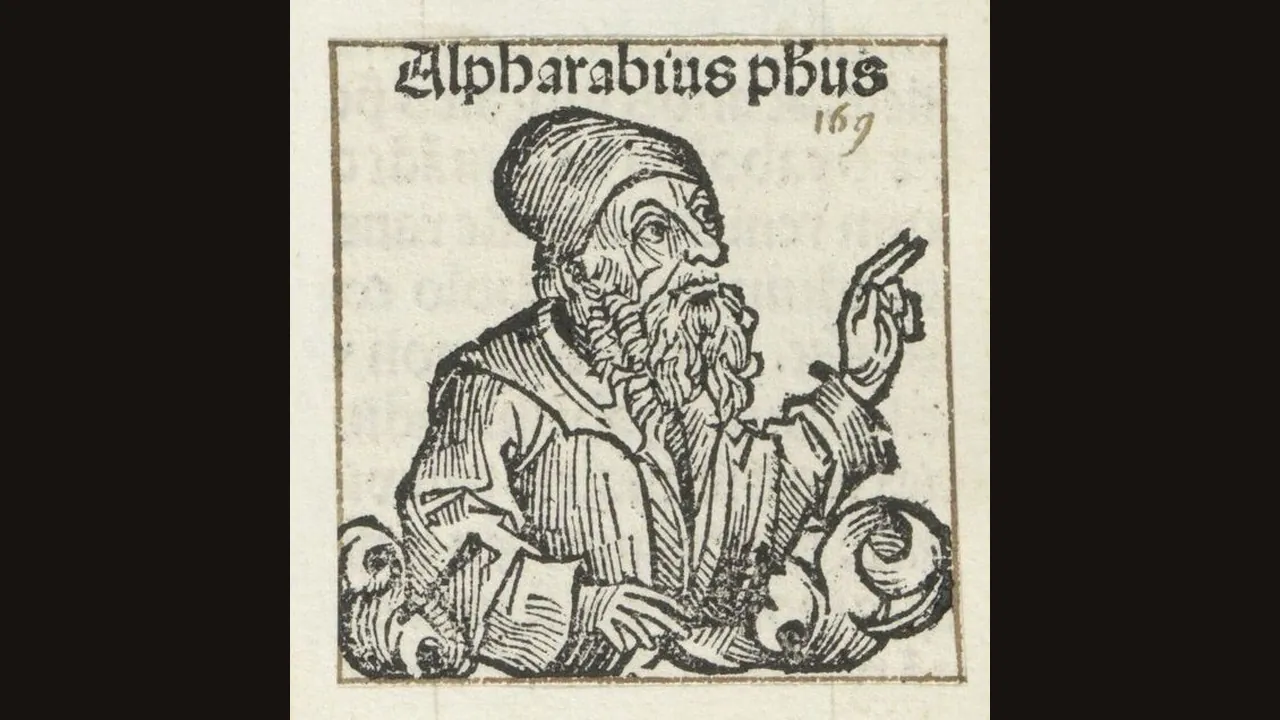
Turkic born Islamic philosopher from Farab, in modern Kazakhstan, who worked at Baghdad and died at Damascus. Called the Second Teacher, after Aristotle, he joined Greek logic to Islamic political thought. He lived about 872 to 950.
Al Farabi was born about 872 at Farab, a town on the Syr Darya in what is now Kazakhstan, and studied at Baghdad under the Christian logicians Abu Bishr Matta and Yuhanna ibn Haylan. He spent his later years between Baghdad, Aleppo, and Damascus, and he lived for a time at the Aleppo court of the Hamdanid ruler Sayf al-Dawla. He died at Damascus about 950. Arabic writers named him the Second Teacher, setting Aristotle first.
Al Farabi wrote commentaries and paraphrases on Aristotle's logical works and set logic at the gate of the sciences. His Enumeration of the Sciences sorts knowledge into the science of language, logic, mathematics, natural science and metaphysics, and political science with law and theology. In The Virtuous City and The Political Regime he describes the best city under a founder who joins philosophy to prophecy. From the First Cause, he taught, a series of separate intellects proceeds, and each intellect moves a sphere of the heavens, down to the active intellect that governs the world below the moon. The prophet receives what the philosopher knows by demonstration and casts it in images and laws for the many, so religion presents in symbols the truths philosophy proves. His Great Book of Music classifies instruments, rhythms, and melodies.
Facts
- Born
- About 872, Farab, in what is now Kazakhstan.
- Source: Encyclopaedia Britannica, al-Farabi
- Died
- About 950, Damascus, Syria.
- Source: Encyclopaedia Britannica, al-Farabi
- School
- Islamic Peripatetic philosophy, with Platonic political theory.
- Source: Encyclopaedia Britannica, al-Farabi
- Known for
- Commentaries on Aristotle and Plato, and The Virtuous City, on the perfect state ruled by the philosopher.
- Source: Encyclopaedia Britannica, al-Farabi
Sources
- Encyclopaedia Britannica, al-Farabi Source
Source links accessed 22 November 2026.
Images
Related
- AristotleConnected
- PlatoConnected
- Al KindiConnected
- AvicennaConnected
- Harun al-RashidSame civilization
- Abbasid CaliphateSame civilization
What happened elsewhere
Pairings are by recorded year, not exact simultaneity.
- Alfred the GreatWhile Al Farabi (around 848)
Meanwhile
Meanwhile, around the world — drag to spin, click a pulsing marker.
Keep reading
Test yourself
When was Al Farabi born?
- About 872, Farab, in what is now Kazakhstan
- About 480, Rome, Italy, into an old senatorial family
- About 801, Kufa, Iraq
- 980, near Bukhara, in what is now Uzbekistan
Answer
About 872, Farab, in what is now Kazakhstan — Born: About 872, Farab, in what is now Kazakhstan.
When did Al Farabi die?
- About 950, Damascus, Syria
- About 873, Baghdad
- 1037, Hamadan, Iran
- Late 1476 or early 1477, in battle near Bucharest
Answer
About 950, Damascus, Syria — Died: About 950, Damascus, Syria.
What is Al Farabi known for?
- Commentaries on Aristotle and Plato, and The Virtuous City, on the perfect state ruled by the philosopher
- The claim that atman is brahman, that plurality is illusion, and commentaries that made Vedanta the dominant Hindu philosophy
- The Consolation of Philosophy, written in prison, and translations of Aristotle's logical works that the Middle Ages studied for centuries
- Over 260 works on metaphysics, optics, music, and medicine, and the first known use of frequency analysis to break ciphers
Answer
Commentaries on Aristotle and Plato, and The Virtuous City, on the perfect state ruled by the philosopher — Known for: Commentaries on Aristotle and Plato, and The Virtuous City, on the perfect state ruled by the philosopher.
Which school of thought was Al Farabi part of?
- Islamic Peripatetic philosophy, with Platonic political theory
- Late ancient Platonism, transmitting Aristotle to the Latin West
- Advaita Vedanta, absolute nondualism
- Islamic Peripatetic philosophy, reshaped by his own metaphysics
Answer
Islamic Peripatetic philosophy, with Platonic political theory — School: Islamic Peripatetic philosophy, with Platonic political theory.
True or false: Turkic born Islamic philosopher from Farab, in modern Kazakhstan, who worked at Baghdad and died at Damascus.
- True
- False
Answer
True — True. Turkic born Islamic philosopher from Farab, in modern Kazakhstan, who worked at Baghdad and died at Damascus.
My notes
Highlights on this page
None yet.
Spotted an error on this page? Email [email protected] and it will be checked against the sources.