

Philosopher · Twentieth century · Algeria
Albert Camus
1913–1960
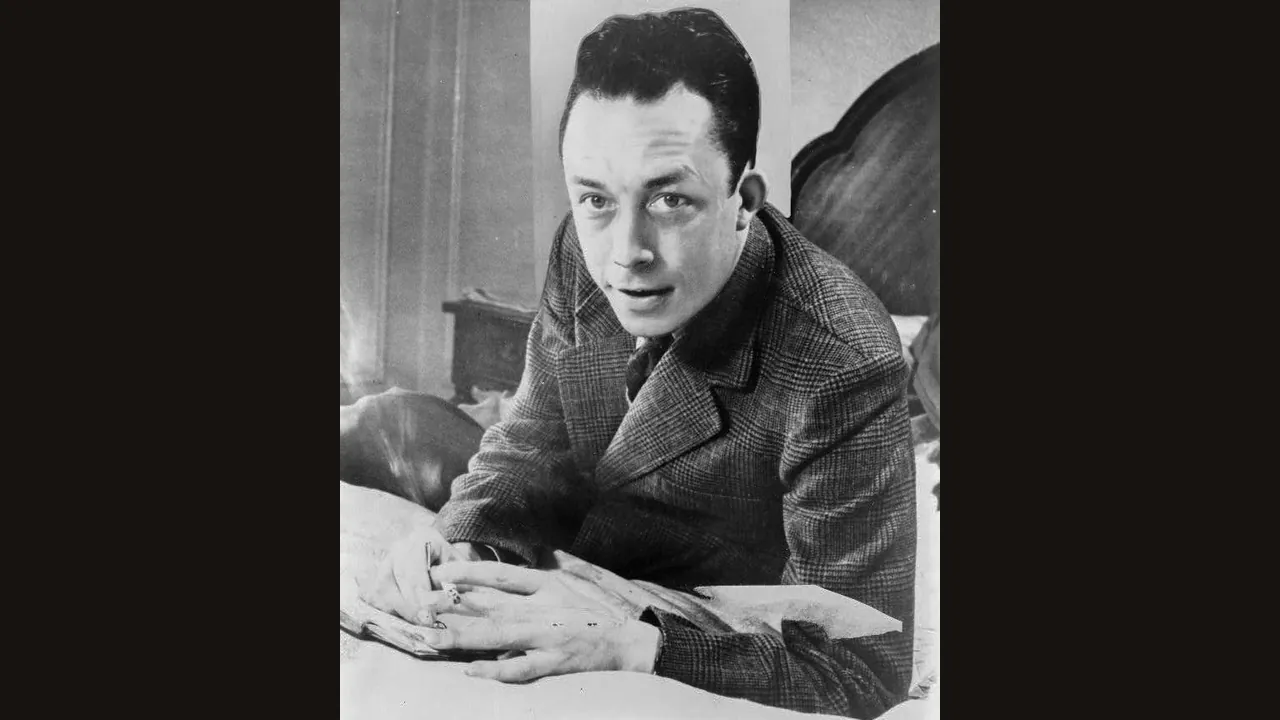
Algerian born French writer who made the absurd, the clash between our hunger for meaning and a silent world, the theme of his work. The Stranger and The Myth of Sisyphus appeared in 1942. Nobel Prize 1957; he died in a car crash in 1960.
Camus was born in Mondovi, Algeria, in 1913. His father died in the First World War, and he grew up in poverty in Algiers. He studied philosophy at the University of Algiers and worked as a journalist in Algeria and Paris. During the German occupation of France he edited the Resistance newspaper Combat. He received the Nobel Prize in Literature in 1957 and died in a car crash near Sens in 1960.
The Myth of Sisyphus (1942) opens with the claim that suicide is the one truly serious philosophical problem. The book defines the absurd as the confrontation between the human demand for meaning and the silence of the world. Camus rejects both suicide and what he calls philosophical suicide, the leap into faith, and he answers the absurd with revolt, freedom, and passion. Sisyphus, condemned to roll his rock up the hill forever, stands as the image of that answer, and the essay ends by asking the reader to imagine Sisyphus happy. The Stranger, published the same year, gives the absurd a narrative form. In The Rebel (1951) he argues that rebellion itself sets a limit: the rebel affirms a value held in common and refuses murder as a method, and the book argues against revolutions that justify killing by appeal to history.
Facts
- Born
- 1913, Mondovi, Algeria.
- Source: Encyclopaedia Britannica, Albert Camus
- Died
- 1960, near Sens, France, in a car crash.
- Source: Encyclopaedia Britannica, Albert Camus
- School
- The absurd; he refused the existentialist label.
- Source: Encyclopaedia Britannica, Albert Camus
- Known for
- The Stranger, The Myth of Sisyphus, The Rebel, and the Nobel Prize in Literature 1957.
- Source: Encyclopaedia Britannica, Albert Camus
Sources
- Encyclopaedia Britannica, Albert Camus Source
Source links accessed 22 November 2026.
Images
Related
- Jean-Paul SartreConnected
- Friedrich NietzscheConnected
- The ChekaSame era
- Nicolae CeaușescuSame era
- Simone de BeauvoirSame era
- Willard Van Orman QuineSame era
What happened elsewhere
Pairings are by recorded year, not exact simultaneity.
- AlbaniaWhile Albert Camus (1912)
- South AfricaWhile Albert Camus (1910)
- The ChekaWhile Albert Camus (1917)
- FinlandWhile Albert Camus (1917)
- U.S. Virgin IslandsWhile Albert Camus (1917)
Meanwhile
Meanwhile, around the world — drag to spin, click a pulsing marker.
Keep reading
Test yourself
When was Albert Camus born?
- 1913, Mondovi, Algeria
- 1908, Akron, Ohio, United States
- 1930, El Biar, Algeria
- 1889, Messkirch, Germany
Answer
1913, Mondovi, Algeria — Born: 1913, Mondovi, Algeria.
When did Albert Camus die?
- 1960, near Sens, France, in a car crash
- 1980, Paris
- 1976, Freiburg, Germany
- 1994, London, England
Answer
1960, near Sens, France, in a car crash — Died: 1960, near Sens, France, in a car crash.
What is Albert Camus known for?
- The Stranger, The Myth of Sisyphus, The Rebel, and the Nobel Prize in Literature 1957
- Two Dogmas of Empiricism, Word and Object, and the indeterminacy of translation
- The public sphere, communicative rationality, and the ideal speech situation
- Being and Time, Dasein, being toward death, and the later critique of technology
Answer
The Stranger, The Myth of Sisyphus, The Rebel, and the Nobel Prize in Literature 1957 — Known for: The Stranger, The Myth of Sisyphus, The Rebel, and the Nobel Prize in Literature 1957.
Which school of thought was Albert Camus part of?
- The absurd; he refused the existentialist label
- Analytic philosophy; logical atomism
- Critical rationalism; philosophy of science
- Liberal political philosophy
Answer
The absurd; he refused the existentialist label — School: The absurd; he refused the existentialist label.
True or false: Algerian born French writer who made the absurd, the clash between our hunger for meaning and a silent world, the theme of his work.
- True
- False
Answer
True — True. Algerian born French writer who made the absurd, the clash between our hunger for meaning and a silent world, the theme of his work.
My notes
Highlights on this page
None yet.
Spotted an error on this page? Email [email protected] and it will be checked against the sources.