
Civilization · Twentieth century · Soviet Union
Soviet Union
1922–1991
The Soviet Union was the world's first communist state, spanning Eurasia from 1922 to 1991. It industrialized by force, beat Nazi Germany, and became a nuclear superpower. It dissolved peacefully in 1991.
The Union of Soviet Socialist Republics was formed on 30 December 1922 from Russia and neighboring republics after the 1917 revolution and civil war. It was the largest state in the world, running from eastern Europe to the Pacific, and it held more than one hundred nationalities. Russians were the largest people, and Russian served as the common language. The Communist Party held the only legal political power, and the state owned industry and set production through five year plans.
Under Stalin the government forced peasant households into collective farms from 1929. The famine of 1932 and 1933 followed across Ukraine, Kazakhstan, and southern Russia; historians estimate the deaths in the millions, with estimates for Ukraine alone running from about three to five million. In the Great Terror of 1936 to 1938 the secret police shot about 680,000 people in 1937 and 1938 alone, by estimates drawn from Soviet archival documents, and arrested far more. The Gulag camp system held millions of prisoners and worked them in mines, logging, and construction.
Germany invaded in June 1941. The war killed an estimated 27 million Soviet citizens before Germany surrendered in 1945. In 1991 the union's republics declared independence one after another, and the Soviet Union was dissolved in December of that year.
Watch
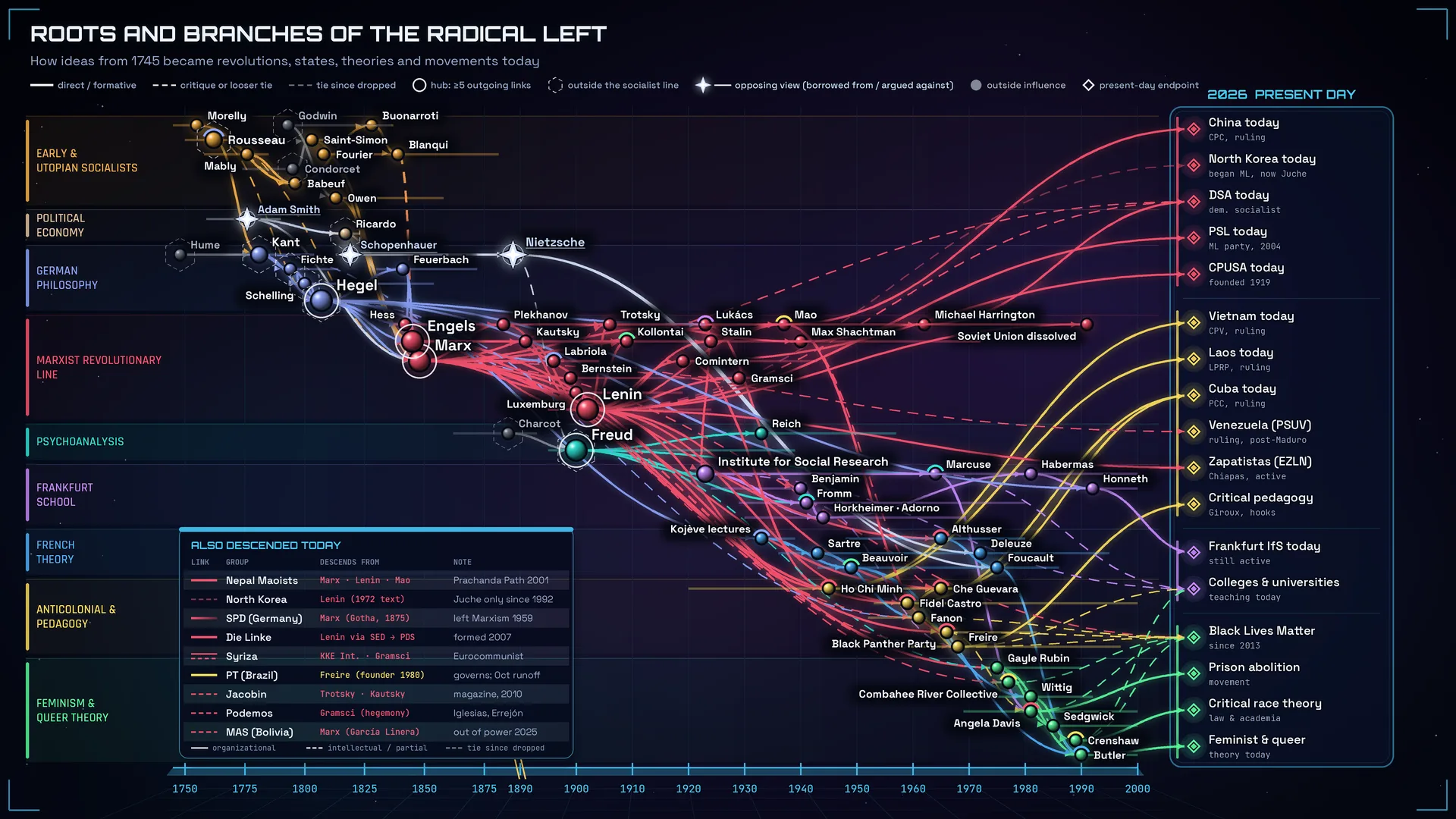
Roots and Branches of the Radical Left
Events · 2026-10-15
Socialism is presented as an economic theory. In reality, woven through every part of the theory are two things that must be adopted before socialism can "work properly": a pseudo-history of mankind, and a massive shift of worldview. Both rest on a fundamental lie about human nature: they blame man's conditions for what belongs to the man himself.
That ideology did not appear from nowhere. It grew out of long-standing ideas, taken up across a chain of events and twisted over time into a promise of a better way for human beings to live, which is why the whole runs far deeper and is far more complex than the economic label suggests. Along the way it was woven in and out of great thinkers, at different points and for different reasons. Some were used for it and some against it, and through all of it the idea kept building.
This map lays that out where it can be seen: the evolution of the ideas, the effects they had, and the chain of cause and effect that followed from thinker to thinker.
Facts
- Founded
- 30 December 1922, the Union of Soviet Socialist Republics formed.
- Source: Encyclopaedia Britannica, Soviet Union
- Ended
- 25 December 1991, dissolved; Russia succeeded it.
- Source: Encyclopaedia Britannica, Soviet Union
- Heartland
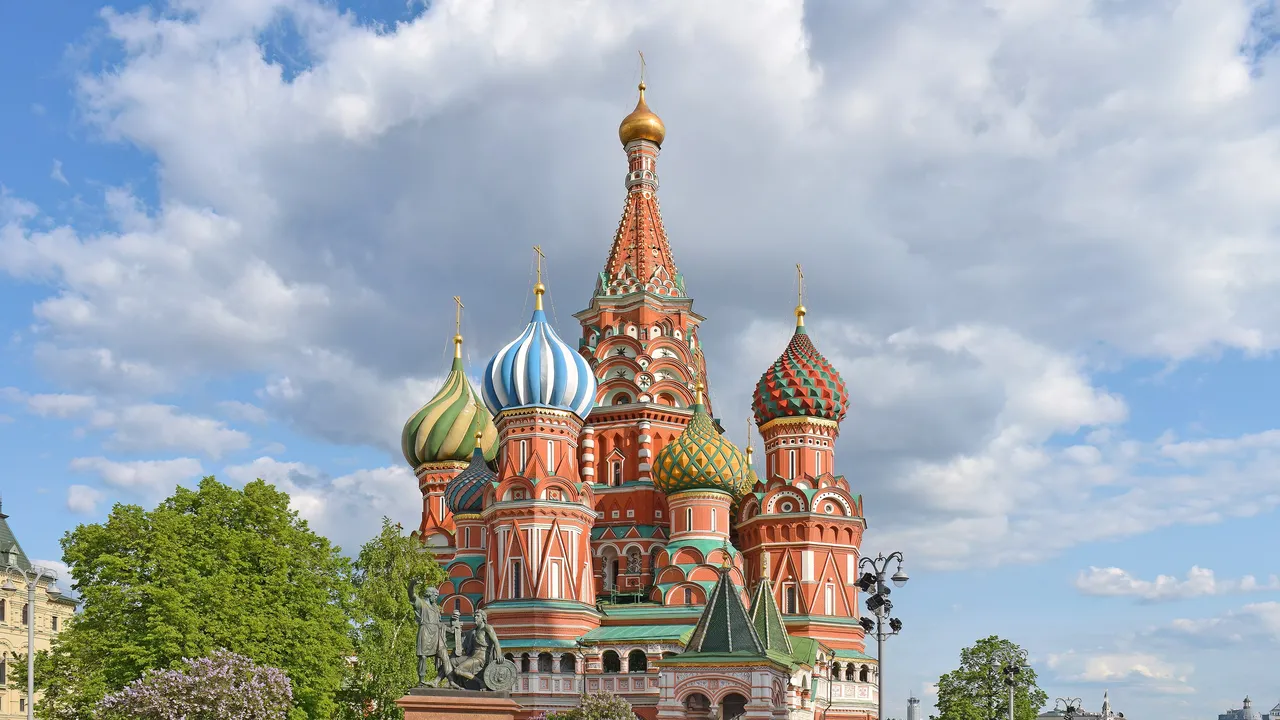
- Eurasia, capital Moscow.
- Source: Encyclopaedia Britannica, Soviet Union
- Major rulers
- Vladimir Lenin, the founder; Joseph Stalin, the tyrant; Nikita Khrushchev; Mikhail Gorbachev, the last leader.
- Source: Encyclopaedia Britannica, Soviet Union
Sources
- Encyclopaedia Britannica, Soviet Union Source
Source links accessed 22 November 2026.
Images
Related
- The ChekaSame civilization
- HolodomorSame civilization
- Stalin's TerrorSame civilization
- Joseph StalinSame civilization
- Vladimir LeninSame civilization
- John RawlsSame era
What happened elsewhere
Pairings are by recorded year, not exact simultaneity.
- IrelandWhile Soviet Union (1922)
- John RawlsWhile Soviet Union (1921)
- MongoliaWhile Soviet Union (1921)
- TurkeyWhile Soviet Union (1923)
- Åland IslandsWhile Soviet Union (1921)
Meanwhile
Meanwhile, around the world — drag to spin, click a pulsing marker.
Keep reading
Test yourself
When was Soviet Union founded?
- 30 December 1922, the Union of Soviet Socialist Republics formed
- 1918, as a republic after the fall of Austria Hungary; full sovereignty restored by the State Treaty of 1955
- 28 November 1912, independence proclaimed at Vlorë as Ottoman rule collapsed
- 1979, after the Islamic Revolution
Answer
30 December 1922, the Union of Soviet Socialist Republics formed — Founded: 30 December 1922, the Union of Soviet Socialist Republics formed.
When did Soviet Union end?
- 25 December 1991, dissolved; Russia succeeded it
- 539 BCE, conquered by Cyrus the Great of Persia
- c. 2154 BCE, amid invasion and drought
- c. 1190 BCE, in the Bronze Age collapse
Answer
25 December 1991, dissolved; Russia succeeded it — Ended: 25 December 1991, dissolved; Russia succeeded it.
Where was the heartland of Soviet Union?
- Eurasia, capital Moscow
- Southern Mesopotamia, in present day Iraq
- The Greek mainland and the Aegean, center at Mycenae
- The Tigris Euphrates valley, in present day Iraq and eastern Syria
Answer
Eurasia, capital Moscow — Heartland: Eurasia, capital Moscow.
True or false: The Soviet Union was the world's first communist state, spanning Eurasia from 1922 to 1991.
- True
- False
Answer
True — True. The Soviet Union was the world's first communist state, spanning Eurasia from 1922 to 1991.
Articles
My notes
Highlights on this page
None yet.
Spotted an error on this page? Email [email protected] and it will be checked against the sources.