

Ruler · High and Late Middle Ages · Norman England · England
William the Conqueror
c. 1028–1087
Duke of Normandy who became king of England in 1066, born about 1028 and dead in 1087. His victory at Hastings on 14 October 1066 ended Anglo Saxon England and joined it to the Norman world. The Domesday survey of 1086 recorded every manor in the kingdom for taxation.
William was born about 1028 at Falaise, the son of Duke Robert I by a woman outside marriage. He became duke in 1035, at seven, when his father died on pilgrimage. Barons fought over the duchy through his childhood, and he defeated rebels at Val es Dunes in 1047 with French help and secured his rule. He argued that Edward the Confessor, king of England, had promised him the throne, and Norman accounts report that Harold Godwinson had sworn to support the claim. When Edward died in January 1066 and Harold took the crown, William assembled a fleet.
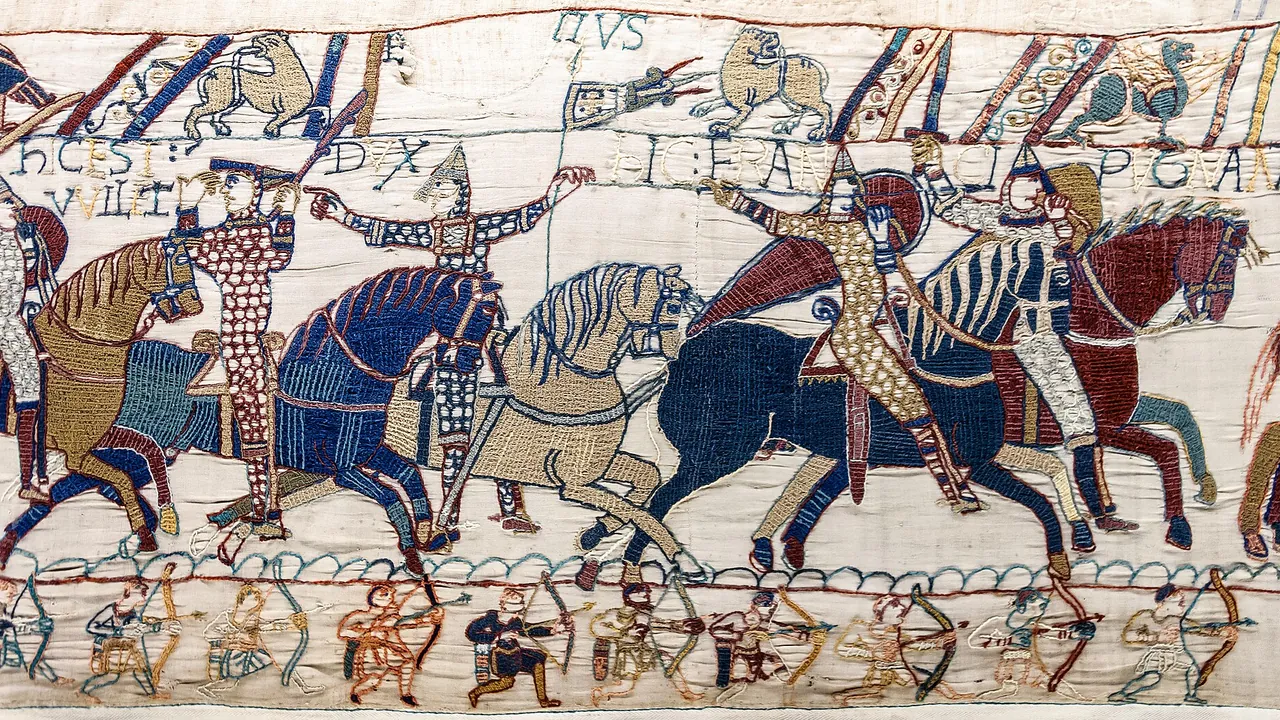
William landed in Sussex in September 1066 and defeated Harold at Hastings on October 14. Harold was killed, and William was crowned at Westminster on December 25. Revolts followed for five years. In winter 1069 and 1070, answering rebellion in the north, his army burned settlements, crops, and stores in Yorkshire and neighboring counties. The chronicler Orderic Vitalis, writing two generations later, put the deaths from famine at more than 100,000, and the Domesday survey of 1086 recorded northern land as waste. William replaced English landowners with Norman tenants, built castles, installed Norman bishops, and in 1085 ordered the Domesday survey.
William died at Rouen in September 1087, from an injury while campaigning at Mantes in France. Normandy passed to his eldest son Robert, and England to his second son, William II.
Facts
- Born
- About 1028, Falaise, Normandy.
- Source: Encyclopaedia Britannica, William the Conqueror
- Died
- 1087, Rouen.
- Source: Encyclopaedia Britannica, William the Conqueror
- Reign
- Duke of Normandy 1035 to 1087; king of England 1066 to 1087.
- Source: Encyclopaedia Britannica, William the Conqueror
- Realm
- Normandy and England.
- Source: Encyclopaedia Britannica, William the Conqueror
- Known for
- Hastings (1066) and the Domesday Book (1086).
- Source: Encyclopaedia Britannica, William the Conqueror
Sources
- Encyclopaedia Britannica, William the Conqueror Source
Source links accessed 22 November 2026.
Images
Related
- Anselm of CanterburySame era
- Al GhazaliSame era
- Frederick BarbarossaSame era
- AverroesSame era
- Zhu XiSame era
- SaladinSame era
What happened elsewhere
Pairings are by recorded year, not exact simultaneity.
- Anselm of CanterburyWhile William the Conqueror (around 1033)
Meanwhile
Meanwhile, around the world — drag to spin, click a pulsing marker.
Keep reading
Test yourself
When was William the Conqueror born?
- About 1028, Falaise, Normandy
- 1440, Moscow
- 1432, Edirne
- 1214, Poissy
Answer
About 1028, Falaise, Normandy — Born: About 1028, Falaise, Normandy.
When did William the Conqueror die?
- 1087, Rouen
- 1505, Moscow
- 1190, drowned in the Saleph river on crusade
- 1227, on campaign against the Western Xia
Answer
1087, Rouen — Died: 1087, Rouen.
When did William the Conqueror reign?
- Duke of Normandy 1035 to 1087; king of England 1066 to 1087
- About 1438 to 1471
- King 1152 to 1190; emperor 1155 to 1190
- 1444 to 1446 and 1451 to 1481
Answer
Duke of Normandy 1035 to 1087; king of England 1066 to 1087 — Reign: Duke of Normandy 1035 to 1087; king of England 1066 to 1087.
What realm did William the Conqueror rule?
- Normandy and England
- The Ottoman Empire
- The Mali Empire of West Africa
- The Inca Empire, from Ecuador to Chile
Answer
Normandy and England — Realm: Normandy and England.
True or false: Duke of Normandy who became king of England in 1066, born about 1028 and dead in 1087.
- True
- False
Answer
True — True. Duke of Normandy who became king of England in 1066, born about 1028 and dead in 1087.
My notes
Highlights on this page
None yet.
Myth vs. evidence
The myth
The Norman Conquest of 1066 wiped out the English language.
The evidence
English remained the speech of most of the population. French ruled the court and the law for about three centuries and poured thousands of words into English, but the language that emerged kept English grammar and English core vocabulary.
Sources: David Crystal, The Cambridge Encyclopedia of the English Language
Spotted an error on this page? Email [email protected] and it will be checked against the sources.