

Philosopher · High and Late Middle Ages · Italy
Anselm of Canterbury
1033–1109
Italian born monk who became Archbishop of Canterbury in 1093 and gave scholastic theology its motto, faith seeking understanding. His Proslogion argues for God's existence from the bare idea of God. He lived 1033 to 1109.
Anselm was born at Aosta in northern Italy in 1033. He crossed the Alps and entered the abbey of Bec in Normandy, where he studied under Lanfranc. He became prior of Bec in 1063 and abbot in 1078. In 1093 he accepted the archbishopric of Canterbury. His defense of the church's liberties against William II and then Henry I, above all in the dispute over investiture of bishops, brought him two exiles from England. He died at Canterbury in 1109.
He called his method faith seeking understanding: he took the doctrines of the faith as given, then pressed reason to show their ground. The Monologion argues toward one supreme nature by degrees of goodness and being. The Proslogion argues from the idea of God alone: God is that than which nothing greater can be conceived, and a thing that exists in reality as well as in the mind is greater than one that exists in the mind alone, so the being conceived must exist in reality too. The monk Gaunilo answered that the same reasoning would prove a perfect island, and Anselm replied that the argument holds only for that than which nothing greater can be conceived. In Cur Deus Homo he argues that sin places man in debt to God's honour, that man ought to pay and only God can pay, and that the payment therefore required a God-man.
Facts
- Born
- 1033, Aosta, in what is now Italy.
- Source: Encyclopaedia Britannica, Saint Anselm
- Died
- 1109, Canterbury, England.
- Source: Encyclopaedia Britannica, Saint Anselm
- School
- Scholasticism, at its beginning.
- Source: Encyclopaedia Britannica, Saint Anselm
- Known for
- The ontological argument: God, defined as that than which nothing greater can be thought, must exist even in reality. Also Cur Deus Homo, on why God became man.
- Source: Encyclopaedia Britannica, Saint Anselm
Sources
- Encyclopaedia Britannica, Saint Anselm Source
Source links accessed 22 November 2026.
Images
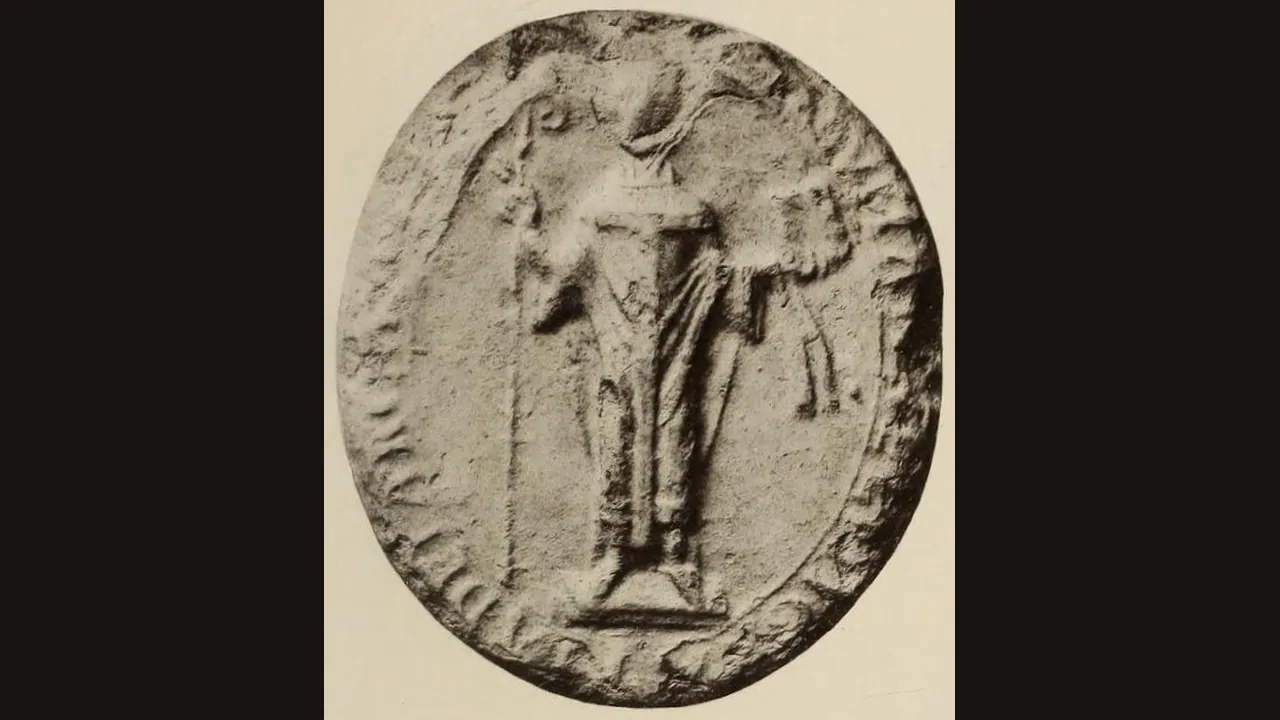
Related
- Augustine of HippoConnected
- Thomas AquinasConnected
- William the ConquerorSame era
- Al GhazaliSame era
- Frederick BarbarossaSame era
- AverroesSame era
What happened elsewhere
Pairings are by recorded year, not exact simultaneity.
- William the ConquerorWhile Anselm of Canterbury (around 1028)
- Al GhazaliWhile Anselm of Canterbury (1058)
Meanwhile
Meanwhile, around the world — drag to spin, click a pulsing marker.
Keep reading
Test yourself
When was Anselm of Canterbury born?
- 1033, Aosta, in what is now Italy
- 1225, Roccasecca, near Aquino, Italy
- 1058, Tus, in what is now Iran
- 1332, Tunis, Tunisia
Answer
1033, Aosta, in what is now Italy — Born: 1033, Aosta, in what is now Italy.
When did Anselm of Canterbury die?
- 1109, Canterbury, England
- 1406, Cairo, Egypt
- 1347, Munich, Germany, probably of the plague
- 1204, Fustat, Egypt
Answer
1109, Canterbury, England — Died: 1109, Canterbury, England.
Which school of thought was Anselm of Canterbury part of?
- Scholasticism, at its beginning
- Neo Confucianism, the school of principle
- Asharite theology, joined to Sufi mysticism
- Scholasticism; nominalism, the denial that universals exist outside the mind
Answer
Scholasticism, at its beginning — School: Scholasticism, at its beginning.
True or false: Italian born monk who became Archbishop of Canterbury in 1093 and gave scholastic theology its motto, faith seeking understanding.
- True
- False
Answer
True — True. Italian born monk who became Archbishop of Canterbury in 1093 and gave scholastic theology its motto, faith seeking understanding.
My notes
Highlights on this page
None yet.
Spotted an error on this page? Email [email protected] and it will be checked against the sources.