
Ruler · Age of revolutions and empire · Venezuela
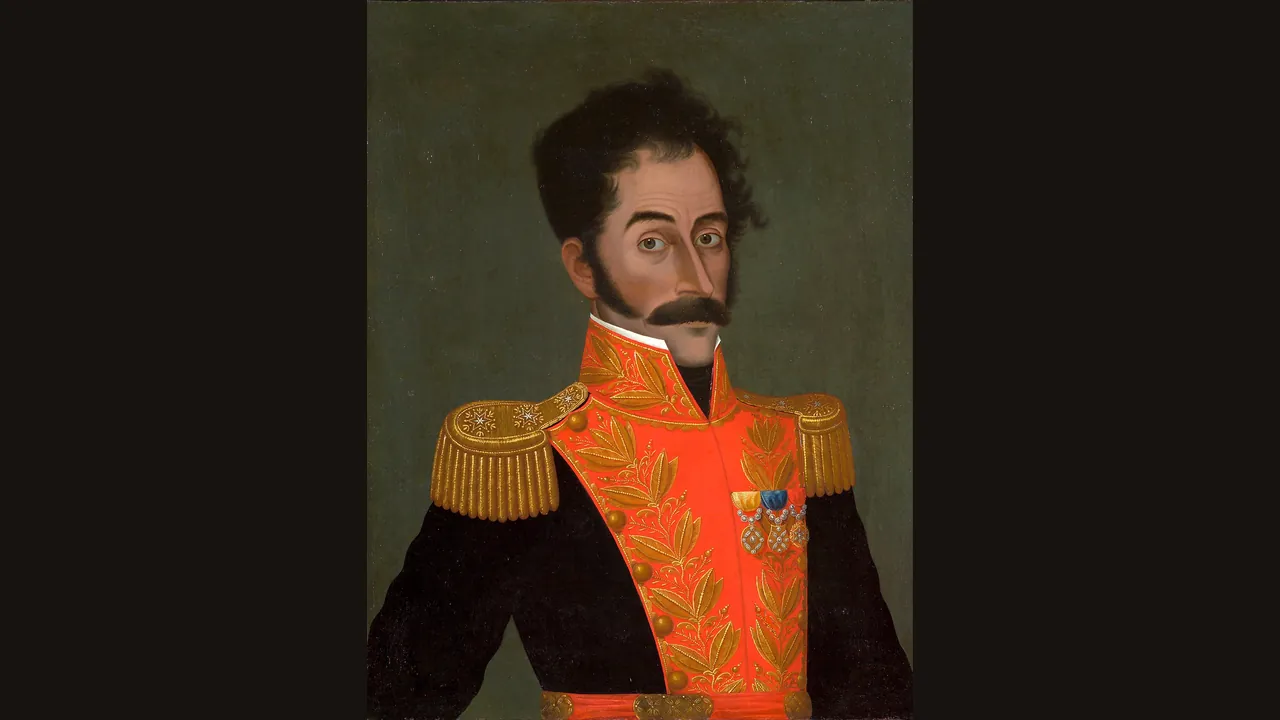
Simon Bolivar
1783–1830
Venezuelan general and statesman, 1783 to 1830, called the Liberator, who freed much of South America from Spain. His campaigns liberated Venezuela, Colombia, Ecuador, Peru and Bolivia, the last named for him. He dreamed of a united Spanish America but died disillusioned, his federations broken apart.
Bolivar was born at Caracas in 1783 into a wealthy Creole family. He joined the independence movement in 1810, as Venezuela broke from Spain. Royalist forces destroyed the first republic, and Bolivar's Admirable Campaign of 1813 retook Caracas and set up a second republic. At Trujillo in June 1813 he decreed war to the death against Spaniards who opposed independence. Royalist llanero horsemen under Jose Tomas Boves destroyed the second republic in 1814, and Bolivar fled into exile.
In 1815 Bolivar set out his case in the Jamaica Letter, and Haiti's president Petion gave him ships and men. In 1819 he crossed the flooded plains and the Andes into New Granada and defeated the Spanish at Boyaca on 7 August 1819. His victory at Carabobo in 1821 secured Venezuela, and his lieutenant Sucre won at Pichincha in 1822 and took Quito. Bolivar became president of Gran Colombia, the union of Venezuela, New Granada, and Quito. In Peru his forces won at Junin in 1824, and Sucre's victory at Ayacucho in December 1824 ended Spanish power in South America. Upper Peru took the name Bolivia in 1825.
The Congress of Panama, which Bolivar called in 1826 to bind the new republics together, produced no lasting union. Venezuela and Ecuador broke away from Gran Colombia in 1829 and 1830. Bolivar resigned in 1830 and died of tuberculosis at Santa Marta that December.
Facts
- Born
- 1783, Caracas.
- Source: Encyclopaedia Britannica, Simon Bolivar
- Died
- 1830, Santa Marta, Colombia.
- Source: Encyclopaedia Britannica, Simon Bolivar
- Campaigns
- 1810 to 1826, from Venezuela to Peru.
- Source: Encyclopaedia Britannica, Simon Bolivar
- Known for
- Boyaca (1819), Carabobo (1821), and the liberation of five nations.
- Source: Encyclopaedia Britannica, Simon Bolivar
Sources
- Encyclopaedia Britannica, Simon Bolivar Source
Source links accessed 22 November 2026.
Images
Related
- ShakaSame era
- Arthur SchopenhauerSame era
- French RevolutionSame era
- Friedrich SchellingSame era
- Georg Wilhelm Friedrich HegelSame era
- Napoleon BonaparteSame era
What happened elsewhere
Pairings are by recorded year, not exact simultaneity.
- ShakaWhile Simon Bolivar (around 1787)
- Arthur SchopenhauerWhile Simon Bolivar (1788)
- Norfolk IslandWhile Simon Bolivar (1788)
- French RevolutionWhile Simon Bolivar (1789)
- United StatesWhile Simon Bolivar (1776)
Meanwhile
Meanwhile, around the world — drag to spin, click a pulsing marker.
Keep reading
Test yourself
When was Simon Bolivar born?
- 1783, Caracas
- 1819, London
- 1815, Schonhausen, Prussia
- 1852, Kyoto
Answer
1783, Caracas — Born: 1783, Caracas.
When did Simon Bolivar die?
- 1830, Santa Marta, Colombia
- 1828, assassinated
- 1912, Tokyo
- 1901, Isle of Wight
Answer
1830, Santa Marta, Colombia — Died: 1830, Santa Marta, Colombia.
What is Simon Bolivar known for?
- Boyaca (1819), Carabobo (1821), and the liberation of five nations
- The Meiji Restoration and Japan's modernization
- The Victorian era and the peak of British imperial power
- German unification (1871) and the wars of 1864, 1866 and 1870
Answer
Boyaca (1819), Carabobo (1821), and the liberation of five nations — Known for: Boyaca (1819), Carabobo (1821), and the liberation of five nations.
True or false: Venezuelan general and statesman, 1783 to 1830, called the Liberator, who freed much of South America from Spain.
- True
- False
Answer
True — True. Venezuelan general and statesman, 1783 to 1830, called the Liberator, who freed much of South America from Spain.
My notes
Highlights on this page
None yet.
Spotted an error on this page? Email [email protected] and it will be checked against the sources.