

Ruler · Early modern period · England
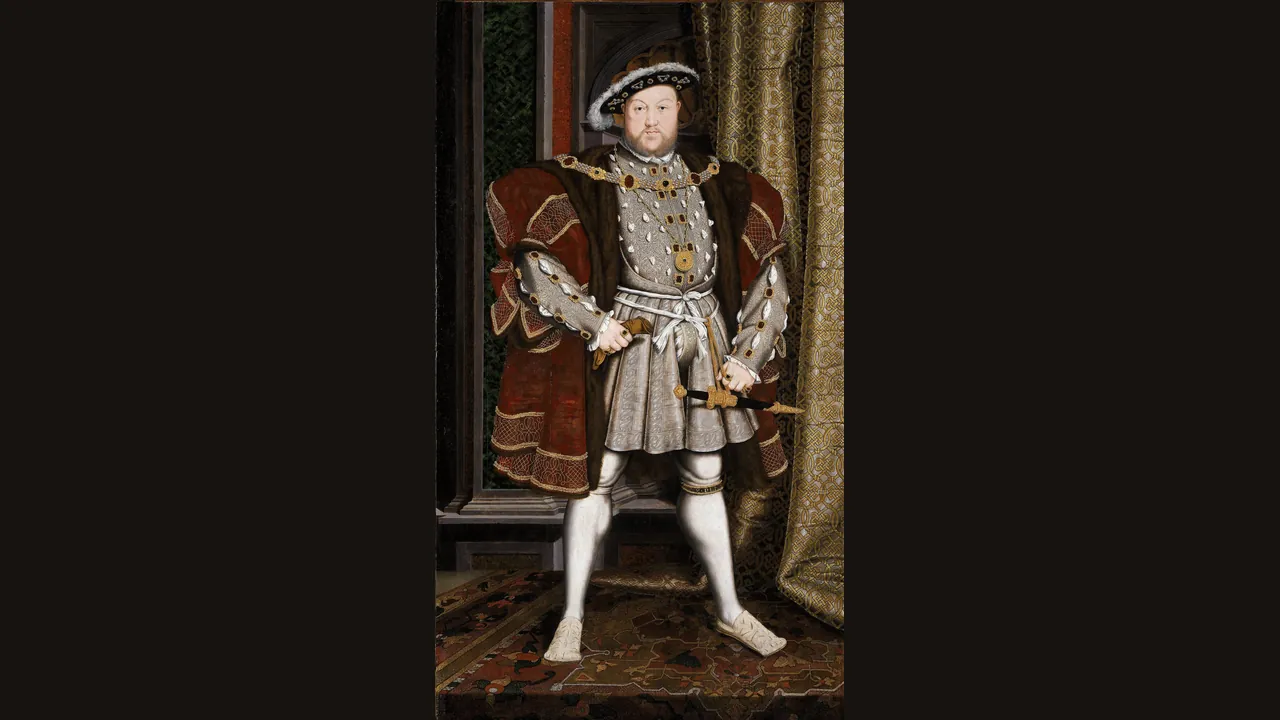
Henry VIII
1491–1547
King of England from 1509 to 1547, born in 1491, who broke with Rome and made himself head of the Church of England. His six marriages and the quest for a male heir drove the break; the dissolution of the monasteries followed. England's navy and its sense of separateness from Europe date much to his reign.
Henry became king in 1509 on the death of his father, Henry VII. He warred with France in 1513 and governed through Cardinal Wolsey until 1529. His marriage to Catherine of Aragon had produced one surviving child, a daughter, Mary, and Henry sought an annulment, which Pope Clement VII would not grant. Parliament then cut England's ties to Rome: the Act in Restraint of Appeals in 1533 and the Act of Supremacy in 1534, which made the king Supreme Head of the Church of England. Thomas More was executed in 1535 for refusing the oath on the succession. Anne Boleyn was executed on charges of adultery and treason in 1536.
Between 1536 and 1541 the crown dissolved the monasteries, some 800 religious houses, and took their lands and income, selling much of the land to gentry and courtiers. The Pilgrimage of Grace, a northern rising of 1536 against the changes, was suppressed and its leaders executed. No reliable count of executions in the reign survives, and historians' estimates vary too widely to state as fact.
Henry married six times. Laws of 1536 and 1543 united Wales to England, and he took the title king of Ireland in 1542. In his last years he debased the coinage to pay for wars with France and Scotland. He died on January 28, 1547, and his son Edward VI succeeded him.
Facts
- Born
- 1491, Greenwich.
- Source: Encyclopaedia Britannica, Henry VIII
- Died
- 1547, Whitehall.
- Source: Encyclopaedia Britannica, Henry VIII
- Reign
- 1509 to 1547.
- Source: Encyclopaedia Britannica, Henry VIII
- Realm
- England.
- Source: Encyclopaedia Britannica, Henry VIII
- Known for
- The break with Rome (1534), the dissolution of the monasteries, and his six marriages.
- Source: Encyclopaedia Britannica, Henry VIII
Sources
- Encyclopaedia Britannica, Henry VIII Source
Source links accessed 22 November 2026.
Images
Related
- Suleiman the MagnificentSame era
- Charles VSame era
- Safavid EmpireSame era
- Moctezuma IISame era
- Wang YangmingSame era
- Niccolò MachiavelliSame era
What happened elsewhere
Pairings are by recorded year, not exact simultaneity.
- SpainWhile Henry VIII (1492)
- Puerto RicoWhile Henry VIII (1493)
- Suleiman the MagnificentWhile Henry VIII (1494)
- Charles VWhile Henry VIII (1500)
- Safavid EmpireWhile Henry VIII (1501)
Meanwhile
Meanwhile, around the world — drag to spin, click a pulsing marker.
Keep reading
Test yourself
When was Henry VIII born?
- 1491, Greenwich
- 1672, Moscow
- 1712, Berlin
- 1543, Okazaki
Answer
1491, Greenwich — Born: 1491, Greenwich.
When did Henry VIII die?
- 1547, Whitehall
- 1632, killed at the Battle of Lutzen
- 1566, on campaign in Hungary
- 1520, Tenochtitlan
Answer
1547, Whitehall — Died: 1547, Whitehall.
When did Henry VIII reign?
- 1509 to 1547
- Shogun 1603 to 1605; effective ruler to 1616
- 1556 to 1598
- 1558 to 1603
Answer
1509 to 1547 — Reign: 1509 to 1547.
What realm did Henry VIII rule?
- England
- The Ottoman Empire at its peak, spanning three continents
- Spain, the Netherlands, Austria, much of Italy and Spanish America
- The Mughal Empire across northern and central India
Answer
England — Realm: England.
True or false: King of England from 1509 to 1547, born in 1491, who broke with Rome and made himself head of the Church of England.
- True
- False
Answer
True — True. King of England from 1509 to 1547, born in 1491, who broke with Rome and made himself head of the Church of England.
My notes
Highlights on this page
None yet.
Myth vs. evidence
The myth
The school rhyme tells the story of the six wives: divorced, beheaded, died, divorced, beheaded, survived.
The evidence
The rhyme turns two annulments into divorces, a remedy English law did not grant. The annulment of the Aragon marriage took seven years of struggle and broke England from Rome. Anne Boleyn died on charges most historians judge fabricated. Behind the rhyme stand the hunt for a male heir, court faction, and a religious revolution.
Sources: J. J. Scarisbrick, Henry VIII
Spotted an error on this page? Email [email protected] and it will be checked against the sources.