

Philosopher · Early modern period · Ming dynasty · China
Wang Yangming
1472–1529
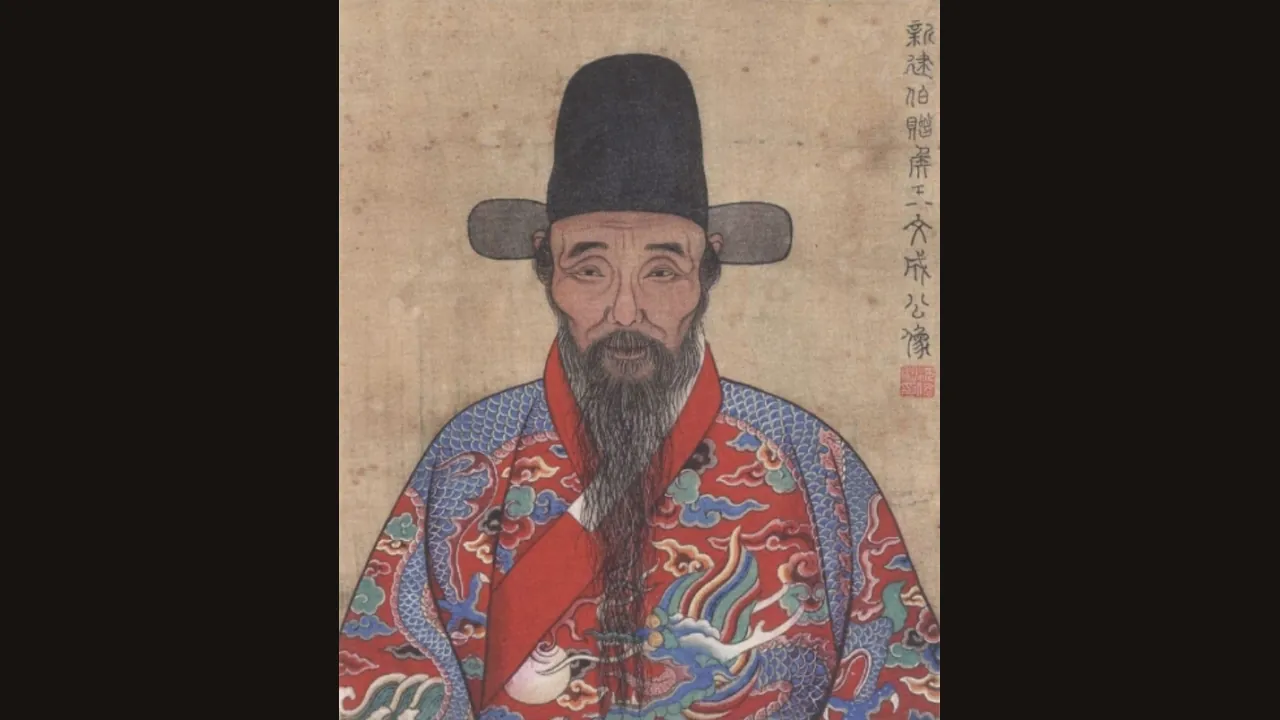
Chinese thinker and general who founded the Neo Confucian school of mind, teaching the unity of knowledge and action. He put down rebellions while writing philosophy. He lived 1472 to 1529.
Wang Yangming was born at Yuyao in Zhejiang province in 1472 and passed the highest civil service examinations in 1499. His career as an official included a period of exile at Longchang in Guizhou, punishment for protesting against the conduct of a powerful court eunuch. Wang dated his central insight to that exile in 1508. He later returned to favor and held high military command, suppressing bandit uprisings in the south and defeating the rebellion of the Prince of Ning in 1519. He died in 1529 on the journey home from a campaign in Guangxi.
Wang taught against the teaching associated with Zhu Xi, who directed students to investigate principle in things outside the mind. Wang held that principle is the mind itself, and that a person finds moral principle by clearing the mind of selfish desire. He drew the term innate knowing from Mencius and made it the center of his doctrine: every person carries an original knowledge of good, and moral failure comes from that knowledge being obscured. His best known doctrine is the unity of knowledge and action. A man who claims to know filial duty and does not practice it has not yet known it. His followers recorded his teaching in the Instructions for Practical Living.
Facts
- Born
- 1472, Yuyao, Zhejiang, China.
- Source: Encyclopaedia Britannica, Wang Yangming
- Died
- 1529, on campaign in the south.
- Source: Encyclopaedia Britannica, Wang Yangming
- School
- Neo Confucianism, the school of mind.
- Source: Encyclopaedia Britannica, Wang Yangming
- Known for
- The unity of knowledge and action: to know the good and not do it is not to know it. And innate knowing, the mind's original sense of right.
- Source: Encyclopaedia Britannica, Wang Yangming
Sources
- Encyclopaedia Britannica, Wang Yangming Source
Source links accessed 22 November 2026.
Images
Related
- Zhu XiConnected
- ChinaConnected
- Hongwu EmperorSame civilization
- Niccolò MachiavelliSame era
- Henry VIIISame era
- Suleiman the MagnificentSame era
What happened elsewhere
Pairings are by recorded year, not exact simultaneity.
- Niccolò MachiavelliWhile Wang Yangming (1469)
- Henry VIIIWhile Wang Yangming (1491)
- SpainWhile Wang Yangming (1492)
- Puerto RicoWhile Wang Yangming (1493)
- Suleiman the MagnificentWhile Wang Yangming (1494)
Meanwhile
Meanwhile, around the world — drag to spin, click a pulsing marker.
Keep reading
Test yourself
When was Wang Yangming born?
- 1472, Yuyao, Zhejiang, China
- 1533, near Bordeaux, France
- 1711, Edinburgh, Scotland
- 1689, near Bordeaux, France
Answer
1472, Yuyao, Zhejiang, China — Born: 1472, Yuyao, Zhejiang, China.
When did Wang Yangming die?
- 1529, on campaign in the south
- 1790, Edinburgh
- 1679, Hardwick Hall, England, at ninety one
- 1677, The Hague, of lung disease, at forty four
Answer
1529, on campaign in the south — Died: 1529, on campaign in the south.
What is Wang Yangming known for?
- The unity of knowledge and action: to know the good and not do it is not to know it. And innate knowing, the mind's original sense of right
- Cogito ergo sum, mind body dualism, and analytic geometry, the coordinate system that carries his name
- The Ethics: one substance, God or Nature, of which minds and bodies are modes; freedom as understanding necessity
- The problem of induction, the attack on miracles, and the Dialogues Concerning Natural Religion, published after his death
Answer
The unity of knowledge and action: to know the good and not do it is not to know it. And innate knowing, the mind's original sense of right — Known for: The unity of knowledge and action: to know the good and not do it is not to know it. And innate knowing, the mind's original sense of right.
Which school of thought was Wang Yangming part of?
- Neo Confucianism, the school of mind
- Empiricism, turned into immaterialism
- Empiricism and skepticism
- Renaissance skepticism
Answer
Neo Confucianism, the school of mind — School: Neo Confucianism, the school of mind.
True or false: Chinese thinker and general who founded the Neo Confucian school of mind, teaching the unity of knowledge and action.
- True
- False
Answer
True — True. Chinese thinker and general who founded the Neo Confucian school of mind, teaching the unity of knowledge and action.
My notes
Highlights on this page
None yet.
Spotted an error on this page? Email [email protected] and it will be checked against the sources.