
Ruler · Early modern period · Ottoman Empire · Turkey
Suleiman the Magnificent
1494–1566
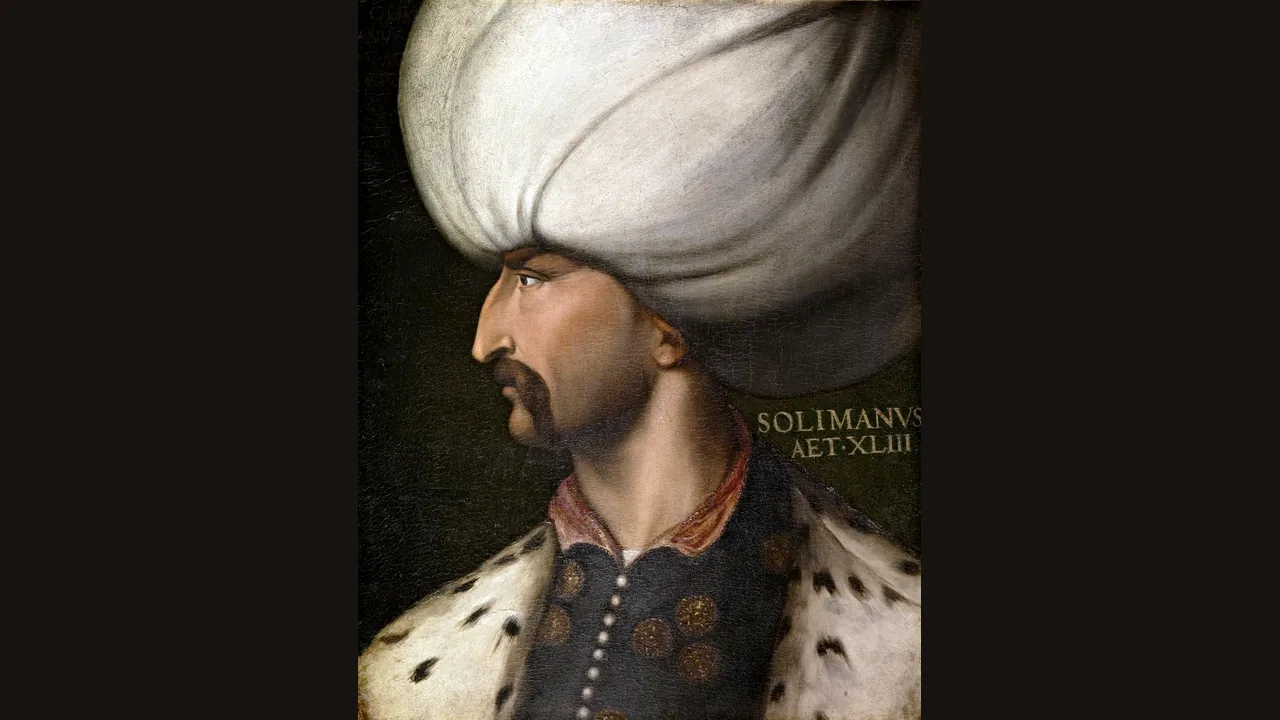
Ottoman sultan from 1520 to 1566, born in 1494, under whom the empire reached its greatest extent and splendor. He took Belgrade, Rhodes and Hungary, and his fleets dominated the Mediterranean. To his own people he was Kanuni, the Lawgiver, for systematizing Ottoman law.
Suleiman came to the throne in 1520 as the only surviving son of Selim the Grim, and he ruled for forty six years, the longest reign of any Ottoman sultan. He inherited an empire that held Egypt, Syria, and the holy cities of Arabia, a full treasury, and armies seasoned by his father's conquests. Europe named him the Magnificent for the splendor of his court. His own subjects named him Kanuni, the Lawgiver, a title earned at home rather than abroad.
He opened his reign with war in the west. Belgrade fell in 1521, opening the road into Hungary. In 1522 he took the island of Rhodes from the Knights Hospitaller after a siege of six months, and the knights sailed away under terms. In 1526 at Mohacs his army destroyed the Hungarian field army in about two hours, and King Louis the Second died in the flight. Hungary broke into pieces. The Ottomans took Buda for good in 1541, and the middle of the kingdom stayed under Ottoman rule for a century and a half. In 1529 Suleiman marched on Vienna itself. Rain, mud, sickness, and the lateness of the season broke the siege, and his army withdrew with heavy loss. Vienna marked the far edge of Ottoman advance into Europe.
In the east he fought the Safavid shahs of Persia across three campaigns. Baghdad fell to him in 1534, giving the empire Iraq and a port on the Persian Gulf. The Treaty of Amasya in 1555 fixed the frontier and left Iraq and eastern Anatolia in Ottoman hands. In the Mediterranean his admiral Hayreddin Barbarossa beat the combined fleet of the emperor and the pope at Preveza in 1538, and Ottoman sea power ruled the eastern Mediterranean for a generation. The record had failures as well. In 1565 the great siege of Malta collapsed after months of fighting and the loss of thousands of men, one of the worst defeats of the reign.
At home Suleiman rebuilt the law. His clerks gathered the sultanic law, the kanun, into ordered codes covering taxes, landholding, and crime, and set them beside the religious law of Islam. Surveyors registered land and taxpayers province by province, and the registers let the state fund its armies and courts. In Istanbul the architect Sinan raised the Suleymaniye Mosque, finished in 1557, and hundreds of mosques, bridges, aqueducts, and public kitchens across the empire. The court consumed poetry, ceremony, and building on a scale that Europe watched with envy and fear.
His court also carried the seeds of trouble. Suleiman broke custom by marrying his favorite Hurrem, called Roxelana in Europe, and her influence over appointments and succession became a standing complaint among Ottoman officials. He ordered the execution of his grand vizier and friend Ibrahim Pasha in 1536 and of his able son Mustafa in 1553, on charges historians still argue about. Older historians taught that the empire began a long decline the moment Suleiman died, worn down by weak sultans and corrupt courts. Many historians now reject that story. They point to recovery, reform, and expansion that continued long after 1566, and they say the decline theory rests on taking the complaints of Ottoman moralists at face value.
Suleiman died in his tent in September 1566 during the siege of Szigetvar in Hungary, on his thirteenth campaign. His officers hid the death until the fortress fell and his son Selim the Second was secure on the throne. At his death the empire stretched from Hungary to Arabia and from the Crimea to Algeria, and it was the strongest power in Europe and the Near East. The cost was paid in taxes, in soldiers who never came home from Hungary and Persia, and in the peoples of the frontier provinces who lived between two empires at war for forty years.
Facts
- Born
- 1494.
- Source: Encyclopaedia Britannica, Suleyman the Magnificent
- Died
- 1566, on campaign in Hungary.
- Source: Encyclopaedia Britannica, Suleyman the Magnificent
- Reign
- 1520 to 1566.
- Source: Encyclopaedia Britannica, Suleyman the Magnificent
- Realm
- The Ottoman Empire at its peak, spanning three continents.
- Source: Encyclopaedia Britannica, Suleyman the Magnificent
- Known for
- Mohacs (1526), the siege of Vienna (1529), and the Kanun legal reforms.
- Source: Encyclopaedia Britannica, Suleyman the Magnificent
Sources
- Encyclopaedia Britannica, Suleyman the Magnificent Source
Source links accessed 22 November 2026.
Images
Related
- TurkeyConnected
- Mehmed IISame civilization
- Ottoman EmpireSame civilization
- Henry VIIISame era
- Charles VSame era
- Safavid EmpireSame era
What happened elsewhere
Pairings are by recorded year, not exact simultaneity.
- Puerto RicoWhile Suleiman the Magnificent (1493)
- SpainWhile Suleiman the Magnificent (1492)
- Henry VIIIWhile Suleiman the Magnificent (1491)
- Charles VWhile Suleiman the Magnificent (1500)
- Safavid EmpireWhile Suleiman the Magnificent (1501)
Meanwhile
Meanwhile, around the world — drag to spin, click a pulsing marker.
Keep reading
Test yourself
When was Suleiman the Magnificent born?
- 1494
- About 1466
- 1571
- 1711
Answer
1494 — Born: 1494.
When did Suleiman the Magnificent die?
- 1566, on campaign in Hungary
- 1796, Saint Petersburg
- 1725, Saint Petersburg
- 1632, killed at the Battle of Lutzen
Answer
1566, on campaign in Hungary — Died: 1566, on campaign in Hungary.
When did Suleiman the Magnificent reign?
- 1520 to 1566
- 1762 to 1796
- 1740 to 1786
- 1556 to 1598
Answer
1520 to 1566 — Reign: 1520 to 1566.
What realm did Suleiman the Magnificent rule?
- The Ottoman Empire at its peak, spanning three continents
- Prussia
- Japan under the Tokugawa shogunate
- The Aztec Empire of central Mexico
Answer
The Ottoman Empire at its peak, spanning three continents — Realm: The Ottoman Empire at its peak, spanning three continents.
True or false: Ottoman sultan from 1520 to 1566, born in 1494, under whom the empire reached its greatest extent and splendor.
- True
- False
Answer
True — True. Ottoman sultan from 1520 to 1566, born in 1494, under whom the empire reached its greatest extent and splendor.
My notes
Highlights on this page
None yet.
Spotted an error on this page? Email [email protected] and it will be checked against the sources.