

Ruler · Early modern period · Spain
Charles V
1500–1558
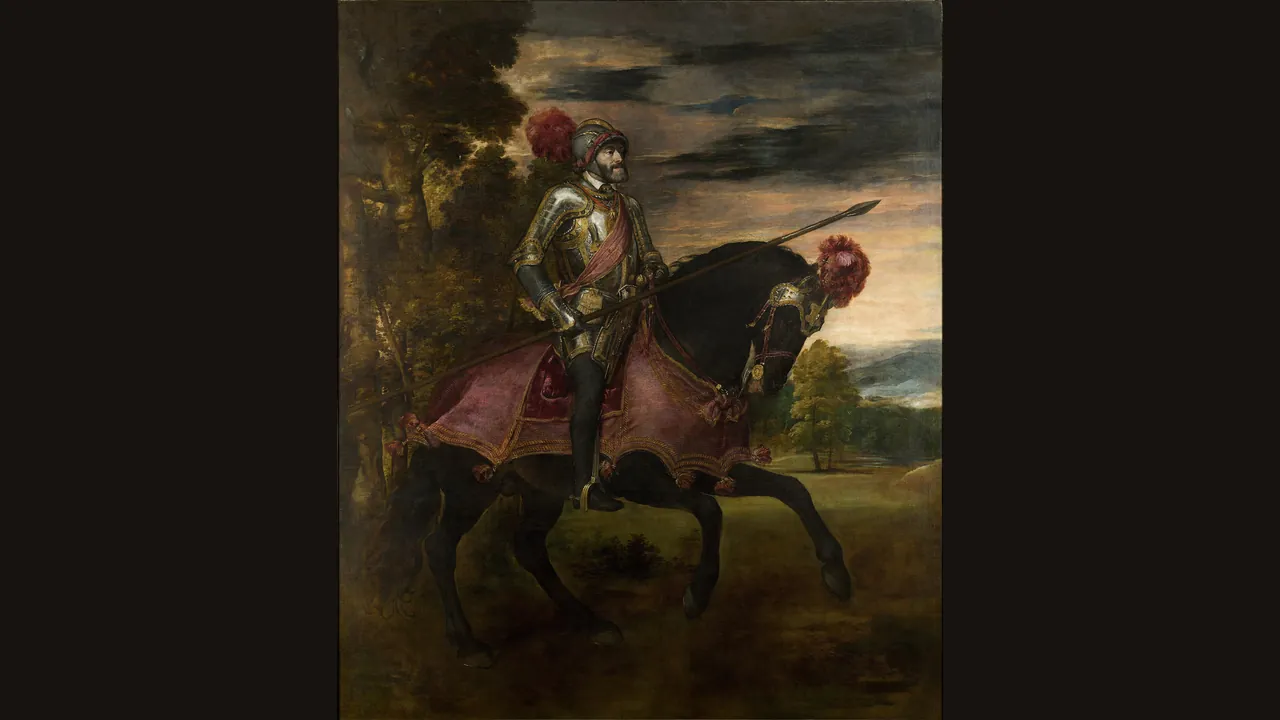
Holy Roman Emperor from 1519 and king of Spain from 1516, born in 1500, who ruled more of Europe than anyone since Charlemagne. His inheritance joined Spain, the Netherlands, Austria and much of Italy under one crown. Exhausted by wars with France and the Turks, he abdicated in 1556 and died in a Spanish monastery in 1558.
Charles was born at Ghent in 1500 and came into his inheritances piece by piece. He took the Burgundian Netherlands from his father in 1506, became king of Spain in 1516 on the death of his grandfather Ferdinand, and in 1519 the electors chose him Holy Roman Emperor over Francis I of France, on credit from the Fugger bankers. He ruled Spain, the Netherlands, Naples, Sicily, the Austrian lands, the American colonies, and the empire in Germany at once, and he spent his reign traveling between them.
His wars ran in three directions. Against France he fought over Italy and the Burgundian lands; his army captured Francis at Pavia in 1525, and in 1527 his unpaid imperial troops mutinied and sacked Rome. Against the Ottomans he defended Hungary and Austria after Suleiman turned back from Vienna in 1529, led an expedition that took Tunis in 1535, and failed before Algiers in 1541. Against the German Protestants he outlawed Luther at Worms in 1521, defeated the Schmalkaldic League at Muhlberg in 1547, and accepted the Peace of Augsburg in 1555, letting each prince set his territory's religion.
In 1555 and 1556 Charles abdicated in stages. He gave the Netherlands and Spain to his son Philip and the imperial title to his brother Ferdinand, then retired to the monastery of Yuste in Spain, where he died in 1558.
Facts
- Born
- 1500, Ghent.
- Source: Encyclopaedia Britannica, Charles V
- Died
- 1558, Yuste, Spain.
- Source: Encyclopaedia Britannica, Charles V
- Reign
- King of Spain 1516 to 1556; emperor 1519 to 1556.
- Source: Encyclopaedia Britannica, Charles V
- Realm
- Spain, the Netherlands, Austria, much of Italy and Spanish America.
- Source: Encyclopaedia Britannica, Charles V
- Known for
- The abdication of 1556 and the wars with France and the Ottoman Empire.
- Source: Encyclopaedia Britannica, Charles V
Sources
- Encyclopaedia Britannica, Charles V Source
Source links accessed 22 November 2026.
Images
Related
- Safavid EmpireSame era
- Moctezuma IISame era
- Suleiman the MagnificentSame era
- Henry VIIISame era
- Mughal EmpireSame era
- Philip IISame era
What happened elsewhere
Pairings are by recorded year, not exact simultaneity.
- Safavid EmpireWhile Charles V (1501)
- Moctezuma IIWhile Charles V (1502)
- Suleiman the MagnificentWhile Charles V (1494)
- Puerto RicoWhile Charles V (1493)
- Henry VIIIWhile Charles V (1491)
Meanwhile
Meanwhile, around the world — drag to spin, click a pulsing marker.
Keep reading
Test yourself
When was Charles V born?
- 1500, Ghent
- 1729, Stettin
- 1712, Berlin
- 1672, Moscow
Answer
1500, Ghent — Born: 1500, Ghent.
When did Charles V die?
- 1558, Yuste, Spain
- 1520, Tenochtitlan
- 1547, Whitehall
- 1796, Saint Petersburg
Answer
1558, Yuste, Spain — Died: 1558, Yuste, Spain.
When did Charles V reign?
- King of Spain 1516 to 1556; emperor 1519 to 1556
- 1502 to 1520
- 1643 to 1715; personal rule from 1661
- 1509 to 1547
Answer
King of Spain 1516 to 1556; emperor 1519 to 1556 — Reign: King of Spain 1516 to 1556; emperor 1519 to 1556.
What realm did Charles V rule?
- Spain, the Netherlands, Austria, much of Italy and Spanish America
- Qing dynasty China
- Russia
- The Russian Empire
Answer
Spain, the Netherlands, Austria, much of Italy and Spanish America — Realm: Spain, the Netherlands, Austria, much of Italy and Spanish America.
True or false: Holy Roman Emperor from 1519 and king of Spain from 1516, born in 1500, who ruled more of Europe than anyone since Charlemagne.
- True
- False
Answer
True — True. Holy Roman Emperor from 1519 and king of Spain from 1516, born in 1500, who ruled more of Europe than anyone since Charlemagne.
My notes
Highlights on this page
None yet.
Spotted an error on this page? Email [email protected] and it will be checked against the sources.