

Civilization · Early modern period · Mughal Empire
Mughal Empire
1526–1857
The Mughal Empire ruled most of India for three centuries. Akbar the Great built a tolerant, centralized state; Shah Jahan built the Taj Mahal. British power hollowed it out, and the 1857 revolt ended it.
Babur, a Timurid prince from Central Asia, defeated the Delhi sultanate at Panipat in 1526 and founded the empire. His grandson Akbar (ruled 1556 to 1605) conquered most of northern India and organized the state his successors kept. At its widest, under Aurangzeb at the end of the seventeenth century, the empire covered nearly the whole Indian subcontinent. Its population was mostly Hindu, under a Muslim ruling house. Persian was the language of government, and Hindus and Muslims served in its army and administration.
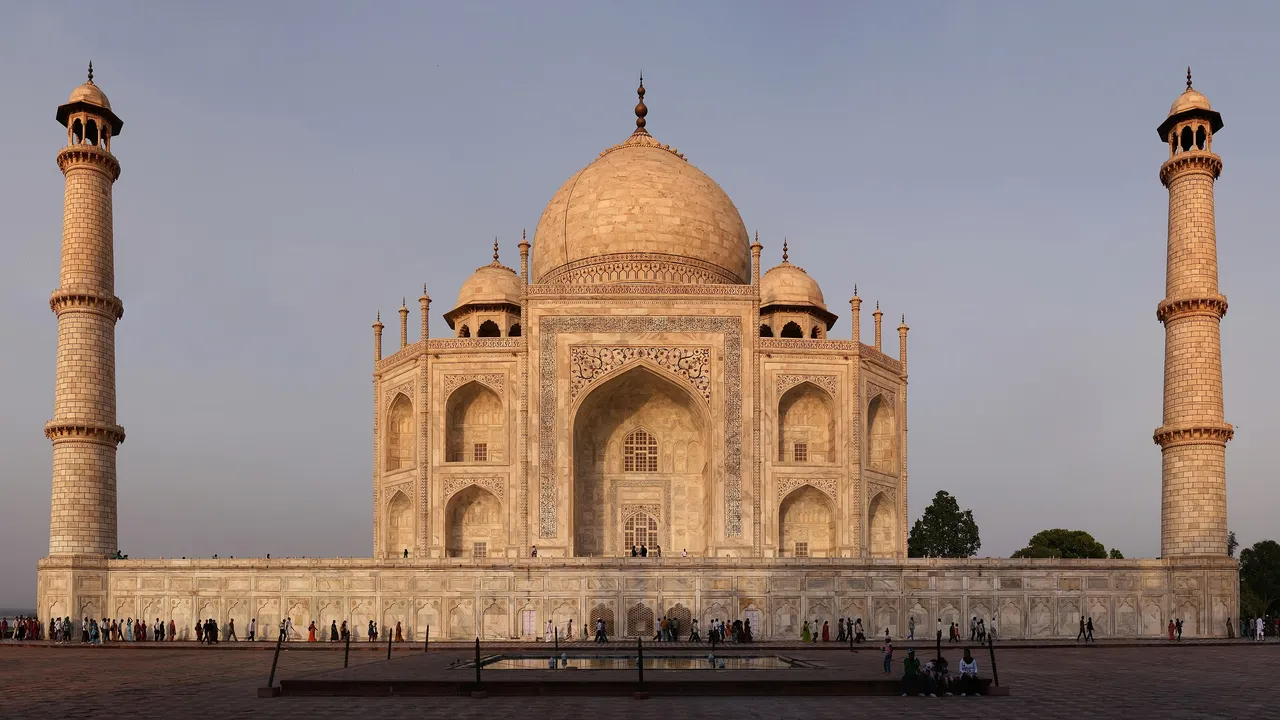
Akbar's officials measured farmland and set the state's share of the harvest as a tax under the zabt system. Imperial officers held mansab ranks that fixed their pay and the number of horsemen they had to supply. Akbar removed the jizya tax on non-Muslims in 1564; Aurangzeb restored it in 1679. The court at Agra and later Delhi commissioned mosques, forts, and tombs, including the Taj Mahal, built under Shah Jahan from 1632 to 1653 as a tomb for his wife.
After Aurangzeb died in 1707, succession wars and regional powers, above all the Marathas, broke the empire's hold. Nader Shah of Persia sacked Delhi in 1739, and the British East India Company took Bengal in 1757. In 1857 Indian soldiers revolted and proclaimed the emperor Bahadur Shah II their leader. British forces retook Delhi, exiled him to Burma, and ended the empire.
Facts
- Founded
- 1526, Babur won the Battle of Panipat.
- Source: Encyclopaedia Britannica, Mughal Empire
- Ended
- 1857, the British deposed the last emperor after the revolt.
- Source: Encyclopaedia Britannica, Mughal Empire
- Heartland
- Northern India, capitals Agra and Delhi.
- Source: Encyclopaedia Britannica, Mughal Empire
- Major rulers
- Akbar the Great, who united India in tolerance; Shah Jahan, builder of the Taj Mahal; Aurangzeb, the last of the great emperors, whose long Deccan wars strained the empire.
- Source: Encyclopaedia Britannica, Mughal Empire
Sources
- Encyclopaedia Britannica, Mughal Empire Source
Source links accessed 22 November 2026.
Images
Related
- AkbarSame civilization
- Philip IISame era
- Michel de MontaigneSame era
- Elizabeth ISame era
- Tokugawa IeyasuSame era
- Moctezuma IISame era
What happened elsewhere
Pairings are by recorded year, not exact simultaneity.
- Philip IIWhile Mughal Empire (1527)
- SwedenWhile Mughal Empire (1523)
- Michel de MontaigneWhile Mughal Empire (1533)
- Elizabeth IWhile Mughal Empire (1533)
Meanwhile
Meanwhile, around the world — drag to spin, click a pulsing marker.
Keep reading
Test yourself
When was Mughal Empire founded?
- 1526, Babur won the Battle of Panipat
- 1839, independence recognized by the Treaty of London
- 1291, the Federal Charter of the three forest cantons
- 1847, full independence declared
Answer
1526, Babur won the Battle of Panipat — Founded: 1526, Babur won the Battle of Panipat.
When did Mughal Empire end?
- 1857, the British deposed the last emperor after the revolt
- 609 BCE, Nineveh destroyed by Babylonians and Medes
- 539 BCE, conquered by Cyrus the Great of Persia
- 539 BCE, when Cyrus the Great took Babylon for Persia
Answer
1857, the British deposed the last emperor after the revolt — Ended: 1857, the British deposed the last emperor after the revolt.
Where was the heartland of Mughal Empire?
- Northern India, capitals Agra and Delhi
- The Tigris Euphrates valley, in present day Iraq and eastern Syria
- Central Mesopotamia, capital at Akkad
- Persia, capital Isfahan
Answer
Northern India, capitals Agra and Delhi — Heartland: Northern India, capitals Agra and Delhi.
True or false: The Mughal Empire ruled most of India for three centuries.
- True
- False
Answer
True — True. The Mughal Empire ruled most of India for three centuries.
My notes
Highlights on this page
None yet.
Spotted an error on this page? Email [email protected] and it will be checked against the sources.