
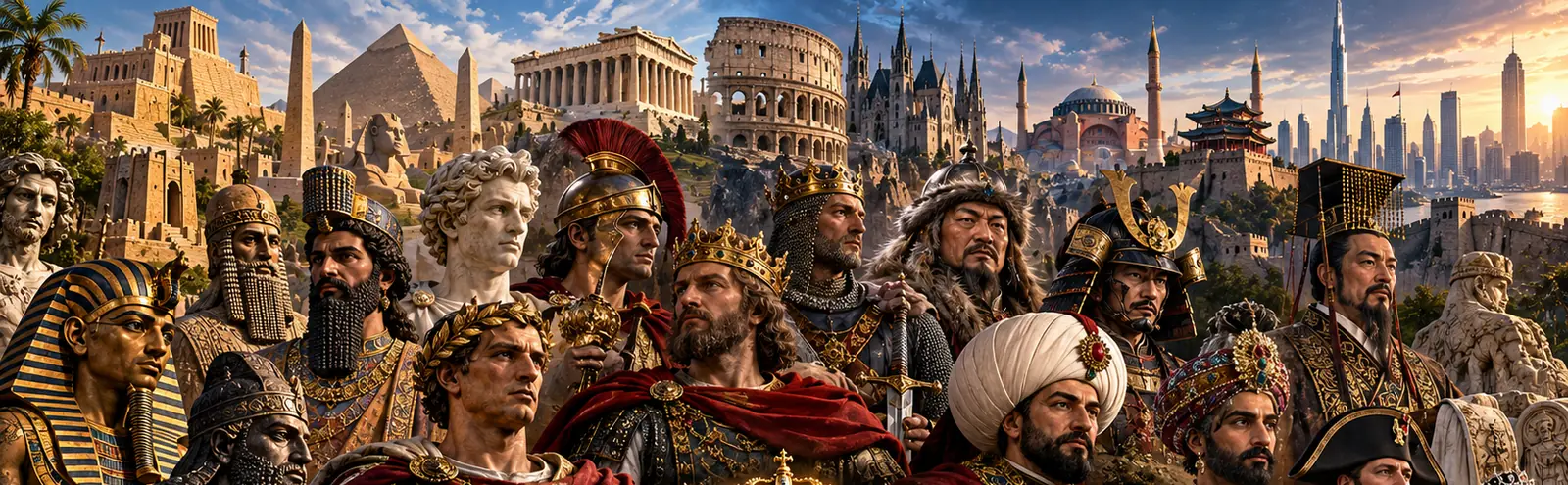
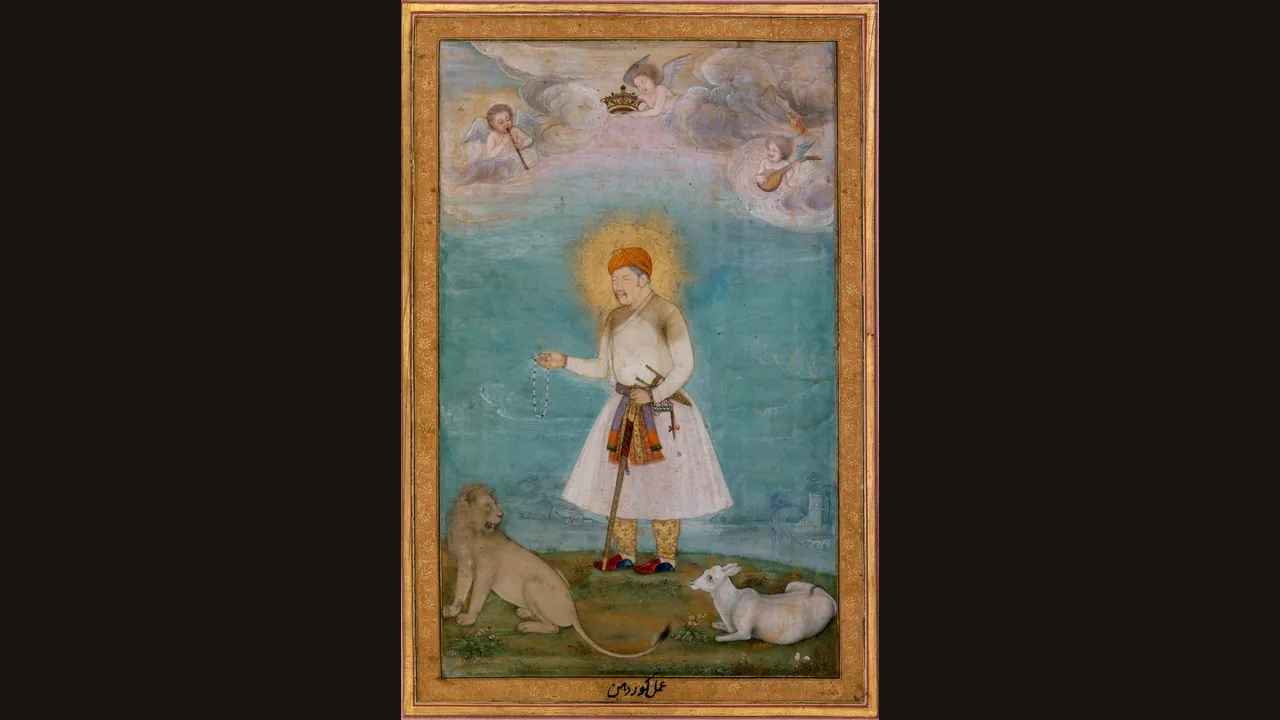
Ruler · Early modern period · India
Akbar
1542–1605
Mughal emperor from 1556 to 1605, born in 1542, who built the Mughal Empire into India's dominant power. He conquered northern and central India, reformed taxation, and practiced unusual religious tolerance for his age, debating with Jesuits, Hindus and Jains at his court. His reign is the classic age of Mughal India.
Akbar was born in 1542 at Umarkot in Sindh, where his father Humayun lived in exile from India. Humayun recovered the Mughal throne in 1555 and died the next year. Akbar was proclaimed emperor in 1556 at the age of thirteen, under the regent Bairam Khan. That year his army defeated Hemu at the Second Battle of Panipat and kept the throne. Akbar dismissed Bairam Khan in 1560 and ruled in his own name.
His armies conquered Malwa, Gujarat in 1573, Bengal in 1576, Kashmir in 1586, and Kandahar in 1595, and took parts of the northern Deccan by 1601. The siege of Chittor in 1567 and 1568 ended with the fortress taken and, by the count of his own court chronicler Abu'l Fazl, about 30,000 noncombatants killed on his orders. In administration he organized his nobles in the mansabdari system of ranked service, and his finance minister Todar Mal set land taxes by measured fields and recorded harvests. He abolished the pilgrimage tax in 1563 and the jizya tax on non Muslims in 1564, appointed Hindus to high office, and formed marriage alliances with Rajput ruling houses. He built the capital of Fatehpur Sikri in 1571 and held religious debates there from 1575, hearing Muslim, Hindu, Jain, Zoroastrian, and Jesuit speakers.
Akbar died at Agra in 1605. His son Salim succeeded him as the emperor Jahangir.
Facts
- Born
- 1542.
- Source: Encyclopaedia Britannica, Akbar
- Died
- 1605.
- Source: Encyclopaedia Britannica, Akbar
- Reign
- 1556 to 1605.
- Source: Encyclopaedia Britannica, Akbar
- Realm
- The Mughal Empire across northern and central India.
- Source: Encyclopaedia Britannica, Akbar
- Known for
- Religious tolerance, administrative reform, and the new capital at Fatehpur Sikri.
- Source: Encyclopaedia Britannica, Akbar
Sources
- Encyclopaedia Britannica, Akbar Source
Source links accessed 22 November 2026.
Images
Related
- Mughal EmpireSame civilization
- Tokugawa IeyasuSame era
- Michel de MontaigneSame era
- Elizabeth ISame era
- Philip IISame era
- Francis BaconSame era
What happened elsewhere
Pairings are by recorded year, not exact simultaneity.
- Tokugawa IeyasuWhile Akbar (1543)
- Michel de MontaigneWhile Akbar (1533)
- Elizabeth IWhile Akbar (1533)
Meanwhile
Meanwhile, around the world — drag to spin, click a pulsing marker.
Keep reading
Test yourself
When was Akbar born?
- 1542
- 1571
- About 1466
- 1494
Answer
1542 — Born: 1542.
When did Akbar die?
- 1605
- 1722
- 1799
- 1616
Answer
1605 — Died: 1605.
When did Akbar reign?
- 1556 to 1605
- 1682 to 1725; emperor from 1721
- 1556 to 1598
- 1588 to 1629
Answer
1556 to 1605 — Reign: 1556 to 1605.
What realm did Akbar rule?
- The Mughal Empire across northern and central India
- The Russian Empire
- Qing dynasty China
- The Ottoman Empire at its peak, spanning three continents
Answer
The Mughal Empire across northern and central India — Realm: The Mughal Empire across northern and central India.
True or false: Mughal emperor from 1556 to 1605, born in 1542, who built the Mughal Empire into India's dominant power.
- True
- False
Answer
True — True. Mughal emperor from 1556 to 1605, born in 1542, who built the Mughal Empire into India's dominant power.
My notes
Highlights on this page
None yet.
Spotted an error on this page? Email [email protected] and it will be checked against the sources.