

Civilization · Early modern period · Safavid Empire
Safavid Empire
1501–1736
The Safavid Empire made Persia Shia and gave Iran its modern identity. Shah Ismail founded it in 1501; Shah Abbas the Great made Isfahan one of the world's most beautiful cities. Isfahan fell to Afghan invaders in 1722; the dynasty formally ended in 1736.
In 1501 Ismail I, the head of a Sufi order based at Ardabil, took Tabriz and was crowned shah. He declared Twelver Shia Islam the religion of the state, and his Turkmen followers, the Qizilbash, conquered the plateau of Persia within a decade. The empire covered roughly the territory of modern Iran, and at times reached into Iraq, the Caucasus, and western Afghanistan. Its people spoke Persian, Turkic languages, Armenian, and Georgian, and Persian served as the language of administration and letters.
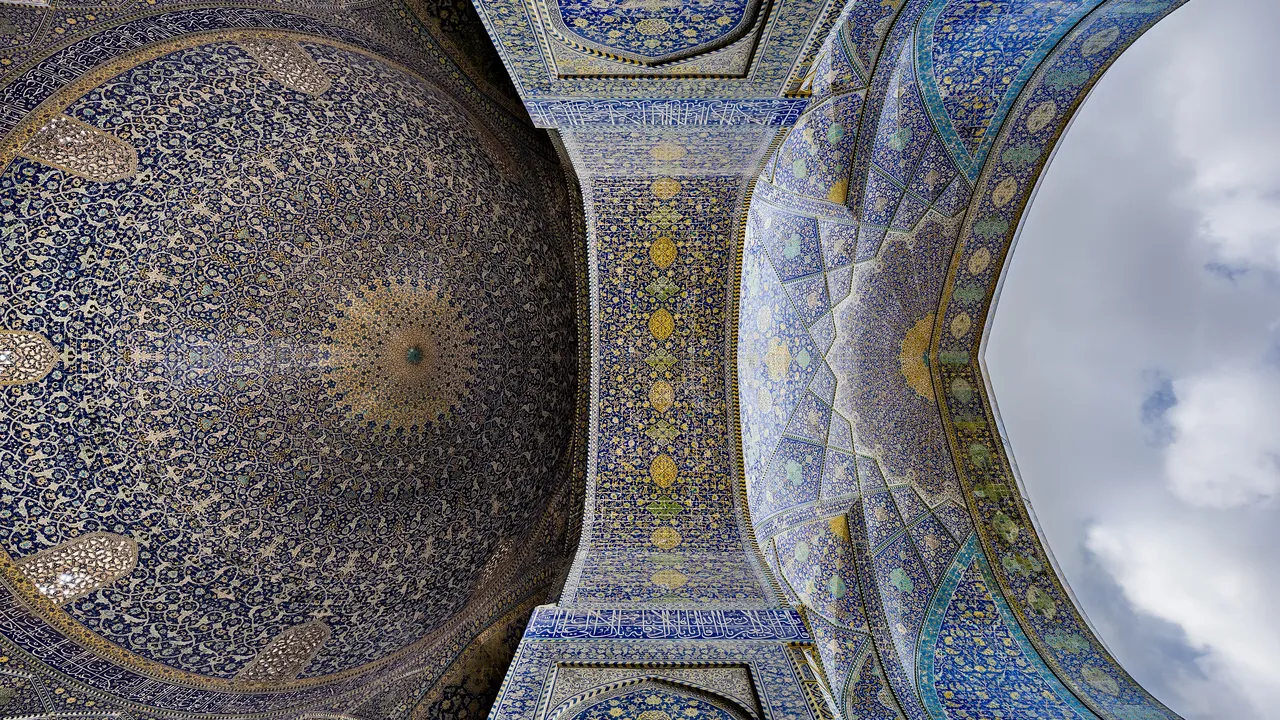
The shah ruled as both king and religious leader, supported by the Qizilbash tribal cavalry. The empire fought repeated wars against the Sunni Ottoman Empire in the west and the Uzbeks in the east, and it lost the Battle of Chaldiran to the Ottomans in 1514. Shah Abbas I, who ruled from 1588 to 1629, built a standing force of musketeers and a corps of soldiers drawn from converted Georgian, Armenian, and Circassian captives. He moved the capital to Isfahan in 1598, rebuilt the city with a royal square, mosques, and bridges, and put the silk trade under a royal monopoly that sold to European merchants.
After Abbas I the court weakened. Afghan rebels besieged Isfahan in 1722, and the city surrendered after famine inside the walls. In 1736 the general Nader deposed the last Safavid shah and took the throne himself, ending the dynasty.
Facts
- Founded
- 1501, Shah Ismail crowned at Tabriz.
- Source: Encyclopaedia Britannica, Safavid Empire
- Ended
- 1736; Isfahan fell to Afghan invaders in 1722, and the last shah was deposed in 1736.
- Source: Encyclopaedia Britannica, Safavid Empire
- Heartland
- Persia, capital Isfahan.
- Source: Encyclopaedia Britannica, Safavid Empire
- Major rulers
- Ismail I, the founder; Abbas I the Great, who made the empire a great power.
- Source: Encyclopaedia Britannica, Safavid Empire
Sources
- Encyclopaedia Britannica, Safavid Empire Source
Source links accessed 22 November 2026.
Images
Related
- Abbas ISame civilization
- Moctezuma IISame era
- Charles VSame era
- Suleiman the MagnificentSame era
- Henry VIIISame era
- Mughal EmpireSame era
What happened elsewhere
Pairings are by recorded year, not exact simultaneity.
- Moctezuma IIWhile Safavid Empire (1502)
- Charles VWhile Safavid Empire (1500)
- Suleiman the MagnificentWhile Safavid Empire (1494)
- Puerto RicoWhile Safavid Empire (1493)
- SpainWhile Safavid Empire (1492)
Meanwhile
Meanwhile, around the world — drag to spin, click a pulsing marker.
Keep reading
Test yourself
When was Safavid Empire founded?
- 1501, Shah Ismail crowned at Tabriz
- 1847, full independence declared
- 1291, the Federal Charter of the three forest cantons
- 1526, Babur won the Battle of Panipat
Answer
1501, Shah Ismail crowned at Tabriz — Founded: 1501, Shah Ismail crowned at Tabriz.
When did Safavid Empire end?
- 1736; Isfahan fell to Afghan invaders in 1722, and the last shah was deposed in 1736
- 1922, the sultanate abolished after the First World War
- 1857, the British deposed the last emperor after the revolt
- c. 1190 BCE, in the Bronze Age collapse
Answer
1736; Isfahan fell to Afghan invaders in 1722, and the last shah was deposed in 1736 — Ended: 1736; Isfahan fell to Afghan invaders in 1722, and the last shah was deposed in 1736.
Where was the heartland of Safavid Empire?
- Persia, capital Isfahan
- Northern Mesopotamia, capitals Assur, Nineveh, and Nimrud
- Central Mesopotamia, capital at Akkad
- The Nile valley, capitals Memphis and Thebes
Answer
Persia, capital Isfahan — Heartland: Persia, capital Isfahan.
True or false: The Safavid Empire made Persia Shia and gave Iran its modern identity.
- True
- False
Answer
True — True. The Safavid Empire made Persia Shia and gave Iran its modern identity.
My notes
Highlights on this page
None yet.
Spotted an error on this page? Email [email protected] and it will be checked against the sources.