
Ruler · Iron Age · Neo Assyrian Empire · Iraq
Ashurbanipal
r. 668–c. 627 BC
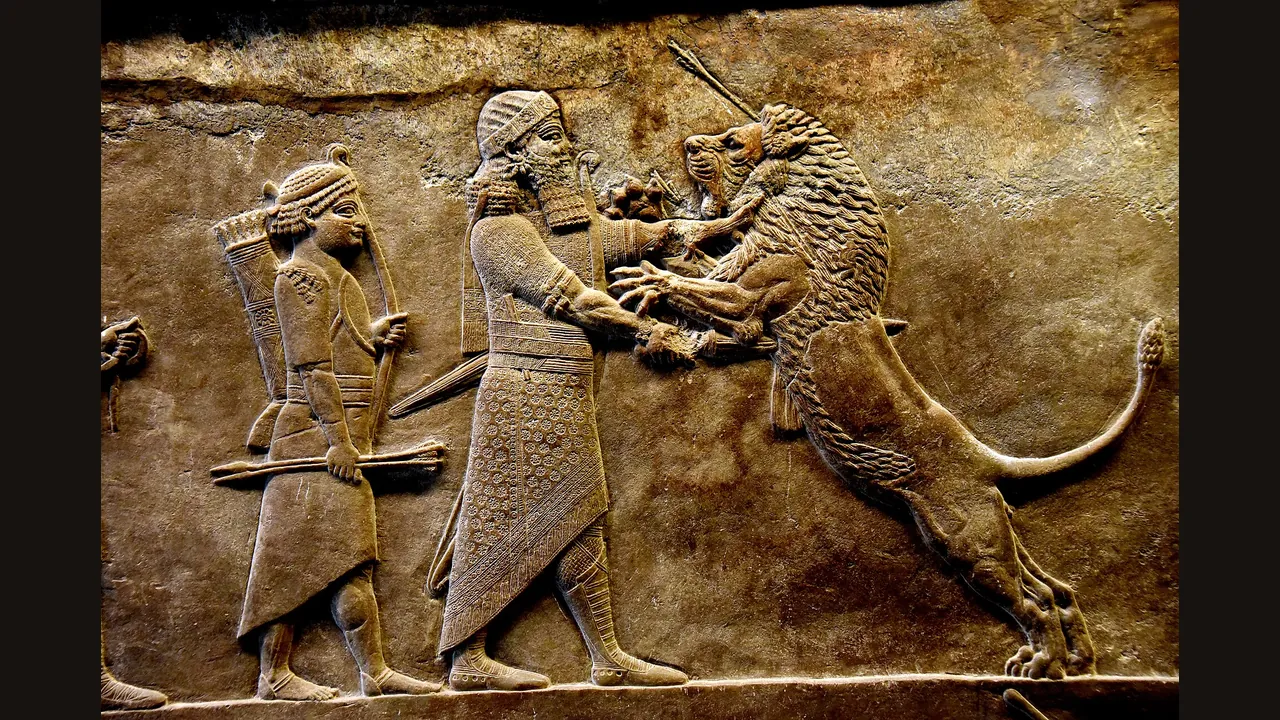
King of Assyria from 668 to about 627 BC, the last great king of the Neo Assyrian Empire. He built a library at Nineveh that gathered thousands of clay tablets, preserving works like the Epic of Gilgamesh. The palace reliefs of his lion hunts are among the finest sculptures of the ancient Near East.
Ashurbanipal became king of Assyria in 668 BC. His father Esarhaddon had named him crown prince in 672 BC and placed his brother Shamash-shum-ukin on the throne of Babylon under him, an arrangement meant to keep the two lands at peace. Ashurbanipal reigned until about 627 BC, though the date and manner of his death are not clearly documented.
His armies took Egypt as far as Thebes, which Assyrian forces sacked in 663 BC, and campaigned against Elam, Arabia, and the Levant. When Shamash-shum-ukin rebelled in 652 BC, Ashurbanipal besieged Babylon for about two years, and his brother died in the fire of his own palace as the city fell in 648 BC. He then turned on Elam and destroyed Susa in 646 BC. His annals describe the devastation in detail, including the opening of royal tombs and the carrying off of Elamite gods, and the figures in those annals are a king's own claims. At Nineveh he built the North Palace and gathered a library of clay tablets from across the empire, collecting by royal order. About thirty thousand tablets and fragments from it survive, and he boasted in his inscriptions that he could read cuneiform himself.
Within twenty years of his death the empire collapsed, and Nineveh fell to the Babylonians and Medes in 612 BC.
Facts
- Reign
- 668 to about 627 BC.
- Source: Encyclopaedia Britannica, Ashurbanipal
- Realm
- The Neo Assyrian Empire, at its greatest extent.
- Source: Encyclopaedia Britannica, Ashurbanipal
- Known for
- The library at Nineveh and the lion hunt palace reliefs, now in the British Museum.
- Source: Encyclopaedia Britannica, Ashurbanipal
Sources
- Encyclopaedia Britannica, Ashurbanipal Source
Source links accessed 22 November 2026.
Images
Related
- Thales of MiletusSame era
- LaoziSame era
- PythagorasSame era
- The BuddhaSame era
- Cyrus the GreatSame era
- ConfuciusSame era
What happened elsewhere
Pairings are by recorded year, not exact simultaneity.
- JapanWhile Ashurbanipal (around 660 BC)
- Thales of MiletusWhile Ashurbanipal (around 624 BC)
- LaoziWhile Ashurbanipal (around 600 BC)
Meanwhile
Meanwhile, around the world — drag to spin, click a pulsing marker.
Keep reading
Test yourself
When did Ashurbanipal reign?
- 668 to about 627 BC
- 559 to 530 BC
- 27 BC to 14 AD as Augustus
- 306 to 337
Answer
668 to about 627 BC — Reign: 668 to about 627 BC.
What realm did Ashurbanipal rule?
- The Neo Assyrian Empire, at its greatest extent
- The Roman Empire
- New Kingdom Egypt
- The Roman Empire, reunited under one ruler
Answer
The Neo Assyrian Empire, at its greatest extent — Realm: The Neo Assyrian Empire, at its greatest extent.
What is Ashurbanipal known for?
- The library at Nineveh and the lion hunt palace reliefs, now in the British Museum
- The poem On Nature, which reasons that what is cannot come from what is not, so change and plurality are illusion
- Atoms and the void as the explanation of all change, and an ethics of cheerfulness
- The capture of Babylon in 539 BC and the Cyrus Cylinder
Answer
The library at Nineveh and the lion hunt palace reliefs, now in the British Museum — Known for: The library at Nineveh and the lion hunt palace reliefs, now in the British Museum.
True or false: King of Assyria from 668 to about 627 BC, the last great king of the Neo Assyrian Empire.
- True
- False
Answer
True — True. King of Assyria from 668 to about 627 BC, the last great king of the Neo Assyrian Empire.
My notes
Highlights on this page
None yet.
Spotted an error on this page? Email [email protected] and it will be checked against the sources.