

Civilization · Iron Age · Phoenicia
Phoenicia
c. 1500–300 BCE
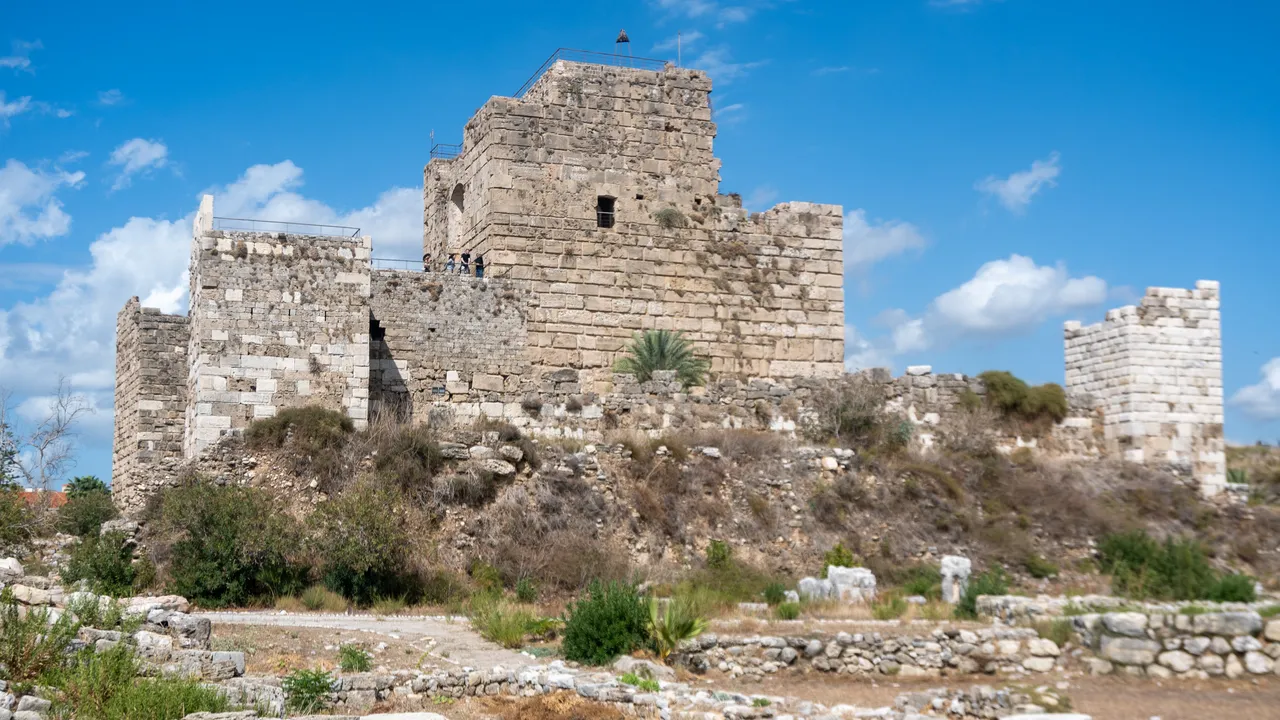
Phoenicia was a seafaring civilization of the Levantine coast, never one state but a string of city states. Its sailors traded across the Mediterranean and founded Carthage. Its alphabet became the ancestor of nearly all alphabets used today.
Phoenicia was never a single state. It was a strip of coast in the eastern Mediterranean, in present day Lebanon and parts of Syria and Israel, held by independent city states, of which Byblos, Sidon, Tyre, and Arwad were the chief. The Phoenicians spoke a Semitic language close to Hebrew and wrote it in an alphabet of about twenty two signs, all consonants, which their scribes had developed by about 1000 BCE.
Each city had its own king, advised by councils of elders and leading merchants. The cities lived by the sea. Their ships carried cedar timber and the purple dye made from murex shells to Egypt and Mesopotamia, and their merchants traded across the Mediterranean, founding colonies at Kition on Cyprus, at Carthage in North Africa, and at Gadir in Spain. Tradition dates the founding of Carthage by Tyre to 814 BCE.
The Phoenician cities paid tribute in turn to the Assyrian, Babylonian, and Persian empires and kept their own kings and trade under each of them. Alexander of Macedon besieged Tyre in 332 BCE and took the city after building a causeway to its island walls. The cities then passed into the kingdoms of his successors, and by about 300 BCE the Phoenician city states had ended as separate states.
Facts
- Founded
- c. 1500 BCE, the rise of the coastal cities.
- Source: Encyclopaedia Britannica, Phoenicia
- Ended
- c. 300 BCE, absorbed into the Hellenistic kingdoms after Alexander.
- Source: Encyclopaedia Britannica, Phoenicia
- Heartland
- The Levantine coast, cities Tyre, Sidon, and Byblos, in present day Lebanon.
- Source: Encyclopaedia Britannica, Phoenicia
- Major rulers
- Hiram of Tyre, ally of Solomon; the merchant princes of the city states.
- Source: Encyclopaedia Britannica, Phoenicia
Sources
- Encyclopaedia Britannica, Phoenicia Source
Source links accessed 22 November 2026.
Images
Related
- AssyriaSame era
- AshurbanipalSame era
- Thales of MiletusSame era
- LaoziSame era
- PythagorasSame era
- The BuddhaSame era
What happened elsewhere
Pairings are by recorded year, not exact simultaneity.
- Thutmose IIIWhile Phoenicia (around 1479 BC)
Meanwhile
Meanwhile, around the world — drag to spin, click a pulsing marker.
Keep reading
Test yourself
When was Phoenicia founded?
- c. 1500 BCE, the rise of the coastal cities
- 1918, as a republic after the fall of Austria Hungary; full sovereignty restored by the State Treaty of 1955
- 1979, after the Islamic Revolution
- c. 2025 BCE, as a city state at Assur; the empire peaked 911–609 BCE
Answer
c. 1500 BCE, the rise of the coastal cities — Founded: c. 1500 BCE, the rise of the coastal cities.
When did Phoenicia end?
- c. 300 BCE, absorbed into the Hellenistic kingdoms after Alexander
- 609 BCE, Nineveh destroyed by Babylonians and Medes
- c. 1190 BCE, in the Bronze Age collapse
- 539 BCE, conquered by Cyrus the Great of Persia
Answer
c. 300 BCE, absorbed into the Hellenistic kingdoms after Alexander — Ended: c. 300 BCE, absorbed into the Hellenistic kingdoms after Alexander.
Where was the heartland of Phoenicia?
- The Levantine coast, cities Tyre, Sidon, and Byblos, in present day Lebanon
- Persia, capitals Pasargadae, Persepolis, and Susa, in present day Iran
- Southern Mesopotamia, in present day Iraq
- The island of Crete, center at Knossos
Answer
The Levantine coast, cities Tyre, Sidon, and Byblos, in present day Lebanon — Heartland: The Levantine coast, cities Tyre, Sidon, and Byblos, in present day Lebanon.
True or false: Phoenicia was a seafaring civilization of the Levantine coast, never one state but a string of city states.
- True
- False
Answer
True — True. Phoenicia was a seafaring civilization of the Levantine coast, never one state but a string of city states.
My notes
Highlights on this page
None yet.
Spotted an error on this page? Email [email protected] and it will be checked against the sources.