

Civilization · Iron Age · Assyria
Assyria
c. 2025–609 BCE
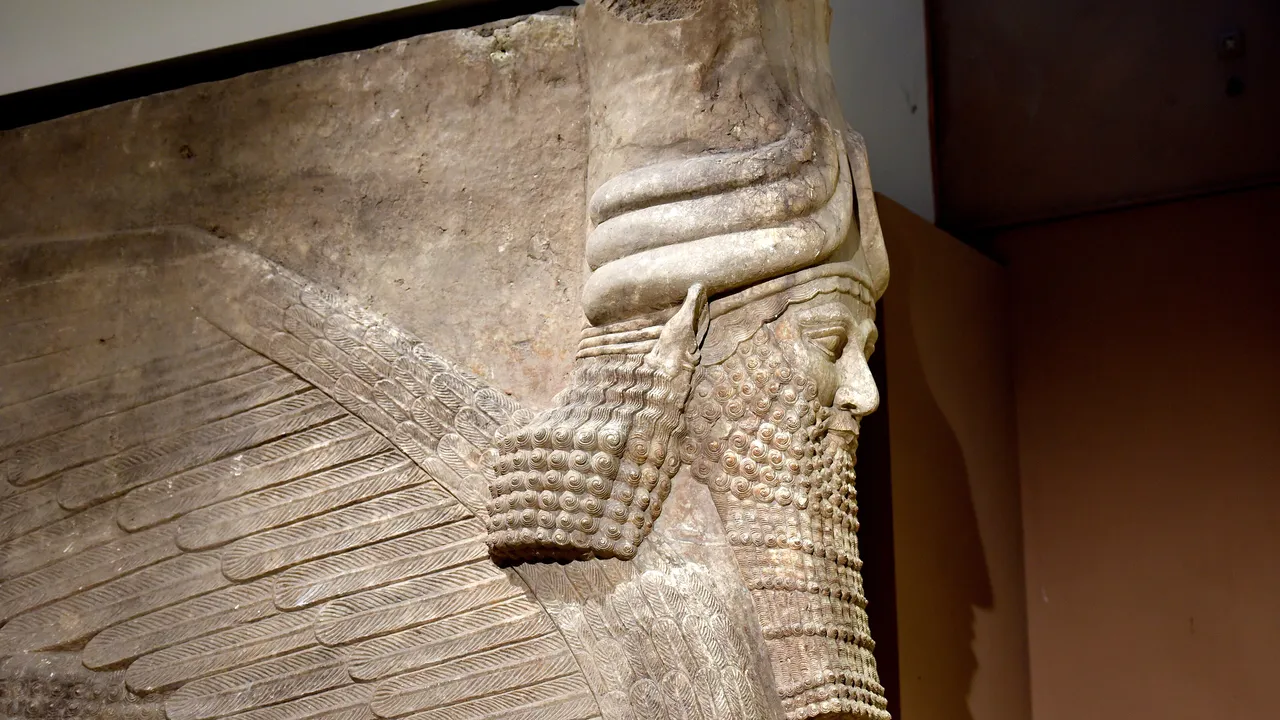
Assyria was the great military power of the ancient Near East, centered on the upper Tigris. Its Neo Assyrian Empire of the ninth to seventh centuries BCE ruled from Egypt to Iran. It fell to a coalition of Babylonians and Medes in 609 BCE.
Assyria began with the city of Assur on the upper Tigris in northern Mesopotamia, a trading town by about 2025 BCE. Its people spoke the Assyrian dialect of Akkadian. In the early second millennium BCE the merchants of Assur ran trading colonies in Anatolia, and their records at Kanesh preserve contracts, letters, and caravan accounts.
Kings of Assur built the city into a territorial state during the fourteenth and thirteenth centuries BCE. The empire that followed, from 911 to 609 BCE, was governed from royal capitals at Assur, Nimrud, Khorsabad, and Nineveh. Its kings ruled conquered lands through appointed governors, kept a standing army with cavalry and siege trains, and moved whole populations from their homes to settle them in other provinces. Assyrian armies conquered Syria and the kingdom of Israel, whose capital Samaria fell in 722 BCE, and briefly held Egypt after 671 BCE. Ashurbanipal collected a library of clay tablets at Nineveh that held copies of the literature of Mesopotamia.
Assyria weakened after Ashurbanipal died in 627 BCE. Babylon revolted, the Medes joined the Babylonians, and Nineveh fell in 612 BCE. The last Assyrian army was beaten at Harran in 609 BCE, and the state ended.
Facts
- Founded
- c. 2025 BCE, as a city state at Assur; the empire peaked 911–609 BCE.
- Source: Encyclopaedia Britannica, Assyria
- Ended
- 609 BCE, Nineveh destroyed by Babylonians and Medes.
- Source: Encyclopaedia Britannica, Assyria
- Heartland
- Northern Mesopotamia, capitals Assur, Nineveh, and Nimrud.
- Source: Encyclopaedia Britannica, Assyria
- Major rulers
- Ashurnasirpal II; Tiglath Pileser III, who rebuilt the empire; Ashurbanipal, the scholar king with the great library.
- Source: Encyclopaedia Britannica, Assyria
Sources
- Encyclopaedia Britannica, Assyria Source
Source links accessed 22 November 2026.
Images
Related
- PhoeniciaSame era
- AshurbanipalSame era
- Thales of MiletusSame era
- LaoziSame era
- PythagorasSame era
- The BuddhaSame era
Meanwhile
Meanwhile, around the world — drag to spin, click a pulsing marker.
Keep reading
Test yourself
When was Assyria founded?
- c. 2025 BCE, as a city state at Assur; the empire peaked 911–609 BCE
- 28 November 1912, independence proclaimed at Vlorë as Ottoman rule collapsed
- 1979, after the Islamic Revolution
- 1918, as a republic after the fall of Austria Hungary; full sovereignty restored by the State Treaty of 1955
Answer
c. 2025 BCE, as a city state at Assur; the empire peaked 911–609 BCE — Founded: c. 2025 BCE, as a city state at Assur; the empire peaked 911–609 BCE.
When did Assyria end?
- 609 BCE, Nineveh destroyed by Babylonians and Medes
- 330 BCE, conquered by Alexander the Great
- 539 BCE, conquered by Cyrus the Great of Persia
- 30 BCE, death of Cleopatra; Egypt became a Roman province
Answer
609 BCE, Nineveh destroyed by Babylonians and Medes — Ended: 609 BCE, Nineveh destroyed by Babylonians and Medes.
Where was the heartland of Assyria?
- Northern Mesopotamia, capitals Assur, Nineveh, and Nimrud
- Persia, capitals Pasargadae, Persepolis, and Susa, in present day Iran
- Southern Mesopotamia, in present day Iraq
- The Levantine coast, cities Tyre, Sidon, and Byblos, in present day Lebanon
Answer
Northern Mesopotamia, capitals Assur, Nineveh, and Nimrud — Heartland: Northern Mesopotamia, capitals Assur, Nineveh, and Nimrud.
True or false: Assyria was the great military power of the ancient Near East, centered on the upper Tigris.
- True
- False
Answer
True — True. Assyria was the great military power of the ancient Near East, centered on the upper Tigris.
My notes
Highlights on this page
None yet.
Spotted an error on this page? Email [email protected] and it will be checked against the sources.