

Ruler · Early modern period · France
Louis XIV
1638–1715
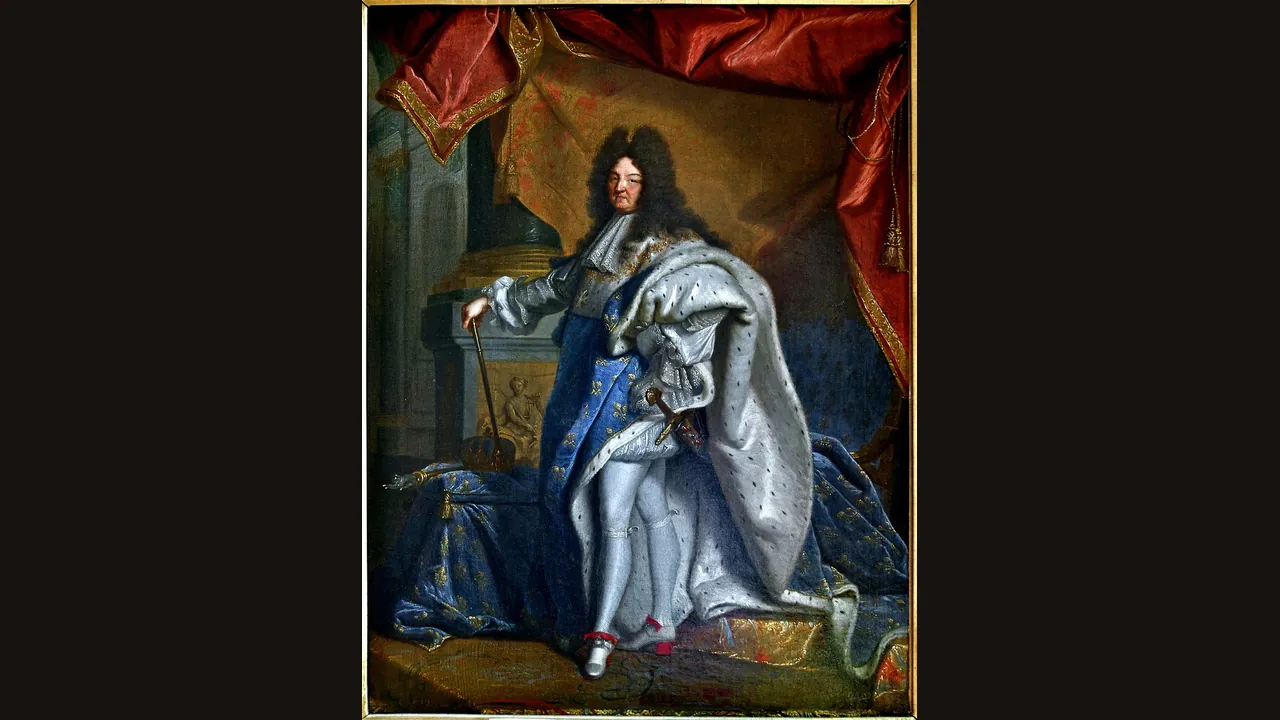
King of France from 1643 to 1715, born in 1638, whose seventy two year reign is the longest verified reign in European history. He made the monarchy absolute in practice, built Versailles into the seat of government, and revoked the Edict of Nantes in 1685. France under him was the dominant power of Europe.
Louis became king in 1643 at the age of four. His mother, Anne of Austria, governed as regent with Cardinal Mazarin, and the revolts of the Fronde, from 1648 to 1653, drove the court from Paris twice. When Mazarin died in 1661 Louis took personal rule and appointed no chief minister. He governed through councils and through intendants, royal agents in the provinces, and he limited the parlements' right to protest his edicts. In 1682 the court moved to Versailles, where the nobles attended on the king.
His ministers Colbert and Louvois enlarged the army into the largest in Europe and kept France at war for much of the reign: the War of Devolution in 1667, the Dutch War of 1672 to 1678, the Nine Years' War, and the War of the Spanish Succession from 1701 to 1714. The treaties of Utrecht and Rastatt left his grandson Philip V on the Spanish throne and France's frontiers largely intact, and left the treasury in debt.
In 1685 the Edict of Fontainebleau revoked the Edict of Nantes, which had granted French Protestants rights of worship since 1598. Protestant churches were demolished, pastors exiled, and laypeople forbidden to leave, while dragoons were quartered in Protestant homes to force conversions. About 200,000 Huguenots escaped abroad. Louis died at Versailles on September 1, 1715, and his great grandson Louis XV, aged five, succeeded him.
Facts
- Born
- 1638, Saint Germain en Laye.
- Source: Encyclopaedia Britannica, Louis XIV
- Died
- 1715, Versailles.
- Source: Encyclopaedia Britannica, Louis XIV
- Reign
- 1643 to 1715; personal rule from 1661.
- Source: Encyclopaedia Britannica, Louis XIV
- Realm
- France.
- Source: Encyclopaedia Britannica, Louis XIV
- Known for
- Versailles, the Revocation of the Edict of Nantes (1685), and absolute monarchy.
- Source: Encyclopaedia Britannica, Louis XIV
Sources
- Encyclopaedia Britannica, Louis XIV Source
Source links accessed 22 November 2026.
Images
Related
- FranceConnected
- John LockeSame era
- Baruch SpinozaSame era
- Gottfried Wilhelm LeibnizSame era
- Kangxi EmperorSame era
- Peter the GreatSame era
What happened elsewhere
Pairings are by recorded year, not exact simultaneity.
- John LockeWhile Louis XIV (1632)
- Baruch SpinozaWhile Louis XIV (1632)
- MontserratWhile Louis XIV (1632)
- Gottfried Wilhelm LeibnizWhile Louis XIV (1646)
- Saint BarthélemyWhile Louis XIV (1648)
Meanwhile
Meanwhile, around the world — drag to spin, click a pulsing marker.
Keep reading
Test yourself
When was Louis XIV born?
- 1638, Saint Germain en Laye
- 1672, Moscow
- 1712, Berlin
- 1594, Stockholm
Answer
1638, Saint Germain en Laye — Born: 1638, Saint Germain en Laye.
When did Louis XIV die?
- 1715, Versailles
- 1786, Potsdam
- 1547, Whitehall
- 1603, Richmond
Answer
1715, Versailles — Died: 1715, Versailles.
When did Louis XIV reign?
- 1643 to 1715; personal rule from 1661
- 1558 to 1603
- 1661 to 1722
- 1588 to 1629
Answer
1643 to 1715; personal rule from 1661 — Reign: 1643 to 1715; personal rule from 1661.
What realm did Louis XIV rule?
- France
- England
- The Spanish Empire: Spain, the Netherlands, Portugal, Italy and Spanish America
- Sweden and its Baltic empire
Answer
France — Realm: France.
True or false: King of France from 1643 to 1715, born in 1638, whose seventy two year reign is the longest verified reign in European history.
- True
- False
Answer
True — True. King of France from 1643 to 1715, born in 1638, whose seventy two year reign is the longest verified reign in European history.
My notes
Highlights on this page
None yet.
Spotted an error on this page? Email [email protected] and it will be checked against the sources.