
Ruler · Twentieth century · Japan
Hirohito
1901–1989
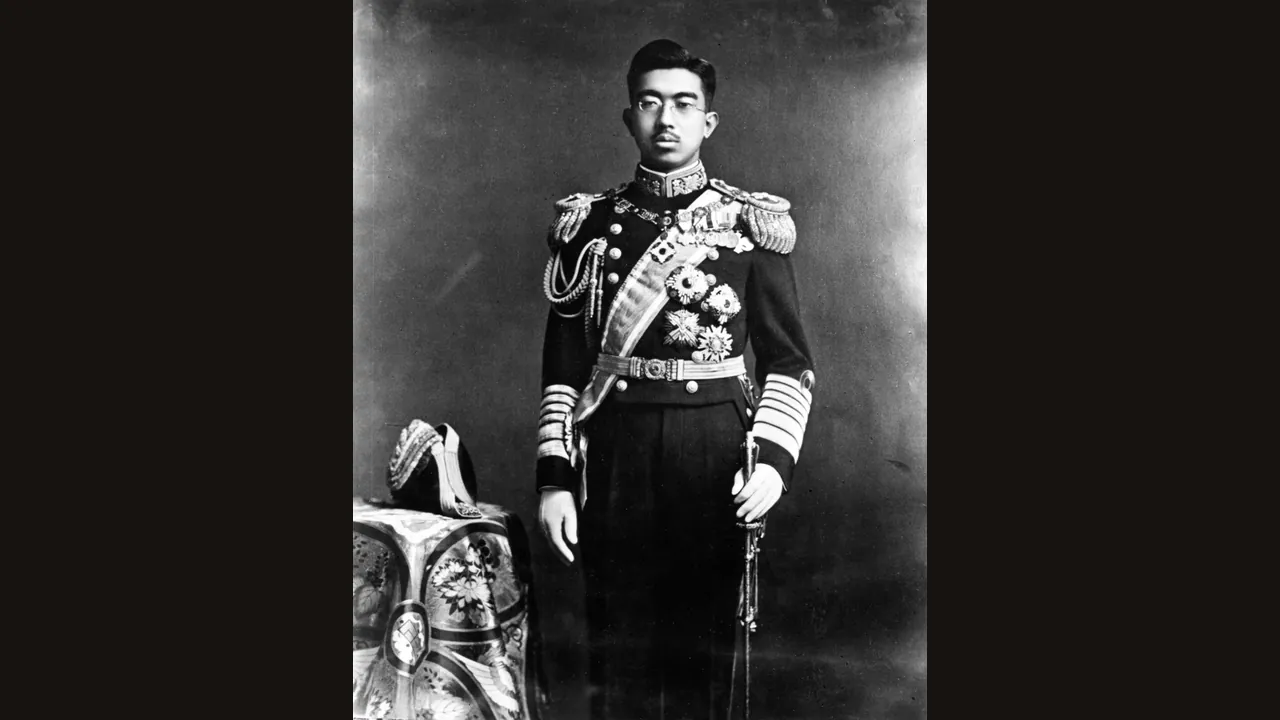
Emperor of Japan from 1926 to 1989, born in 1901, who reigned through Japan's wars and its rebirth. The military ruled in his name during the invasions of China and the Pacific War. His radio broadcast of surrender on 15 August 1945 was the first time most Japanese had heard his voice.
Hirohito became emperor on 25 December 1926. Under the Meiji constitution the emperor stood at the head of the state, held supreme command of the army and navy, and sanctioned government acts, while ministers and the military staffs advised him and carried out policy. Japanese expansion in Asia ran in his name: the army seized Manchuria in 1931, war with China opened in 1937, and imperial conferences in 1941 approved the attack on Pearl Harbor and the invasion of Southeast Asia. In February 1936 he ordered the suppression of a military revolt in Tokyo. In August 1945, with his advisers split over the Potsdam terms, he twice stated his wish to end the war, and his surrender rescript went out by radio on 15 August 1945.
Historians dispute how far he directed the policy carried out in his name. The postwar Japanese and American position held that he acted on ministerial advice as a constitutional monarch. Other historians point to his knowledge of operations, his questions at briefings, and his sanction of decisions as signs of an active part. The surviving documents support different readings of particular decisions. The occupation kept him on the throne, and in 1946 he issued a statement denying that he was a god in human form. Under the constitution of 1947 he reigned as a symbol without governing power, and he died in Tokyo on 7 January 1989, after the longest reign in Japanese history.
Facts
- Born
- 1901, Tokyo.
- Source: Encyclopaedia Britannica, Hirohito
- Died
- 1989, Tokyo.
- Source: Encyclopaedia Britannica, Hirohito
- Reign
- 1926 to 1989, the Showa era.
- Source: Encyclopaedia Britannica, Hirohito
- Realm
- Japan.
- Source: Encyclopaedia Britannica, Hirohito
- Known for
- The surrender broadcast of 15 August 1945.
- Source: Encyclopaedia Britannica, Hirohito
Sources
- Encyclopaedia Britannica, Hirohito Source
Source links accessed 22 November 2026.
Images
Related
- Twentieth centurySame era
- Karl PopperSame era
- Friedrich August von HayekSame era
- Jean-Paul SartreSame era
- Hannah ArendtSame era
- Simone de BeauvoirSame era
What happened elsewhere
Pairings are by recorded year, not exact simultaneity.
- Twentieth centuryWhile Hirohito (1901)
- AustraliaWhile Hirohito (1901)
- Karl PopperWhile Hirohito (1902)
- CubaWhile Hirohito (1902)
- American SamoaWhile Hirohito (1900)
Meanwhile
Meanwhile, around the world — drag to spin, click a pulsing marker.
Keep reading
Test yourself
When was Hirohito born?
- 1901, Tokyo
- 1883, Predappio
- 1866, Guangdong
- 1874, Blenheim Palace
Answer
1901, Tokyo — Born: 1901, Tokyo.
When did Hirohito die?
- 1989, Tokyo
- 1965, London
- 1938, Istanbul
- 1924, Gorki, near Moscow
Answer
1989, Tokyo — Died: 1989, Tokyo.
When did Hirohito reign?
- 1926 to 1989, the Showa era
- 668 to about 627 BC
- About 2334 to 2279 BC, middle chronology
- 559 to 530 BC
Answer
1926 to 1989, the Showa era — Reign: 1926 to 1989, the Showa era.
What realm did Hirohito rule?
- Japan
- The Neo Assyrian Empire, at its greatest extent
- An empire from Greece to India, divided after his death among his generals
- Akkad, with subject cities from Sumer in the south to the upper Euphrates
Answer
Japan — Realm: Japan.
True or false: Emperor of Japan from 1926 to 1989, born in 1901, who reigned through Japan's wars and its rebirth.
- True
- False
Answer
True — True. Emperor of Japan from 1926 to 1989, born in 1901, who reigned through Japan's wars and its rebirth.
My notes
Highlights on this page
None yet.
Spotted an error on this page? Email [email protected] and it will be checked against the sources.