

Ruler · Middle and Late Bronze Age · Old Babylonian Empire · Iraq
Hammurabi
c. 1810–c. 1750 BC
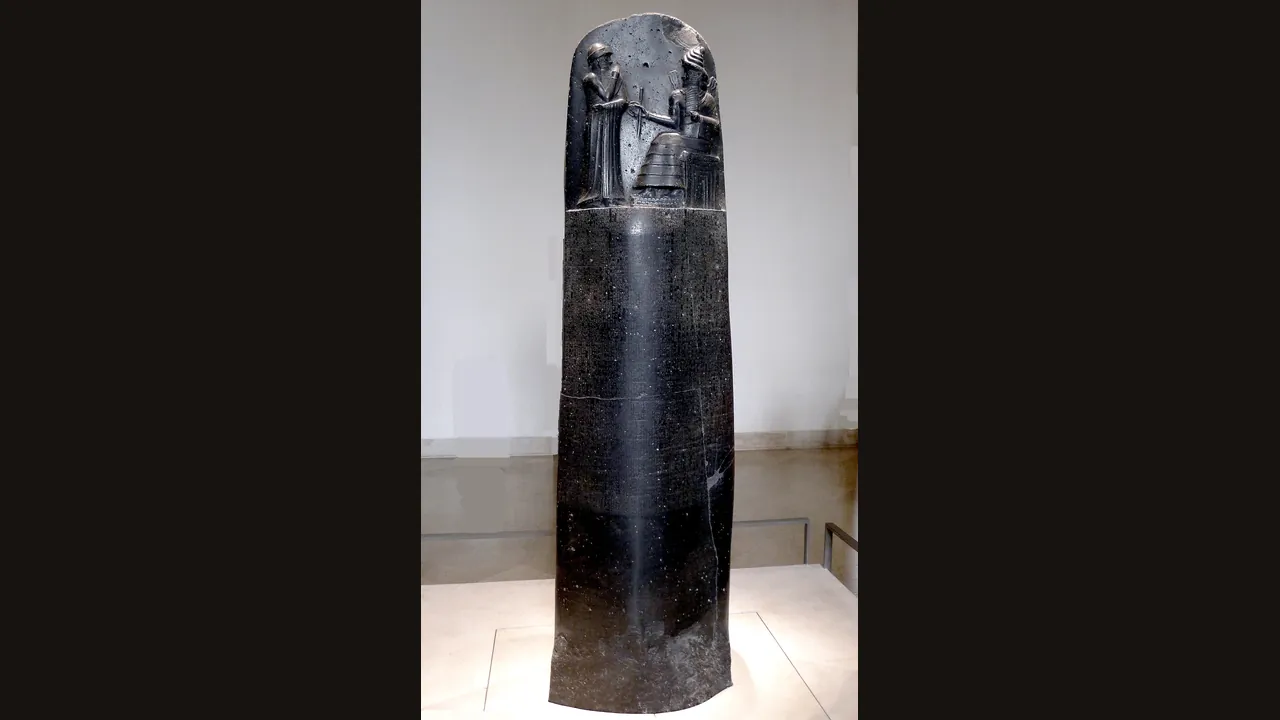
King of Babylon from about 1792 to 1750 BC, who made the city the master of Mesopotamia. His law code, carved on a tall stone pillar, is one of the earliest full sets of written laws to survive. The code set out punishments and prices for a whole society, from nobles to slaves.
Hammurabi inherited the throne of Babylon from his father Sin-muballit about 1792 BC and reigned until 1750 BC. For roughly his first thirty years Babylon was one kingdom among several in Mesopotamia, and he worked through alliances and treaties while stronger neighbors fought each other. He built temples, dug canals, and kept the irrigation works of his small kingdom in repair.
In his last fifteen years he moved by war. He defeated Elam and Eshnunna to the east, took Larsa from Rim-Sin in 1763 BC, and destroyed the palace of Mari after its king Zimri-Lim turned against him. By about 1755 BC he ruled Sumer and Akkad from Babylon, the first time one king had held the whole of southern Mesopotamia since the fall of Ur. His law code, cut on a diorite stele late in his reign, sets out 282 provisions on trade, debt, family, wages, and injury. Penalties change with the rank of the parties, and a man who put out the eye of a free man lost his own eye. His surviving letters show him ruling in close detail, settling lawsuits, tax disputes, and canal work himself.
Hammurabi died in 1750 BC. His son Samsu-iluna succeeded him, and the kingdom shrank steadily under pressure from the south and east.
Facts
- Born
- About 1810 BC.
- Source: Encyclopaedia Britannica, Hammurabi
- Died
- About 1750 BC.
- Source: Encyclopaedia Britannica, Hammurabi
- Reign
- About 1792 to 1750 BC, sixth king of the First Dynasty of Babylon.
- Source: Encyclopaedia Britannica, Hammurabi
- Realm
- Babylon, raised to rule over Sumer and Akkad.
- Source: Encyclopaedia Britannica, Hammurabi
- Known for
- The Code of Hammurabi, inscribed on a diorite stele now in the Louvre.
- Source: Encyclopaedia Britannica, Hammurabi
Sources
- Encyclopaedia Britannica, Hammurabi Source
Source links accessed 22 November 2026.
Images
Related
- Mycenaean GreeceSame era
- BabyloniaSame era
- Hittite EmpireSame era
- Thutmose IIISame era
- Ramesses IISame era
- Minoan civilizationSame era
What happened elsewhere
Pairings are by recorded year, not exact simultaneity.
- Mycenaean GreeceWhile Hammurabi (around 1750 BC)
Meanwhile
Meanwhile, around the world — drag to spin, click a pulsing marker.
Keep reading
Test yourself
When was Hammurabi born?
- About 1810 BC
- 156 BC
- 646
- 598
Answer
About 1810 BC — Born: About 1810 BC.
When did Hammurabi die?
- About 1750 BC
- About 450 BC
- About 475 BC
- About 420 BC
Answer
About 1750 BC — Died: About 1750 BC.
When did Hammurabi reign?
- About 1792 to 1750 BC, sixth king of the First Dynasty of Babylon
- About 1279 to 1213 BC, 66 years
- 668 to about 627 BC
- 522 to 486 BC
Answer
About 1792 to 1750 BC, sixth king of the First Dynasty of Babylon — Reign: About 1792 to 1750 BC, sixth king of the First Dynasty of Babylon.
What realm did Hammurabi rule?
- Babylon, raised to rule over Sumer and Akkad
- The Roman Empire, reunited under one ruler
- The Roman Empire
- New Kingdom Egypt, at its greatest territorial extent
Answer
Babylon, raised to rule over Sumer and Akkad — Realm: Babylon, raised to rule over Sumer and Akkad.
True or false: King of Babylon from about 1792 to 1750 BC, who made the city the master of Mesopotamia.
- True
- False
Answer
True — True. King of Babylon from about 1792 to 1750 BC, who made the city the master of Mesopotamia.
My notes
Highlights on this page
None yet.
Myth vs. evidence
The myth
Hammurabi wrote the first laws in history.
The evidence
His code, from about 1754 BCE, is the most complete early code to survive, not the first. The code of Ur Nammu predates it by roughly three centuries, and the laws of Eshnunna and of Lipit Ishtar also came earlier.
Sources: British Museum, the Code of Hammurabi; Martha T. Roth, Law Collections from Mesopotamia and Asia Minor
Spotted an error on this page? Email [email protected] and it will be checked against the sources.