
Ruler · Middle and Late Bronze Age · New Kingdom of Egypt · Egypt
Ramesses II
r. c. 1279–c. 1213 BC
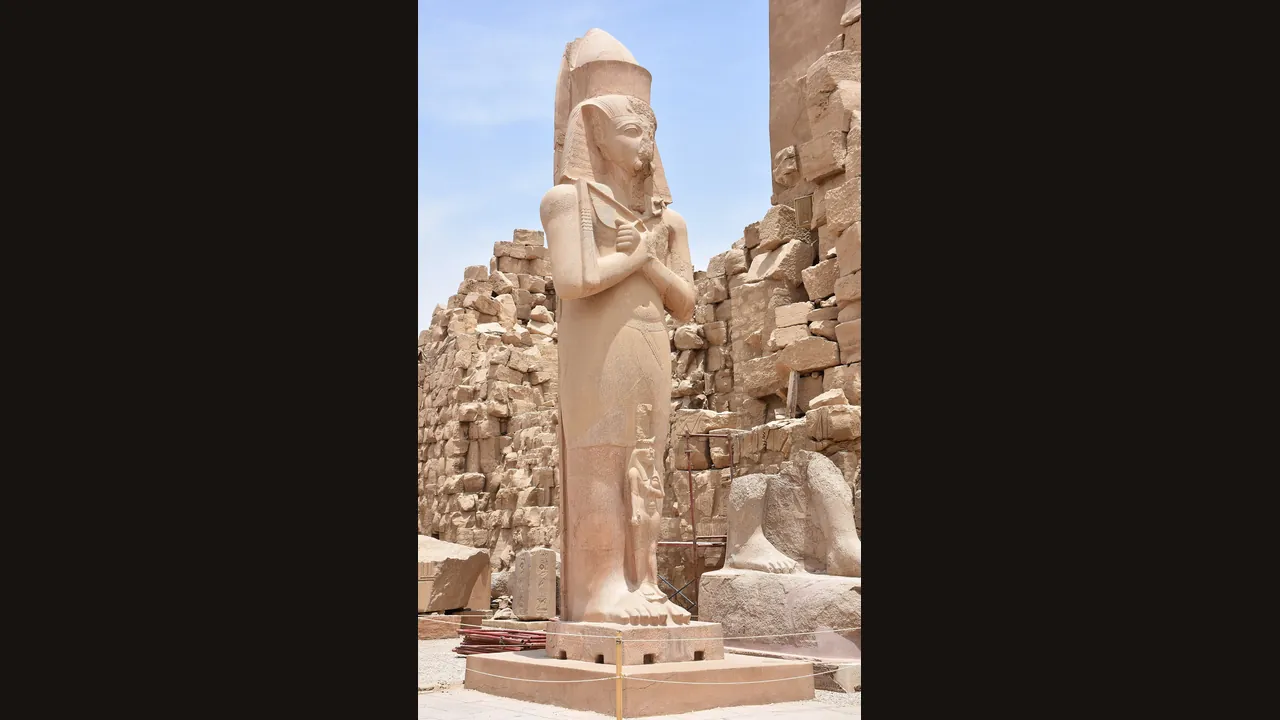
Pharaoh from about 1279 to 1213 BC, remembered as Ramesses the Great for a reign of 66 years. He fought the Hittites to a standstill at the Battle of Kadesh and then made the earliest peace treaty whose text survives from both sides. His building works, from Abu Simbel to the Ramesseum, still dominate the Nile valley.
Ramesses II succeeded his father Seti I as pharaoh about 1279 BC and reigned for sixty six years, until about 1213 BC. He had campaigned with Seti in Canaan and Libya as a young man and continued the war Seti had left unfinished against the Hittite Empire in Syria.
About 1274 BC he marched on Kadesh with four divisions and walked into an ambush. The Hittite chariots cut one division apart and surrounded his camp, and his own temple texts turn the battle into a personal victory won almost alone. The Egyptian army escaped, Kadesh stayed Hittite, and both sides claimed the day. The war ran on for years before it ended in a treaty with Hattusili III about 1259 BC. Copies of the treaty survive in both Egyptian and Hittite versions, the earliest peace treaty known from both sides. A Hittite princess later entered his household to seal the peace. No pharaoh built more. He raised Abu Simbel in Nubia, the Ramesseum at Thebes, and a new capital, Pi-Ramesses, in the Delta, and he set colossal statues of himself across Egypt.
Ramesses died about 1213 BC at about ninety years of age. He had outlived many of his sons, and the thirteenth, Merneptah, took the throne.
Facts
- Reign
- About 1279 to 1213 BC, 66 years.
- Source: Encyclopaedia Britannica, Ramses II
- Died
- About 1213 BC, aged about ninety.
- Source: Encyclopaedia Britannica, Ramses II
- Realm
- New Kingdom Egypt.
- Source: Encyclopaedia Britannica, Ramses II
- Known for
- The Battle of Kadesh, about 1274 BC, and the Egyptian Hittite peace treaty.
- Source: Encyclopaedia Britannica, Ramses II
- Building
- Abu Simbel, the Ramesseum, and work at Karnak and Luxor.
- Source: Encyclopaedia Britannica, Ramses II
Sources
- Encyclopaedia Britannica, Ramses II Source
Source links accessed 22 November 2026.
Images
Related
- EgyptConnected
- Thutmose IIISame civilization
- Hittite EmpireSame era
- Mycenaean GreeceSame era
- HammurabiSame era
- BabyloniaSame era
Meanwhile
Meanwhile, around the world — drag to spin, click a pulsing marker.
Keep reading
Test yourself
When did Ramesses II die?
- About 1213 BC, aged about ninety
- About 135, Nicopolis, Greece
- Late 1476 or early 1477, in battle near Bucharest
- 1109, Canterbury, England
Answer
About 1213 BC, aged about ninety — Died: About 1213 BC, aged about ninety.
When did Ramesses II reign?
- About 1279 to 1213 BC, 66 years
- About 1479 to 1425 BC
- About 2334 to 2279 BC, middle chronology
- 668 to about 627 BC
Answer
About 1279 to 1213 BC, 66 years — Reign: About 1279 to 1213 BC, 66 years.
What realm did Ramesses II rule?
- New Kingdom Egypt
- The Achaemenid Persian Empire at its full extent
- The Achaemenid Persian Empire
- An empire from Greece to India, divided after his death among his generals
Answer
New Kingdom Egypt — Realm: New Kingdom Egypt.
What is Ramesses II known for?
- The Battle of Kadesh, about 1274 BC, and the Egyptian Hittite peace treaty
- The poem On Nature, which reasons that what is cannot come from what is not, so change and plurality are illusion
- The Battle of Megiddo, about 1457 BC, and the Annals carved at Karnak
- The Code of Hammurabi, inscribed on a diorite stele now in the Louvre
Answer
The Battle of Kadesh, about 1274 BC, and the Egyptian Hittite peace treaty — Known for: The Battle of Kadesh, about 1274 BC, and the Egyptian Hittite peace treaty.
True or false: Pharaoh from about 1279 to 1213 BC, remembered as Ramesses the Great for a reign of 66 years.
- True
- False
Answer
True — True. Pharaoh from about 1279 to 1213 BC, remembered as Ramesses the Great for a reign of 66 years.
My notes
Highlights on this page
None yet.
Spotted an error on this page? Email [email protected] and it will be checked against the sources.