

Ruler · Early modern period · Germany
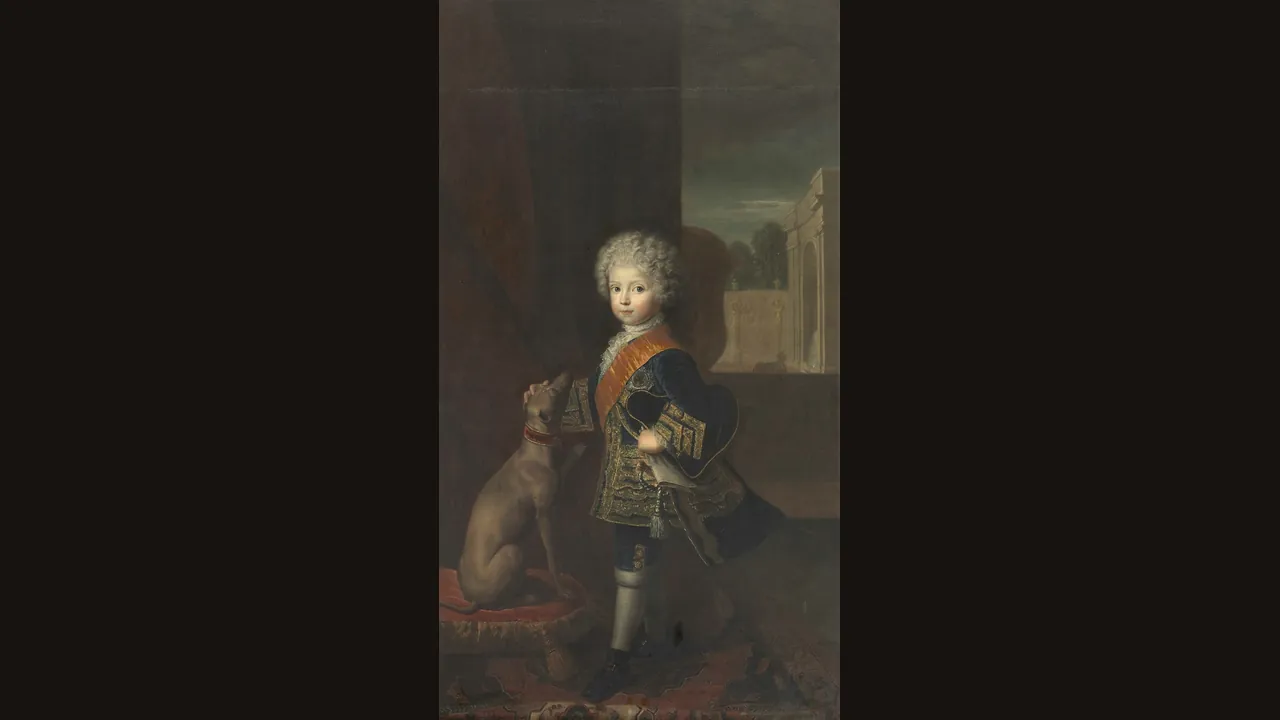
Frederick the Great
1712–1786
King of Prussia from 1740 to 1786, born in 1712, who made a middling German state into a great power. He seized Silesia from Austria on his accession and held it through the Seven Years' War against Austria, France and Russia. A flute playing friend of Voltaire, he practiced enlightened absolutism at home.
Frederick became king of Prussia in 1740 on the death of his father, Frederick William I, who had left him a full treasury and a large army. In December of that year, without a declaration of war, Frederick invaded Silesia, a rich province of the Austrian Habsburgs. Two Silesian wars, ended by the treaties of Breslau in 1742 and Dresden in 1745, confirmed his possession. In 1756 he invaded Saxony to forestall the alliance of Austria, France, and Russia against him, opening the Seven Years' War. His armies won at Rossbach and Leuthen in 1757 and were crushed by the Russians at Kunersdorf in 1759, and Russian and Austrian troops occupied Berlin briefly in 1760. The death of the Russian empress Elizabeth in 1762 brought Russia out of the war, and the Treaty of Hubertusburg in 1763 left Frederick holding Silesia.
In the First Partition of Poland in 1772 Frederick took Polish Prussia, joining East Prussia to the rest of his lands. At home he reformed the courts, restricted judicial torture, and codified the laws, and he allowed his subjects a measure of religious toleration. Serfdom on the noble estates remained untouched, and the army took the largest share of state revenue throughout the reign.
Frederick died at Sanssouci on August 17, 1786. His nephew Frederick William II succeeded him.
Facts
- Born
- 1712, Berlin.
- Source: Encyclopaedia Britannica, Frederick II
- Died
- 1786, Potsdam.
- Source: Encyclopaedia Britannica, Frederick II
- Reign
- 1740 to 1786.
- Source: Encyclopaedia Britannica, Frederick II
- Realm
- Prussia.
- Source: Encyclopaedia Britannica, Frederick II
- Known for
- The seizure of Silesia (1740) and the Seven Years' War (1756 to 1763).
- Source: Encyclopaedia Britannica, Frederick II
Sources
- Encyclopaedia Britannica, Frederick II Source
Source links accessed 22 November 2026.
Images
Related
- GermanyConnected
- Jean-Jacques RousseauSame era
- David HumeSame era
- Qianlong EmperorSame era
- Adam SmithSame era
- Immanuel KantSame era
What happened elsewhere
Pairings are by recorded year, not exact simultaneity.
- Jean-Jacques RousseauWhile Frederick the Great (1712)
- David HumeWhile Frederick the Great (1711)
- Qianlong EmperorWhile Frederick the Great (1711)
- United KingdomWhile Frederick the Great (1707)
- GreenlandWhile Frederick the Great (1721)
Meanwhile
Meanwhile, around the world — drag to spin, click a pulsing marker.
Keep reading
Test yourself
When was Frederick the Great born?
- 1712, Berlin
- 1543, Okazaki
- 1672, Moscow
- 1594, Stockholm
Answer
1712, Berlin — Born: 1712, Berlin.
When did Frederick the Great die?
- 1786, Potsdam
- 1566, on campaign in Hungary
- 1520, Tenochtitlan
- 1603, Richmond
Answer
1786, Potsdam — Died: 1786, Potsdam.
When did Frederick the Great reign?
- 1740 to 1786
- 1661 to 1722
- 1735 to 1796
- 1643 to 1715; personal rule from 1661
Answer
1740 to 1786 — Reign: 1740 to 1786.
What realm did Frederick the Great rule?
- Prussia
- Qing dynasty China at its greatest extent
- The Spanish Empire: Spain, the Netherlands, Portugal, Italy and Spanish America
- Spain, the Netherlands, Austria, much of Italy and Spanish America
Answer
Prussia — Realm: Prussia.
True or false: King of Prussia from 1740 to 1786, born in 1712, who made a middling German state into a great power.
- True
- False
Answer
True — True. King of Prussia from 1740 to 1786, born in 1712, who made a middling German state into a great power.
My notes
Highlights on this page
None yet.
Spotted an error on this page? Email [email protected] and it will be checked against the sources.