

Philosopher · Classical antiquity · India
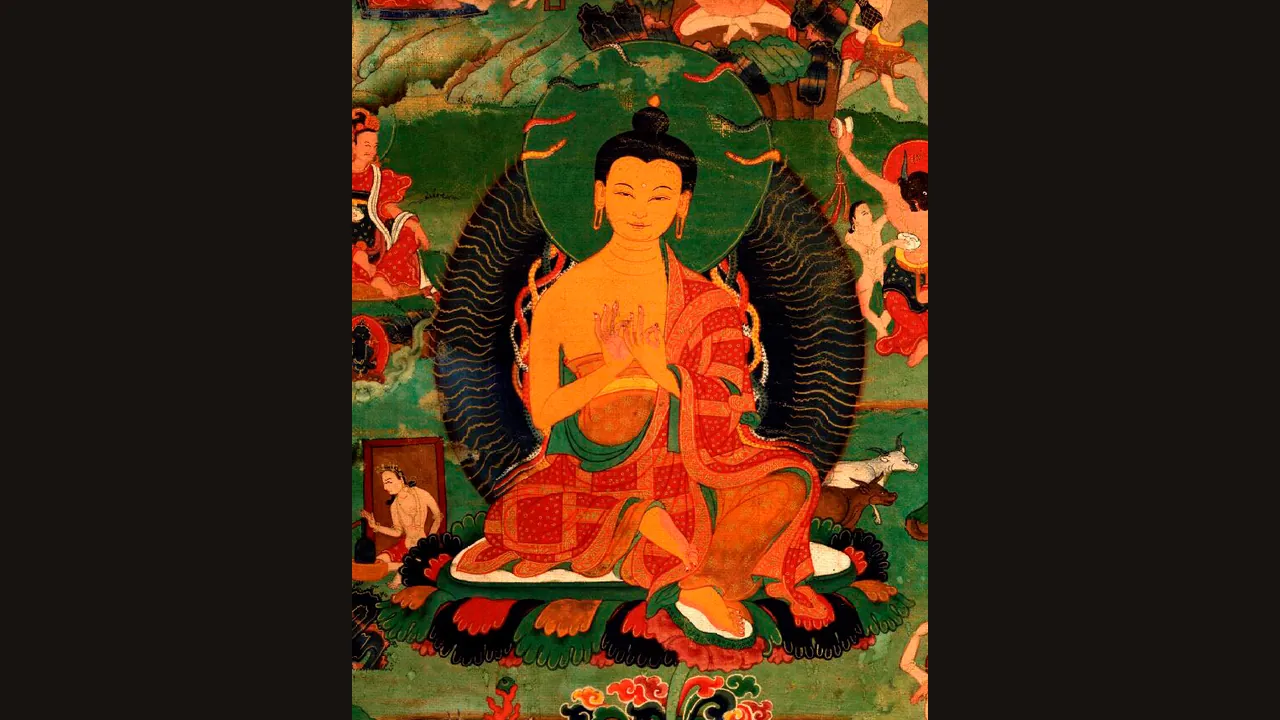
Nagarjuna
c. 150–c. 250
Indian Buddhist thinker, founder of the Madhyamaka middle way school, who argued that all things are empty of inherent existence. His Mulamadhyamakakarika is the central text of Mahayana philosophy. He lived about 150 to 250.
Nagarjuna lived about 150 to 250 and worked in southern India. Little about his life rests on firm evidence. Biographies written centuries later in Chinese and Tibetan place him at the monastery of Nalanda and connect him with a king of the Satavahana line, and they mix his story with legend, including tales of teachings recovered from the serpent kings, the nagas. Tradition addresses his Suhrillekha, the Letter to a Friend, to a royal patron.
His central work, the Mulamadhyamakakarika, the Fundamental Verses on the Middle Way, examines in 27 chapters the notions his opponents treated as basic: motion, causation, the self, the senses, time, and the Buddha himself. His method is to take a concept that claims independent standing and show that it cannot be established, since it depends on its opposite, its parts, its causes, or the mind that designates it. The conclusion he draws is emptiness: things are empty of svabhava, of own being, of any essence that would let them exist from their own side. He identifies emptiness with dependent arising itself, and so presents it as the middle way between existence and nonexistence. He sets out two truths: conventional truth, the world of everyday discourse in which persons, chariots, and teachings function; and ultimate truth, which cannot be taught apart from the conventional. His school takes its name, Madhyamaka, from this middle position.
Facts
- Lived
- About 150 to 250, in southern India.
- Source: Encyclopaedia Britannica, Nagarjuna
- From
- India, of the Satavahana period.
- Source: Encyclopaedia Britannica, Nagarjuna
- School
- Madhyamaka, the middle way between existence and nonexistence.
- Source: Encyclopaedia Britannica, Nagarjuna
- Known for
- The doctrine of emptiness: things exist only in dependence on causes and concepts, and the two truths, conventional and ultimate.
- Source: Encyclopaedia Britannica, Nagarjuna
Sources
- Encyclopaedia Britannica, Nagarjuna Source
Source links accessed 22 November 2026.
Images
Related
- The BuddhaConnected
- Sextus EmpiricusSame era
- Marcus AureliusSame era
- PlotinusSame era
- Sassanian EmpireSame era
- EpictetusSame era
What happened elsewhere
Pairings are by recorded year, not exact simultaneity.
- Sextus EmpiricusWhile Nagarjuna (around 160)
Meanwhile
Meanwhile, around the world — drag to spin, click a pulsing marker.
Keep reading
My notes
Highlights on this page
None yet.
Spotted an error on this page? Email [email protected] and it will be checked against the sources.