

Ruler · Early Middle Ages · Rashidun Caliphate · Saudi Arabia
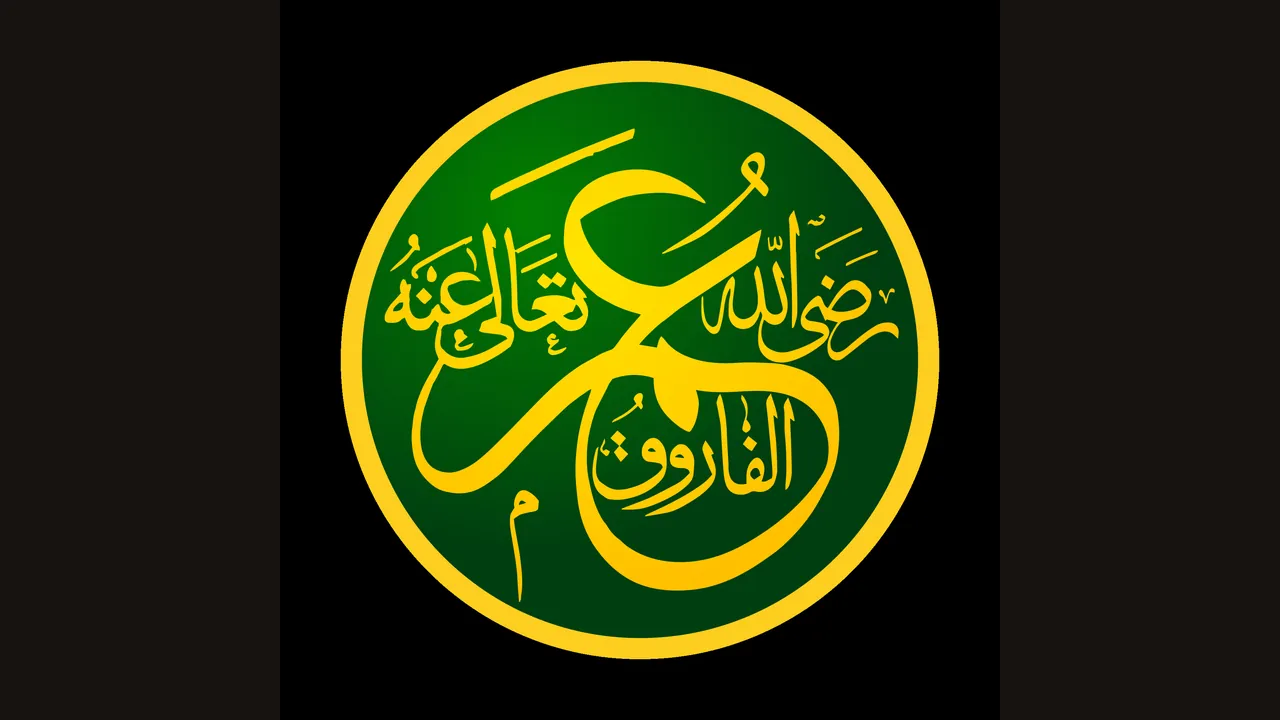
Umar ibn al-Khattab
r. 634–644
Second caliph of Islam, ruling from 634 to 644, born about 584. Under him Arab armies destroyed the Sassanid Persian Empire and took Syria, Palestine and Egypt from Byzantium. He organized the conquered lands with garrison cities and a register of pensions, laying the foundations of the Islamic state.
Umar ibn al-Khattab was born about 584 at Mecca and became a close companion of Muhammad. The first caliph, Abu Bakr, named Umar as his successor, and Umar took office in 634 with the title commander of the faithful. The conquests begun under Abu Bakr went on two fronts. In Iraq his generals defeated the Persians at al Qadisiyyah in 636 and took the Sassanid capital, Ctesiphon, in 637. The victory at Nihawand in 642 broke Persian resistance in the highlands. In the west his armies defeated the Byzantines at Yarmouk in 636 and took Syria. Muslim accounts report that Umar travelled to Jerusalem in 637 or 638 to accept the city's surrender. Egypt was invaded in 639, and Alexandria passed to Muslim rule by 642.
Umar organized the conquered lands as a state. He set up the diwan, a register of soldiers and the pensions paid to them from the revenue of the conquered provinces. Land in Iraq stayed with its owners and paid tax, rather than divided among the Arab soldiers. Garrison cities were founded at Basra and Kufa in Iraq and at Fustat in Egypt, and Umar fixed the Hijri calendar as the era of the state.
Umar died in 644 at Medina, stabbed by Abu Lu'lu'a, a Persian captive. Before his death he named a council of six men to choose the next caliph.
Facts
- Born
- About 584, Mecca.
- Source: Encyclopaedia Britannica, Umar I
- Died
- 644, assassinated in Medina.
- Source: Encyclopaedia Britannica, Umar I
- Reign
- 634 to 644.
- Source: Encyclopaedia Britannica, Umar I
- Realm
- The Rashidun Caliphate, from Persia to Egypt.
- Source: Encyclopaedia Britannica, Umar I
- Known for
- The conquests of Persia, Syria and Egypt, and the organization of the early caliphate.
- Source: Encyclopaedia Britannica, Umar I
Sources
- Encyclopaedia Britannica, Umar I Source
Source links accessed 22 November 2026.
Images
Related
- Abd al-MalikSame era
- Tang dynastySame era
- Umayyad CaliphateSame era
- Tang TaizongSame era
- Justinian ISame era
- CharlemagneSame era
What happened elsewhere
Pairings are by recorded year, not exact simultaneity.
- Abd al-MalikWhile Umar ibn al-Khattab (646)
- Tang dynastyWhile Umar ibn al-Khattab (618)
Meanwhile
Meanwhile, around the world — drag to spin, click a pulsing marker.
Keep reading
Test yourself
When was Umar ibn al-Khattab born?
- About 584, Mecca
- Between about 355 and 370, Alexandria
- About 482, Tauresium (now North Macedonia)
- About 570 BC, Samos, Greece
Answer
About 584, Mecca — Born: About 584, Mecca.
When did Umar ibn al-Khattab die?
- 644, assassinated in Medina
- 814, Aachen
- 973, Memleben
- 809, on campaign in Persia
Answer
644, assassinated in Medina — Died: 644, assassinated in Medina.
When did Umar ibn al-Khattab reign?
- 634 to 644
- 685 to 705
- 786 to 809
- 626 to 649
Answer
634 to 644 — Reign: 634 to 644.
What realm did Umar ibn al-Khattab rule?
- The Rashidun Caliphate, from Persia to Egypt
- The Carolingian Empire, covering France, Germany and northern Italy
- The Abbasid Caliphate, centered on Baghdad
- Germany and northern Italy, as the Holy Roman Empire
Answer
The Rashidun Caliphate, from Persia to Egypt — Realm: The Rashidun Caliphate, from Persia to Egypt.
True or false: Second caliph of Islam, ruling from 634 to 644, born about 584.
- True
- False
Answer
True — True. Second caliph of Islam, ruling from 634 to 644, born about 584.
My notes
Highlights on this page
None yet.
Spotted an error on this page? Email [email protected] and it will be checked against the sources.