

Civilization · Early Middle Ages · Umayyad Caliphate
Umayyad Caliphate
661–750
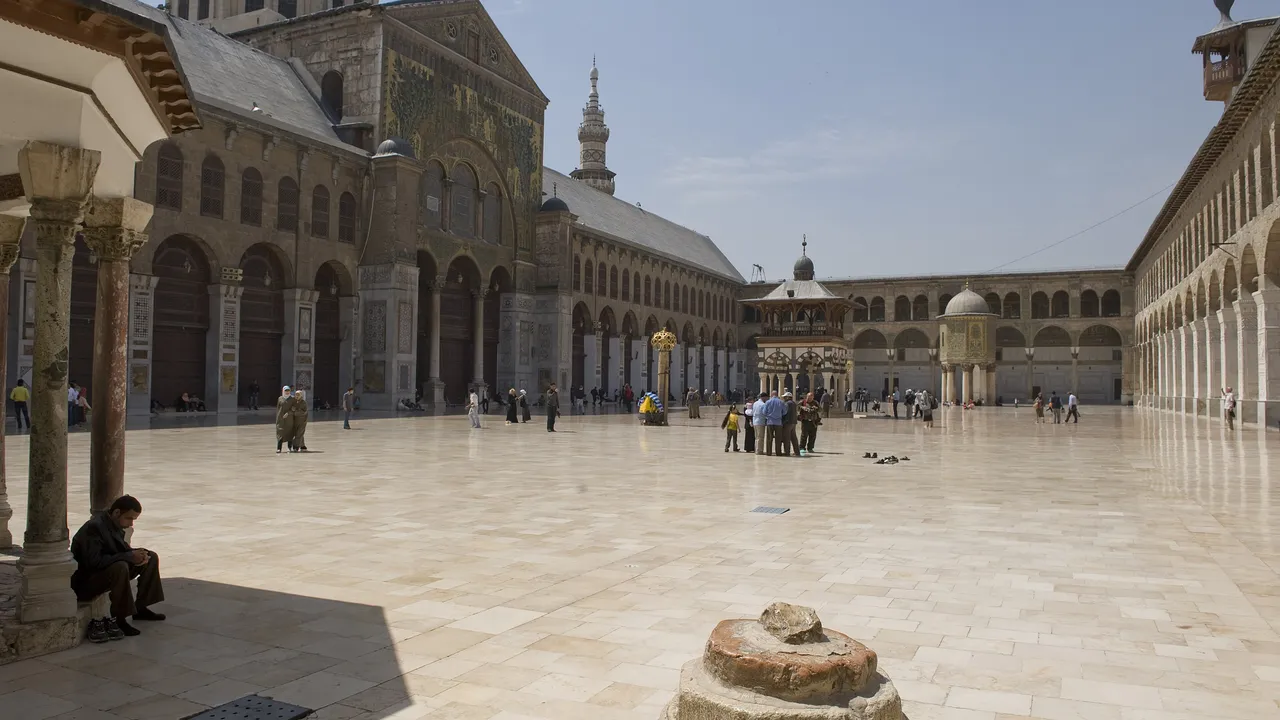
The Umayyad Caliphate was the first great Muslim empire, ruling from Spain to India within a century of Muhammad's death. Its capital Damascus became one of the world's great cities. The Abbasids overthrew it in 750.
The Umayyad Caliphate began in 661 CE, when Muawiya, governor of Syria, became caliph after the civil war that followed the murder of the caliph Ali. He moved the capital to Damascus and passed the office to his son, making the caliphate hereditary. Umayyad caliphs ruled from Damascus until 750.
Umayyad armies conquered Persia, North Africa, Spain in 711, and Sindh the same year, and pushed into Transoxiana beyond the Oxus river. By 715 the caliphate ran from Iberia in the west to the borders of Tang China. Governors ruled the provinces, and diwan registers listed soldiers and their pay. Abd al Malik, caliph from 685 to 705, made Arabic the language of administration in place of Greek and Persian, struck an Arabic coinage in 696 and 697, and built the Dome of the Rock in Jerusalem in 691 and 692. Taxes included a land tax and a poll tax on non-Muslim subjects, and collectors often kept taxing converts to Islam as before.
In Khurasan the Abbasid family organized opposition to Umayyad rule, and its commander Abu Muslim raised an army there in 747. Abbasid forces defeated the caliph Marwan II at the Great Zab river in January 750, and the Abbasids killed most members of the Umayyad family. One prince, Abd al Rahman, escaped to Spain and founded an Umayyad emirate at Córdoba in 756.
Facts
- Founded
- 661 CE, Muawiya founded the dynasty at Damascus.
- Source: Encyclopaedia Britannica, Umayyad Caliphate
- Ended
- 750 CE, overthrown by the Abbasid revolution.
- Source: Encyclopaedia Britannica, Umayyad Caliphate
- Heartland
- The Middle East, capital Damascus.
- Source: Encyclopaedia Britannica, Umayyad Caliphate
- Major rulers
- Muawiya I, the founder; Abd al Malik, who built the Dome of the Rock; Umar II, remembered for piety.
- Source: Encyclopaedia Britannica, Umayyad Caliphate
Sources
- Encyclopaedia Britannica, Umayyad Caliphate Source
Source links accessed 22 November 2026.
Images
Related
- Abd al-MalikSame civilization
- Umar ibn al-KhattabSame era
- Tang dynastySame era
- Tang TaizongSame era
- CharlemagneSame era
- Abbasid CaliphateSame era
Meanwhile
Meanwhile, around the world — drag to spin, click a pulsing marker.
Keep reading
Test yourself
When was Umayyad Caliphate founded?
- 661 CE, Muawiya founded the dynasty at Damascus
- 962, Otto I crowned emperor by the Pope
- 750 CE, the Abbasid revolution; Baghdad founded 762
- 618 CE, Li Yuan founded the dynasty
Answer
661 CE, Muawiya founded the dynasty at Damascus — Founded: 661 CE, Muawiya founded the dynasty at Damascus.
When did Umayyad Caliphate end?
- 750 CE, overthrown by the Abbasid revolution
- 1258 CE, the Mongols sacked Baghdad
- 539 BCE, when Cyrus the Great took Babylon for Persia
- 539 BCE, conquered by Cyrus the Great of Persia
Answer
750 CE, overthrown by the Abbasid revolution — Ended: 750 CE, overthrown by the Abbasid revolution.
Where was the heartland of Umayyad Caliphate?
- The Middle East, capital Damascus
- The Middle East, capital Baghdad
- The eastern Mediterranean, capital Constantinople
- Central Europe, above all Germany and northern Italy
Answer
The Middle East, capital Damascus — Heartland: The Middle East, capital Damascus.
True or false: The Umayyad Caliphate was the first great Muslim empire, ruling from Spain to India within a century of Muhammad's death.
- True
- False
Answer
True — True. The Umayyad Caliphate was the first great Muslim empire, ruling from Spain to India within a century of Muhammad's death.
My notes
Highlights on this page
None yet.
Spotted an error on this page? Email [email protected] and it will be checked against the sources.