Era 1 of 10 · c. 3200–2000 BCE
Early Bronze Age
Writing appears in Mesopotamia and Egypt around 3200 BCE, and the written record begins. The first cities, kings and states grow up along the Tigris, the Euphrates, the Nile and the Indus.
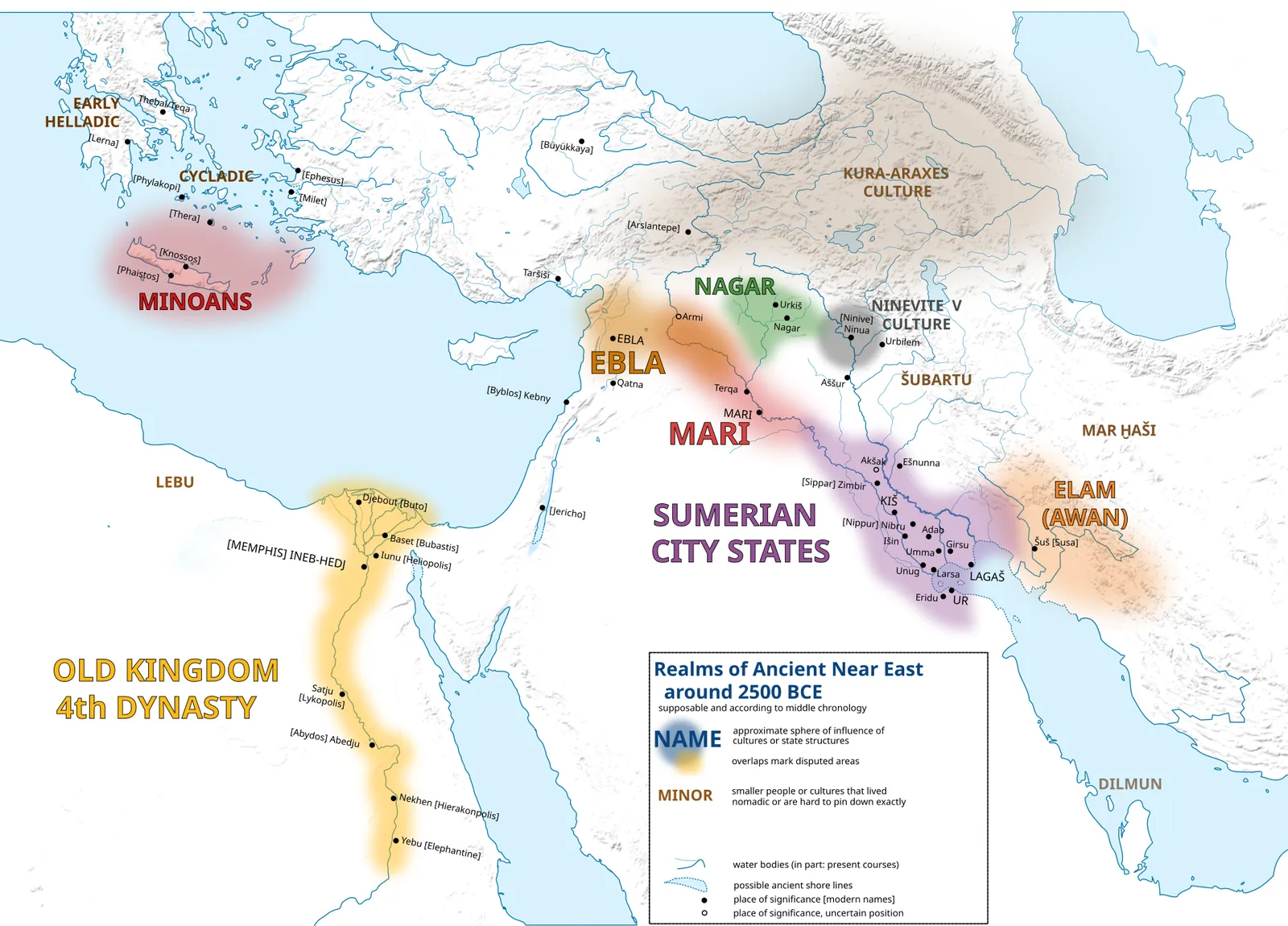
Scribes in southern Mesopotamia pressed signs into clay tablets by about 3200 BCE, and Egyptian scribes developed hieroglyphic writing at about the same time. Sumerian speakers built city states at Uruk, Ur, Lagash, Eridu and Kish. Priests and kings controlled temples, storehouses, irrigation works and labour. Around 3100 BCE rulers united Upper and Lower Egypt, and Memphis became an early royal centre. In the Indus valley, farming towns grew into planned cities during the following centuries.
Farmers raised barley, wheat, dates, flax and livestock in river valleys, while herders moved animals across dry grasslands. Smiths combined copper with tin or arsenic to make bronze tools and weapons. Merchants carried timber, stone, silver, lapis lazuli and grain between Mesopotamia, Anatolia, the Persian Gulf and Egypt. Egyptian kings sent expeditions to Sinai and Nubia for copper, turquoise and gold. By about 2600 BCE Indus cities such as Mohenjo Daro and Harappa had brick houses, drains, weights and seals, although scholars cannot read the Indus script.
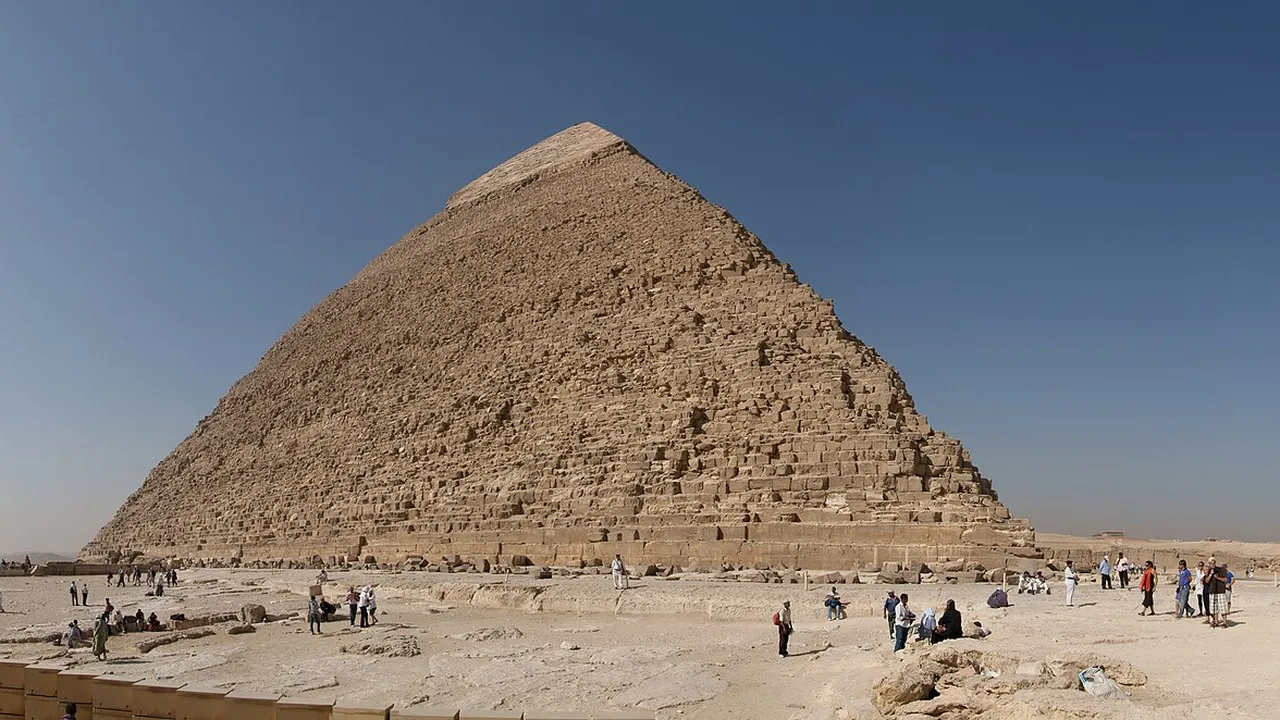
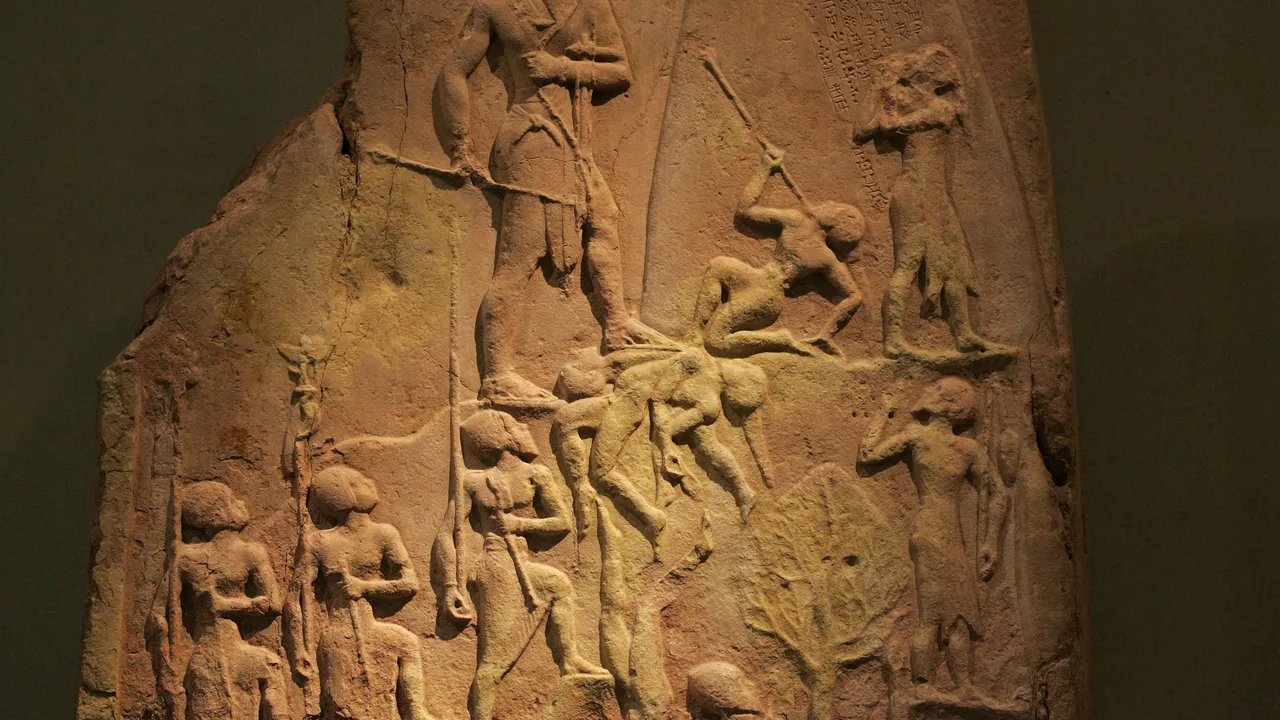
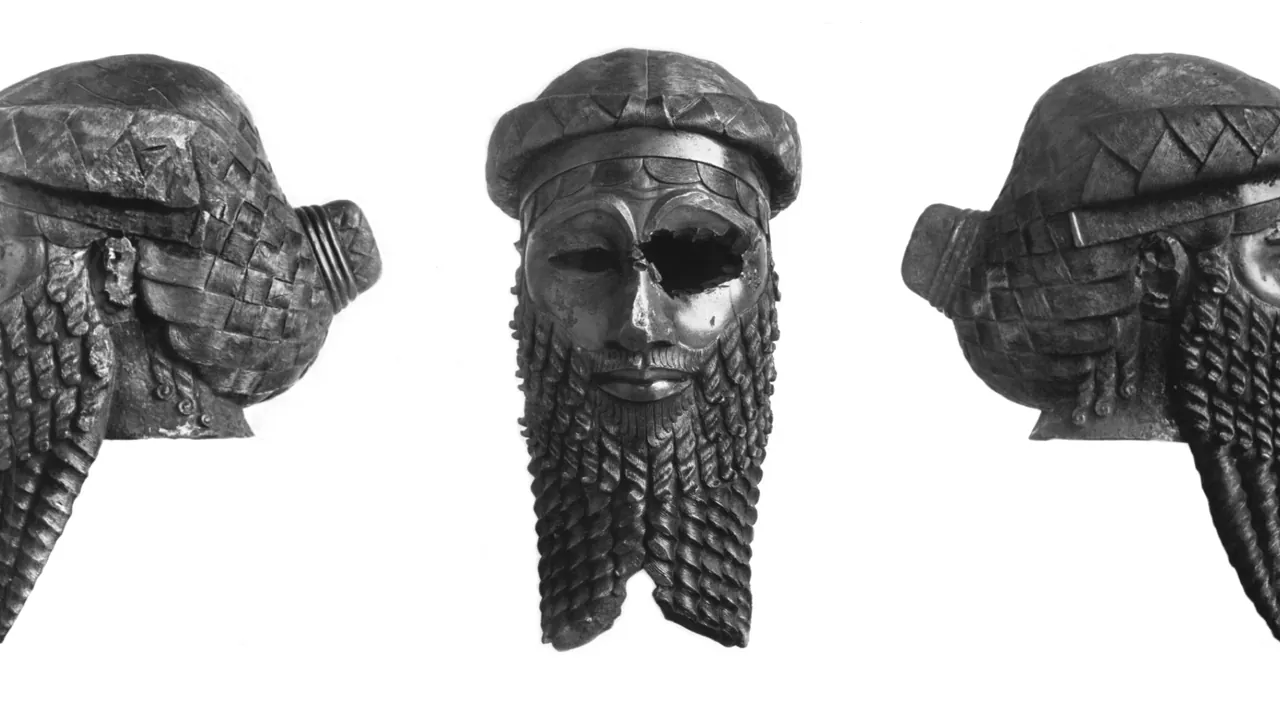
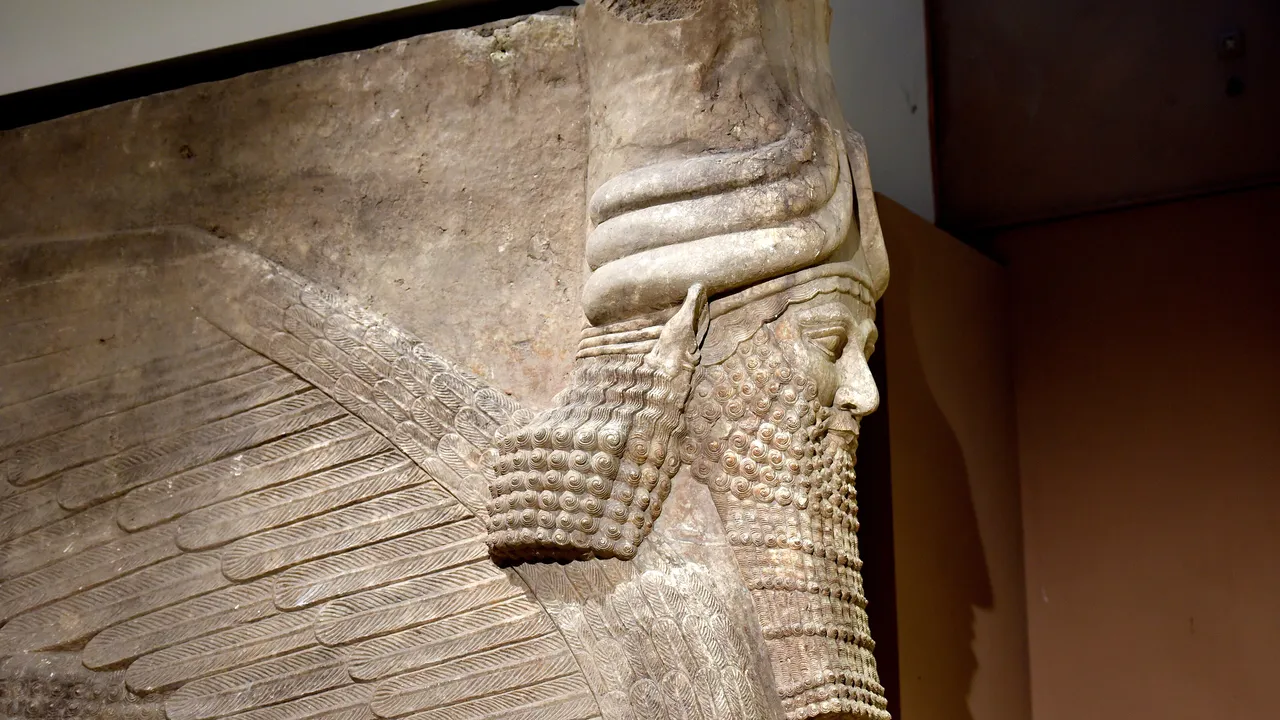
Sargon of Akkad conquered the Sumerian cities around 2334 BCE and built an empire from the Persian Gulf toward Syria. His grandson Naram Sin campaigned widely and presented himself as a divine king. Egyptian kings of the Old Kingdom organised labour for temples and pyramids, including the pyramids at Giza during the twenty sixth century BCE. Royal workshops made pottery, jewellery, furniture and weapons, and court officials recorded taxes and offerings.
Akkadian rule broke apart after about 2154 BCE, and Gutian groups and rival cities took power in Mesopotamia. Egyptian central rule weakened after about 2181 BCE, and provincial governors gained strength. Drought affected parts of the Near East, although historians debate its scale and role. By 2000 BCE no single state controlled the early centres, and regional rulers competed across a more divided political map.