

Civilization · High and Late Middle Ages · Inca Empire
Inca Empire
c. 1400–1533
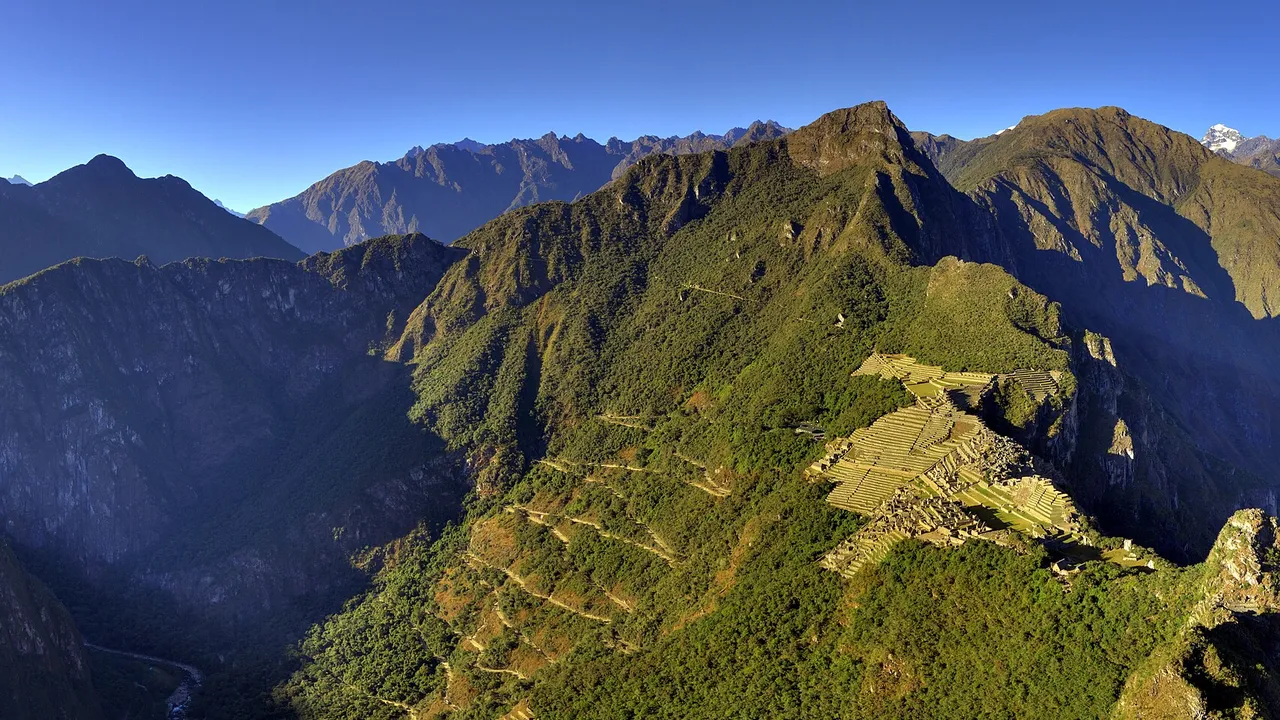
The Inca Empire was the largest state in the pre Columbian Americas, ruling the Andes from its capital Cuzco. It built Machu Picchu and 25,000 miles of roads without the wheel or writing. Pizarro's Spaniards destroyed it in 1533.
The Inca state began as the kingdom of Cuzco in the Peruvian Andes and expanded into an empire under Pachacuti, who came to power in 1438. The Incas called it Tawantinsuyu, the land of the four quarters. At its height it ran along the Andes from modern Ecuador and southern Colombia to central Chile, and it held millions of people speaking Quechua, Aymara, and other languages. The rulers made Quechua the language of government across the empire.
The Sapa Inca ruled as an absolute king descended from the sun god Inti. Governors administered the four quarters from Cuzco, and officials counted people, land, and goods on quipu, knotted cords that recorded numbers. The empire had no writing; trained keepers read the cords as its records. Subjects paid no money tax. They paid in labor under the mit'a system, working state farms, mines, building projects, and road crews in turns. The state stored harvests in warehouses set along a network of stone paved roads, bridges, and rest stations, and issued food from the stores in famine years and to its armies.
Huayna Capac died about 1527, and his sons Huascar and Atahualpa fought a civil war for the throne. Atahualpa won. In 1532 Francisco Pizarro captured him at Cajamarca, and the Spanish executed him in 1533 and occupied Cuzco. The empire passed under Spanish rule.
Facts
- Founded
- c. 1400, the Incas began their conquests from Cuzco.
- Source: Encyclopaedia Britannica, Inca Empire
- Ended
- 1533, Pizarro executed the emperor Atahualpa.
- Source: Encyclopaedia Britannica, Inca Empire
- Heartland
- The Andes, capital Cuzco, in present day Peru.
- Source: Encyclopaedia Britannica, Inca Empire
- Major rulers
- Pachacuti, the empire builder; Huayna Capac, who ruled at the greatest extent; Atahualpa, the last emperor.
- Source: Encyclopaedia Britannica, Inca Empire
Sources
- Encyclopaedia Britannica, Inca Empire Source
Source links accessed 22 November 2026.
Images
Related
- PachacutiSame civilization
- Aztec EmpireSame era
- Vlad the ImpalerSame era
- Mehmed IISame era
- Ivan IIISame era
- Ibn KhaldunSame era
Meanwhile
Meanwhile, around the world — drag to spin, click a pulsing marker.
Keep reading
Test yourself
When was Inca Empire founded?
- c. 1400, the Incas began their conquests from Cuzco
- 8 February 1950
- Decree of Sovnarkom, 20 December 1917 (N.S.), chaired by Felix Dzerzhinsky
- 1918, as a republic after the fall of Austria Hungary; full sovereignty restored by the State Treaty of 1955
Answer
c. 1400, the Incas began their conquests from Cuzco — Founded: c. 1400, the Incas began their conquests from Cuzco.
When did Inca Empire end?
- 1533, Pizarro executed the emperor Atahualpa
- 539 BCE, when Cyrus the Great took Babylon for Persia
- 1521, Cortés took Tenochtitlan
- 539 BCE, conquered by Cyrus the Great of Persia
Answer
1533, Pizarro executed the emperor Atahualpa — Ended: 1533, Pizarro executed the emperor Atahualpa.
Where was the heartland of Inca Empire?
- The Andes, capital Cuzco, in present day Peru
- The Tigris Euphrates valley, in present day Iraq and eastern Syria
- Southern Mesopotamia, in present day Iraq
- Southern Mesopotamia, capital Babylon
Answer
The Andes, capital Cuzco, in present day Peru — Heartland: The Andes, capital Cuzco, in present day Peru.
True or false: The Inca Empire was the largest state in the pre Columbian Americas, ruling the Andes from its capital Cuzco.
- True
- False
Answer
True — True. The Inca Empire was the largest state in the pre Columbian Americas, ruling the Andes from its capital Cuzco.
My notes
Highlights on this page
None yet.
Spotted an error on this page? Email [email protected] and it will be checked against the sources.