
Artifacts · No. 38
Syng Inkstand
The silver inkstand that stood on the table for both the Declaration of Independence and the signing of the Constitution: the one object present at both foundings.
1752Zoomable photographFamily viewing: Yes
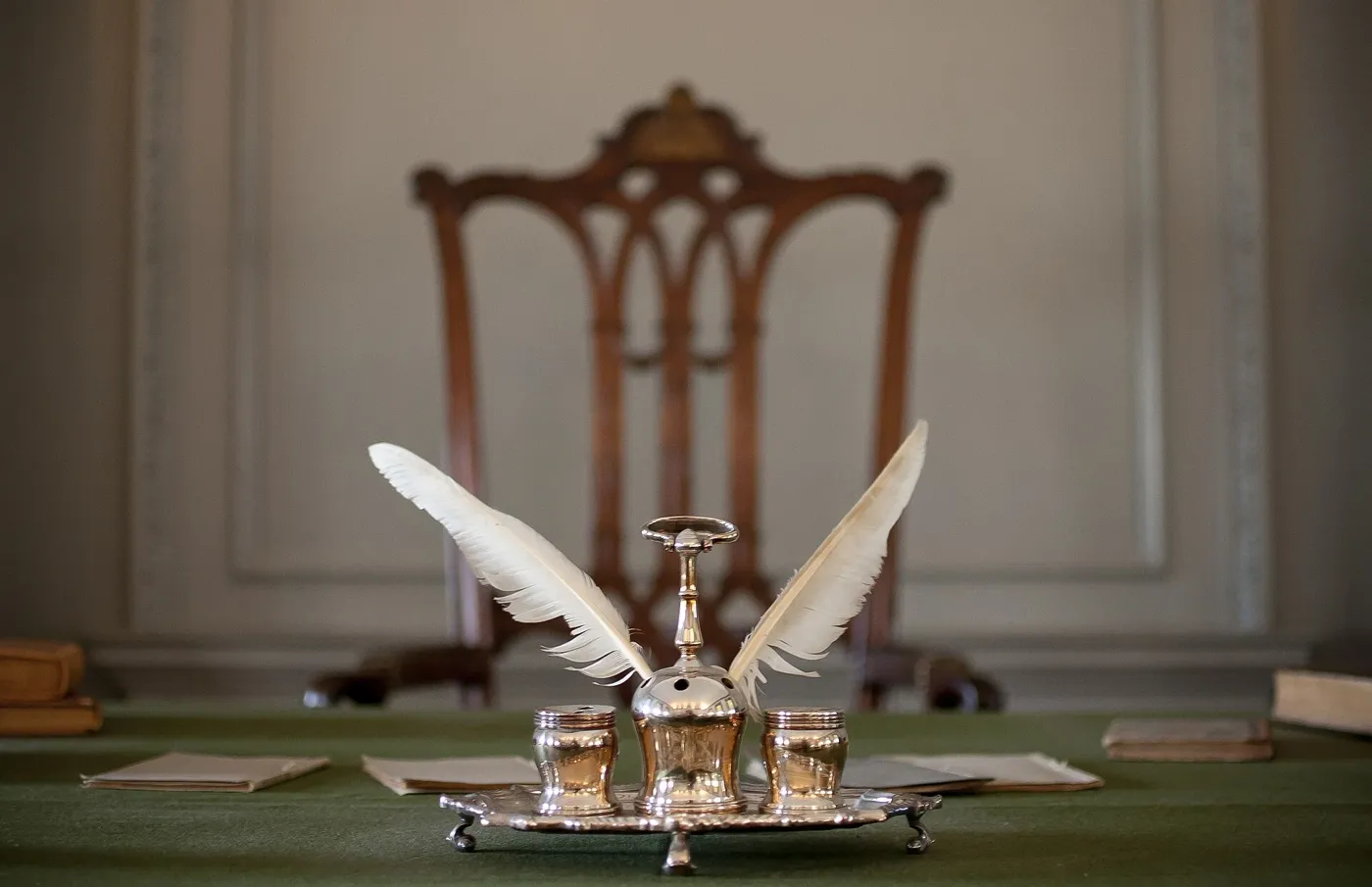
Photograph: NPS photo · Public domain · Source
Held by: Independence National Historical Park, Philadelphia
The story
Philip Syng Jr., a Philadelphia silversmith, made this inkstand in 1752 for the Pennsylvania Assembly: a quill rest, a sand shaker for blotting, a wafer box and the inkwell itself, in the plain good silver of the colonial city. The Assembly's desk furniture passed to the Congress that met in the same room. The stand was on the table through the debates of 1776 and the signing of the Declaration, and eleven years later it was there again for the Constitution.
Painters loved it: it appears in the famous scenes of both signings, usually more accurately than the faces. It is now the National Park Service's prize object at Independence Hall, the piece of furniture that watched the United States get founded twice.
The record, not the myth
Its presence at both signings is documented by the park's research and the paintings, though the claim that any particular signature was dipped from it is beyond proof. It is a working desk tool, not a ceremonial piece, which is the substance of its fame.
Sources
Image and model credits
- PhotographNPS photo · Public domain · Source