
Then and Now · W45
Independence Hall, Philadelphia
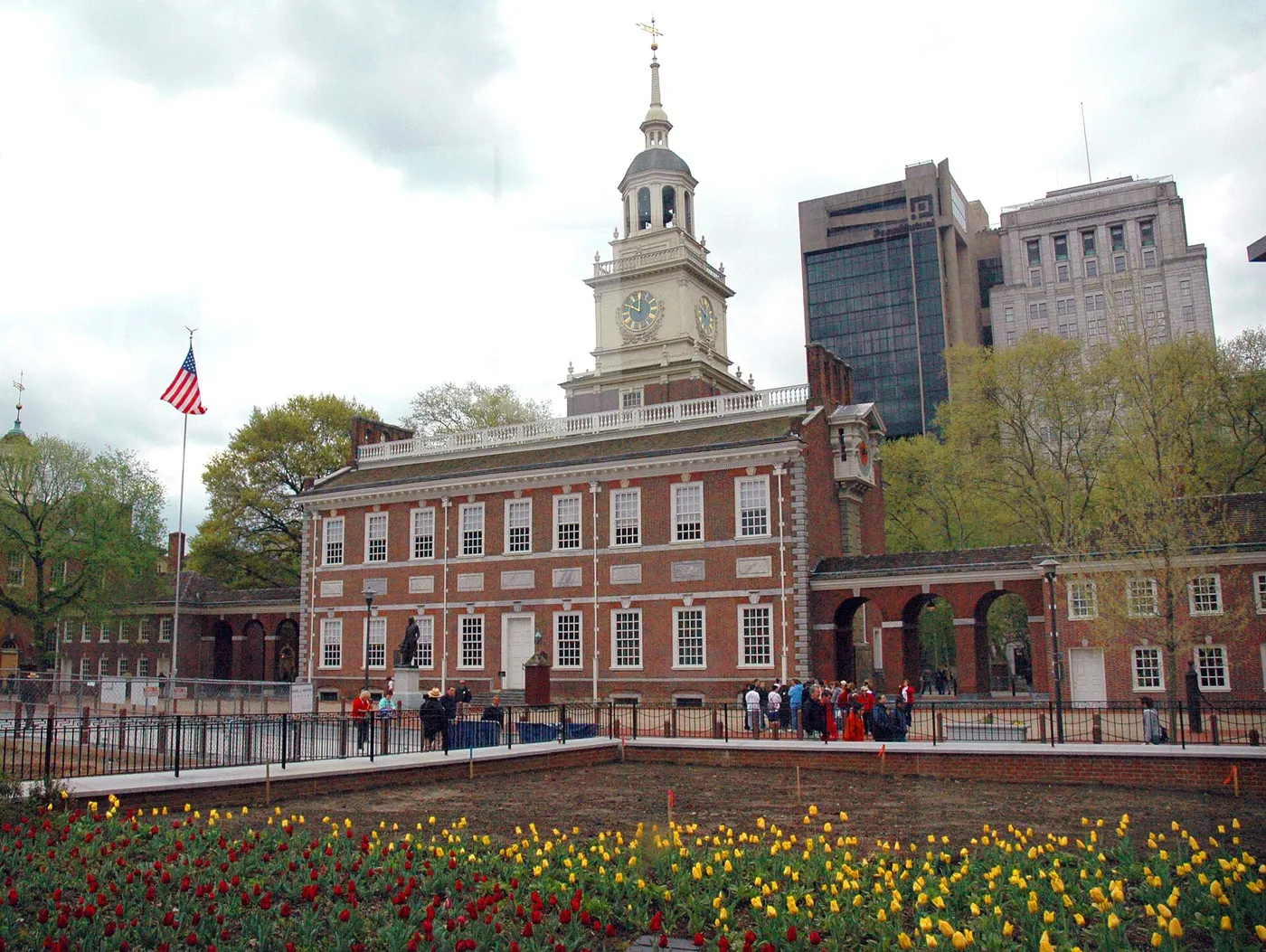
William Birch's 1799 engraving shows the Pennsylvania State House without its steeple, which is correct: the rotted wooden steeple had been taken down in 1781 and the bell hung in the brick tower. The photograph shows the building with the 1828 steeple that replaced it, in the park that replaced its city block.
Then: The State House in 1799Historical imageFamily viewing: Yes
 ThenNow
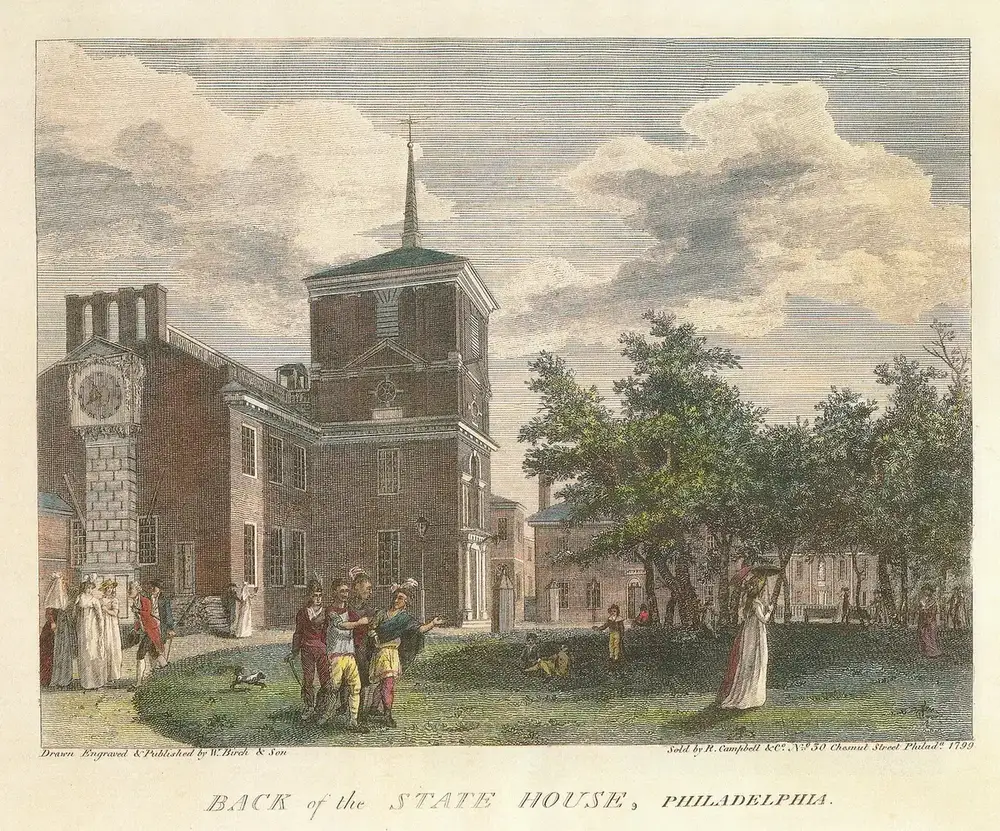
Then. The State House in 1799. This is a real historical image of the place.
Now. A real photograph of the place as it stands.
Did you know? The Liberty Bell cracked beyond repair in the 1800s and has not rung since 1846. The steeple that holds its successor is a replica of the lost original, built from Birch's and others' views of the building.
Then and now
The Pennsylvania State House, built 1732 to 1753, hosted the Second Continental Congress, the signing of the Declaration of Independence in 1776 and the Constitutional Convention of 1787. Birch's plate of 1799 shows it as the early republic knew it: brick tower, no steeple, in a working city street.
The building was nearly demolished in the 1800s and was saved by the city, then restored in stages through the 1900s, its steeple rebuilt in 1828 to William Strickland's design and its surroundings cleared into Independence National Historical Park. The photograph shows the hall from the mall, the most carefully preserved 18th century building in America on its landscaped square.
What changed. The rotted steeple was removed in 1781 and a new one built in 1828; the surroundings are now a park.
The record, not the myth
Birch's 1799 view correctly shows the building without its steeple; the detail is a check on the engraving's accuracy.