
Then and Now · W46
Lexington and Concord, North Bridge
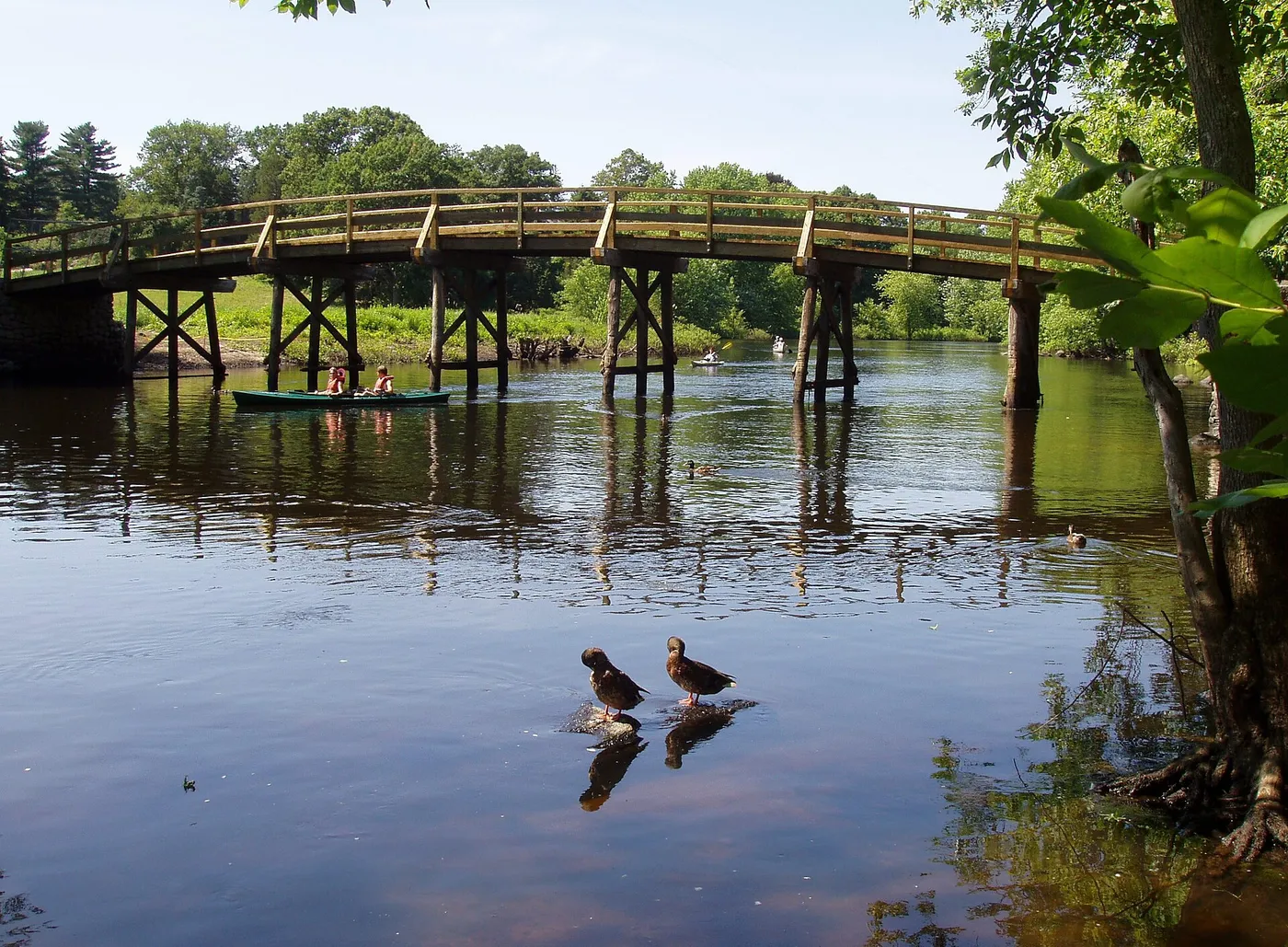
The engraving by Amos Doolittle, worked up with Ralph Earl in 1775, is the first American picture of the Revolution's first day: the fight at Concord's North Bridge. The photograph shows the bridge today, a 1956 replica on the original site, the Minute Man statue on the far bank.
Then: The fight at the North Bridge, 1775Historical imageFamily viewing: Yes
 ThenNow
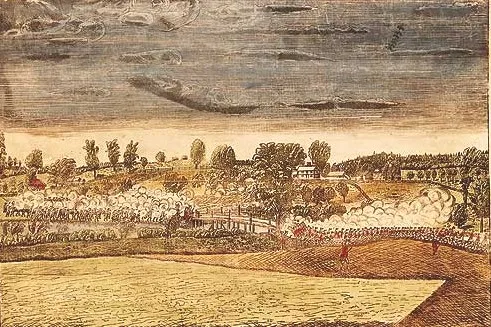
Then. The fight at the North Bridge, 1775. This is a real historical image of the place.
Now. A real photograph of the place as it stands.
Did you know? Doolittle rode out from Connecticut, interviewed witnesses and walked the ground within weeks of the fight. His four plates are propaganda and record at once, the first images of the war made by an American who had seen the places.
Then and now
On 19 April 1775, after the shooting at Lexington green at dawn, British regulars held Concord's North Bridge while militia gathered on the hill above. When smoke rose from the town, the militia advanced; the regulars fired, the militia fired back, the shot heard round the world in Emerson's later phrase, and the British began the long retreat to Boston under fire.
The original bridge was taken down in 1793. The crossing in the photograph is a 1956 replica, and Daniel Chester French's Minute Man of 1875 stands where the militia formed. The ground is a national park now, the river quiet, the fields kept as they were farmed in 1775. Who fired first at Lexington that morning remains unknown.
What changed. The original bridge is gone; today's is a 1956 replica; the Minute Man statue dates to 1875.
The record, not the myth
Who fired first at Lexington is unknown.