
Then and Now · W44
Plymouth
Henry Bacon's 1877 painting shows the Mayflower's company coming ashore at Plymouth in December 1620, the scene as Victorian America pictured it. The photograph shows Plymouth harbor today. The Rock itself has no free photograph the brief could use, which says something about how small and fenced the famous boulder is.
Then: The Pilgrim landing, 1620Historical imageFamily viewing: Yes
 ThenNow
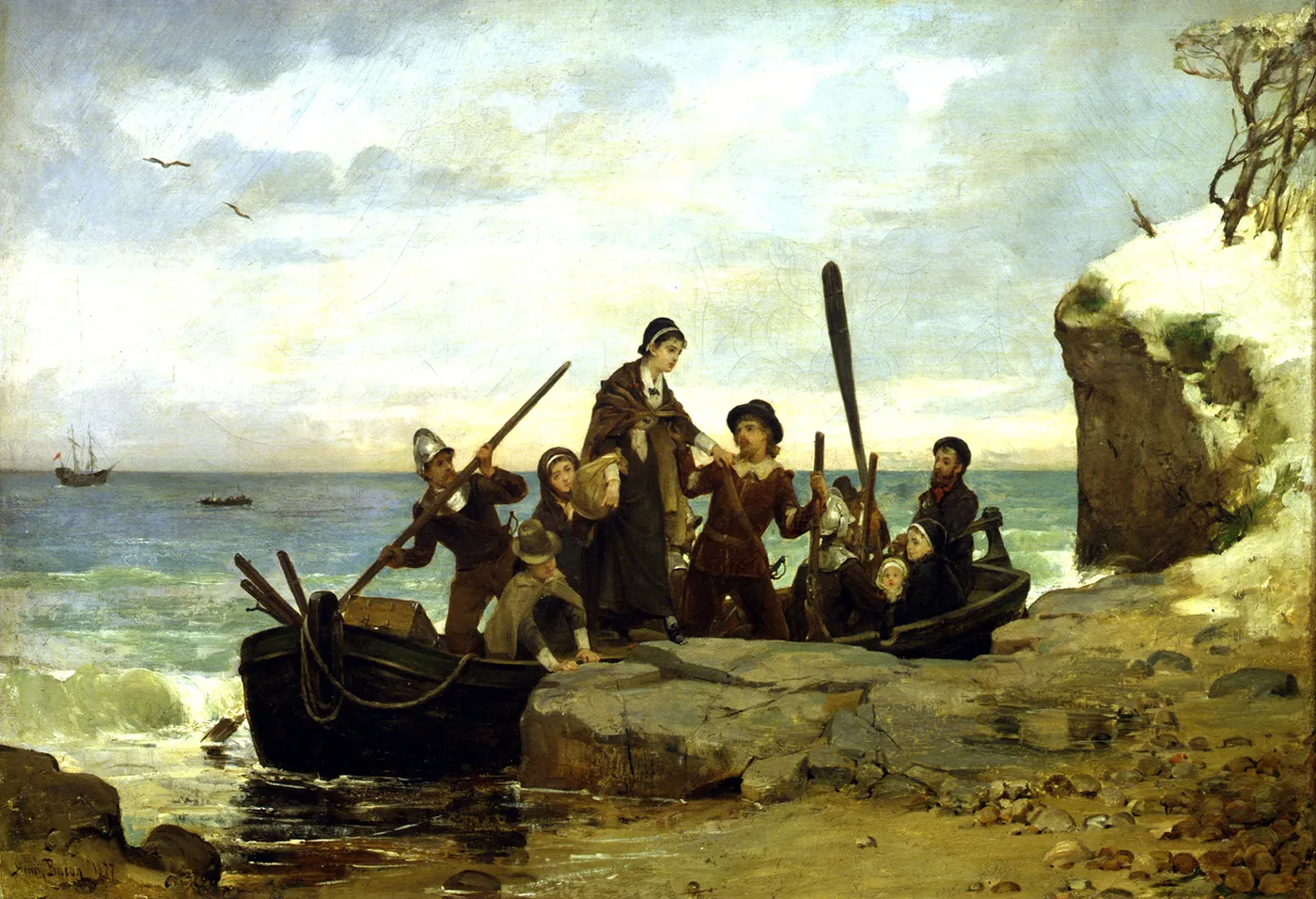
Then. The Pilgrim landing, 1620. This is a real historical image of the place.
Now. A real photograph of the place as it stands.
Did you know? No Pilgrim account mentions a rock. Plymouth Rock enters the record in 1741, 121 years after the landing, when an elderly man whose father arrived in 1623 pointed it out as the landing place.
Then and now
The Mayflower reached Cape Cod in November 1620 and settled at Plymouth in December, on a site emptied by the epidemic that had swept the Patuxet people in the years just before. Half the colonists died the first winter; the colony endured, and its landing became a founding story of the United States.
The harbor in the photograph is a working and tourist waterfront, with the Mayflower II at its pier. The Rock, identified in 1741, was split in moving, hauled around the town in pieces across the 1800s, and since 1921 has sat at the waterline under a granite portico, considerably smaller than its legend and than Bacon's painting suggests.
What changed. The waterfront was rebuilt; the Rock was split, moved, and reset under a 1921 portico.
The record, not the myth
The Rock was first identified in 1741; no Pilgrim account mentions it.