
Artifacts · No. 37
Harrison's H4 Marine Timekeeper
A watch five inches across that solved the longitude problem: it crossed the Atlantic twice and lost seconds where the prize demanded minutes.
1755-1759Zoomable photographFamily viewing: YesCatalogue: ZAA0037
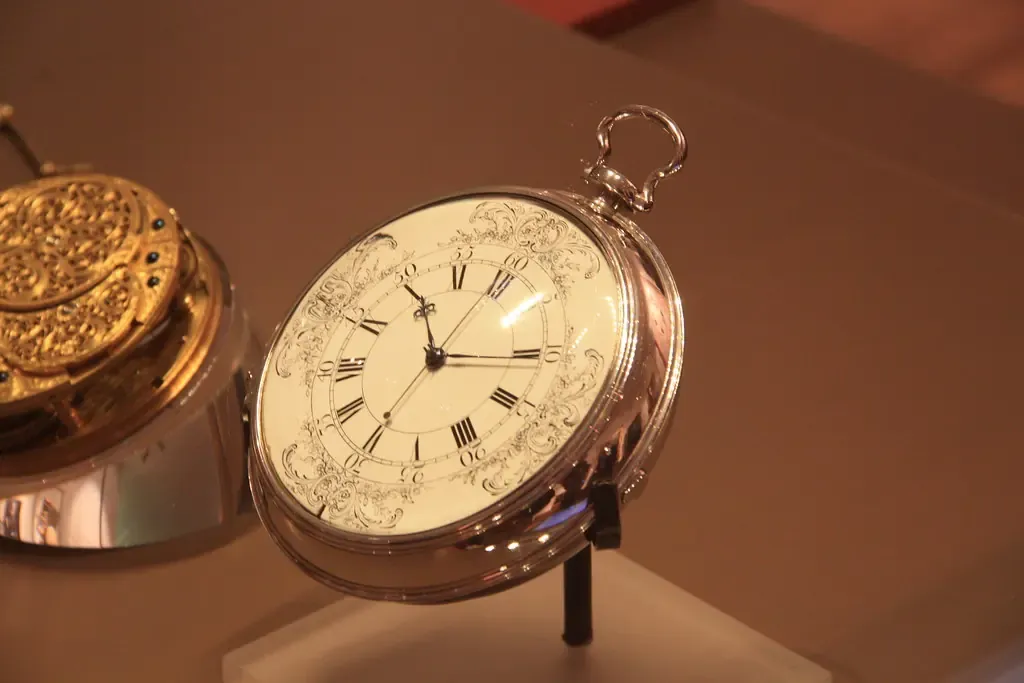
Photograph: RichardAsh1981 · CC BY-SA 2.0 · Source
Held by: Royal Museums Greenwich, London · Catalogue ZAA0037
Seeing it. As of November 2026 H4 cannot be viewed: the Royal Observatory, Greenwich closed on 2 November 2026 for the First Light rebuilding and reopens in phases from summer 2027.
The story
The Longitude Act of 1714 offered a fortune to whoever could find a ship's east west position at sea. John Harrison, a Yorkshire carpenter turned clockmaker, spent his life on it: three great sea clocks, H1 to H3, then a change of design. H4, finished in 1759, is a large watch, 13 centimetres across, jewelled, compensated for temperature, and beautiful. On the Jamaica trial of 1761-62 it lost 5.1 seconds in 81 days; on the Barbados trial of 1764 it came home inside a third of the prize's tightest demand.
The Board of Longitude still made him fight for the money, and Parliament finally settled it in 1773, when Harrison was 80. H4 sits at Greenwich with its three elder brothers and the K1 copy that sailed with Cook. The Observatory around them is closed for rebuilding as this page is published, so the watch cannot be seen in person for now.
The record, not the myth
Harrison won by persistence against a board that preferred astronomy, and the full prize was never formally awarded to anyone: he was paid by Act of Parliament instead. The lone genius frame also underplays his son William, who sailed with H4 on both trials.
Sources
Image and model credits
- PhotographRichardAsh1981 · CC BY-SA 2.0 · Source